
Design-build in Southeast Michigan
Commercial painting and drywall in Southeast Michigan

Commercial painting and drywall for Southeast Michigan businesses
Fresh paint and clean walls are the fastest way to make a business look cared for. Wright’s Renovations provides commercial painting and drywall work for offices, shops, clinics and rental buildings across Southeast Michigan, from a single scuffed hallway to new demising walls for a suite split. The work is done by Wright’s own crews out of Ypsilanti, and it’s part of the full range of commercial renovation services the company handles for owners, landlords and tenants.
These are some of the most common commercial jobs, and they repeat. A landlord repaints every time a suite turns over. A clinic patches and touches up between busy seasons. A shop changes its layout and needs a wall moved, then finished and painted to match. Getting that work done quickly, cleanly and without closing the business is what this page is about.
Who hires a commercial painting contractor
Most calls come from people who need a space ready by a date. They don’t want five trades and five schedules. They want one crew that can hang board, tape it, prime it and paint it, then clean up before the next morning. These are the clients who call most often:
- Landlords and property managers refreshing vacant suites and common areas between tenants
- Business owners updating a dated space before a busy season or a rebrand
- Office and facility managers keeping walls, doors and ceilings in good shape year round
- Tenants restoring walls to lease condition before move-out
- New tenants adding walls, offices or rooms as part of a build-out
Landlords who need more than paint can bundle it with flooring, lighting and restroom updates in a suite turn for a vacant unit. Owners of apartment buildings can see how hallways, stairwells and units are handled on the multifamily renovation page.
Commercial interior painting that holds up to daily use
A business wall takes more abuse in a month than most home walls take in a year. Carts, chairs, backpacks and cleaning crews all leave marks. That’s why commercial interior painting starts with prep: filling dents, sanding patches smooth, spot-priming repairs and stains, and cleaning greasy areas so the new coat actually bonds. Skipping prep is the reason so many cheap paint jobs flash, peel or show every patch under the lights.
Choosing paint sheen for high-traffic commercial spaces
Sheen decides how well a wall cleans and how much it hides. Flat finishes hide flaws but don’t scrub well, so they’re best on ceilings. Eggshell and satin finishes are the usual choice for office and retail walls because they wipe clean and still look soft. Semi-gloss goes on doors, frames and trim, where hands and carts hit hardest. In restrooms, kitchens and exam rooms, a scrubbable enamel stands up to repeated cleaning. Ceilings in those rooms get a mildew-resistant coating so steam and humidity won’t leave dark spots.
Low-odor paint and working around open hours
Most businesses can’t close for a repaint. Low-odor, low-VOC paints let crews work near occupied spaces without driving out staff or customers. Wright’s plans the order of rooms, keeps work areas taped off and protects floors and furniture each day. The guide to renovating a business without closing explains how phasing works when a whole floor needs attention.
Doors, trim and hollow metal frames
Doors and frames are where a tired space shows its age first. Scuffed wood doors get sanded and refinished or painted, and hollow metal frames get cleaned, primed with a bonding primer and painted with a durable enamel. When a door sticks or a closer leaks, the crew can fix the hardware during the same visit through door repair, so the finished paint isn’t damaged by a door that still drags.
Commercial drywall installation and repair
Drywall is the backbone of most commercial interiors, and it’s where layout changes happen. Wright’s crews frame and hang new walls, patch and repair damaged board, and finish everything to the level the lighting demands. Small holes and dents are routine work, the same kind covered by drywall repair for homes, while bigger jobs like new offices or a split suite are planned and permitted as part of a build-out.
New walls, demising walls and suite splits
Landlords often split a large suite into two smaller ones to lease them faster. That takes a demising wall, the wall between two tenant spaces, which usually has to meet fire and sound requirements set by the building code and the lease. New private offices, conference rooms and storage rooms follow the same steps on a smaller scale. Those projects are usually part of a tenant improvement build-out with drawings and a permit.
Drywall finish levels for commercial lighting
Drywall finish is graded on an industry scale from Level 0 to Level 5. Level 4 is common under flat or eggshell paint in offices and shops. Level 5 adds a skim coat over the whole surface, and it’s the right call where long windows, wall washers or glossy paint would show every seam. Lighting decides more than the paint does here. A wall that looks fine at noon can show every joint at sunset when light rakes across it.
Fire-rated walls and ceilings
Many commercial walls are fire rated, especially corridor walls, demising walls and walls around stairs. Those assemblies use specific board, usually Type X, installed a specific way. Cutting into a rated wall for a new outlet, pipe or cable means sealing the opening with a listed firestop product so the rating holds. Inspectors check those details, and they’re far cheaper to get right during the work than to fix after a failed inspection.
Moisture-resistant and impact-resistant board
Not every wall should get standard drywall. Restrooms, janitor closets and areas near sinks call for moisture-resistant board, with cement board behind tile. Corridors in schools, clinics and child care centers often get impact-resistant board and corner guards so carts and strollers don’t punch through. The child care center renovation and medical office renovation pages explain where those tougher materials usually go.
Ceilings, soffits and bulkheads
Ceilings get ignored until they’re stained, sagging or full of patched holes from old equipment. In spaces with a suspended grid, crews replace damaged tiles, straighten bent grid and match tile styles where they can still be found. Drywall ceilings, soffits and bulkheads get patched, retextured and repainted. Water-stained areas are repaired only after the source has been fixed by the right trade. Ceiling repair covers the common cases in more detail.
Bulkheads and soffits often hide ductwork, sprinkler lines or old beams, so changing them takes planning. The crew checks what’s above before cutting, and it coordinates with the building’s mechanical and fire protection contractors when something has to move. That’s a common step when an older space is converted for a new use, and the guide to a change of use in Michigan explains what else that can trigger.
Brand colors, accent walls and wall protection
Paint is often the cheapest way to make a space feel like a specific business instead of a generic suite. Accent walls in a brand color, a darker shade behind a reception desk or a painted mural wall can carry a lot of weight for a small budget. Crews cut those colors in cleanly at corners and ceilings, and they keep a record of every color and sheen used so future touch-ups match. Trim and door painting is often done at the same time so the whole room looks finished.
High-traffic walls can also be protected so the paint lasts longer, which stretches the time between repaints. Chair rails, corner guards, kick plates and wall panels keep carts and chairs from scarring fresh paint in hallways, break rooms and waiting areas. That’s especially useful in veterinary clinics and coffee shop build-outs, where walls take steady bumps and splashes and get cleaned often.
Wallcovering removal and texture matching
Older commercial spaces often have vinyl wallcovering that’s peeling at the seams or simply dated. Removing it takes care, because the paper face can tear the drywall underneath. Crews strip it, repair the surface and prime before painting. The wallpaper removal page explains the process. Where walls carry a texture, patches are blended to match it through drywall texture matching, so the repairs don’t stand out under the new paint.
Painting and drywall for suite turns and lease-end work
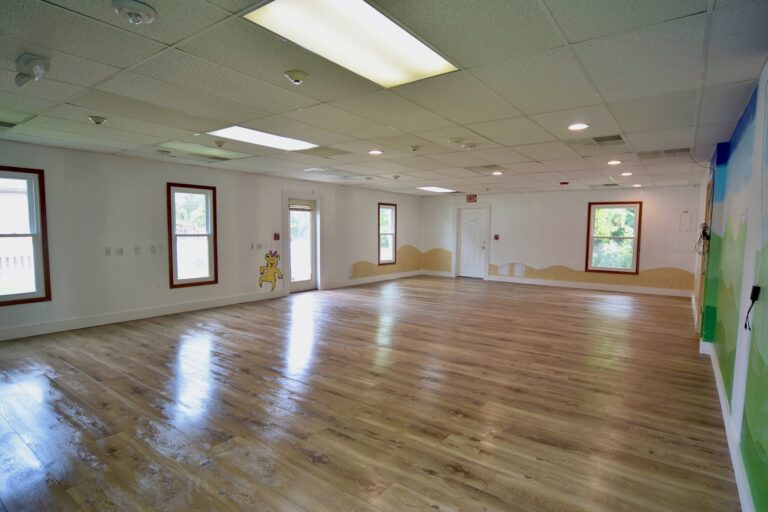
Paint and drywall make up most of the work when a tenant moves out. Anchor holes from shelving, damaged corners, removed signage and years of scuffs all have to be fixed before the next tenant tours the space. Wright’s prices that work line by line so a landlord can see exactly what’s being done. For short lists, commercial repairs and punch lists covers the smaller fixes that go along with a repaint.
Tenants returning a space at lease end usually have to leave it in its original condition, minus normal wear. Before-and-after photos and a written scope help both sides agree on what that means. Landlords getting an empty unit ready can also read about preparing vacant commercial space to lease, and tenants about to sign their next lease can start with a checklist for reviewing a commercial lease.
Painting and drywall inside larger build-outs
On a full build-out, painting and drywall sit near the end of the schedule, which means every delay upstream lands on them. Wright’s runs those trades with its own crews, so there’s no waiting on a sub’s calendar when framing finishes early or an inspection moves. That’s one reason owners choose a design-build team for office renovations, retail store renovations and restaurant build-outs.
The same goes for service businesses with specific needs. Salon build-outs need washable walls near shampoo stations, fitness studio build-outs need tough finishes behind equipment, and dental office interiors need surfaces that hold up to frequent disinfecting. The Troy office Wright’s finished for Stewart Title shows how those details come together in the Troy office renovation project.
What affects the price of commercial painting and drywall
Commercial painting and drywall are priced from the actual space, not a flat rate. The biggest factors are the condition of the walls, the height of the ceilings and how much of the work has to happen around open hours. Tall walls in retail and warehouse spaces need lifts or scaffolding. Heavy damage takes more patching and priming before the first finish coat. Work that happens before opening or after closing is noted on the scope with its own price.
Finish choices matter too. A Level 5 drywall finish costs more than Level 4 because it adds a full skim coat. Specialty coatings, accent colors and multiple sheens in one room take more time to cut in. Grouping work saves money, so many landlords schedule paint and drywall for several suites at once. For a look at how commercial budgets come together, read the guide to commercial renovation costs in Michigan.
Commercial painting and drywall questions
Can you paint while our business is open?
Usually, yes. Low-odor paints, careful room-by-room sequencing and daily cleanup let most offices, shops and clinics stay open. Areas with constant customer traffic, like a sales floor or a waiting room, are often scheduled during slow hours. Any work that has to happen before opening or after closing is priced on the written scope, so the owner can decide before anything is booked.
Do new commercial walls need a permit?
Adding, moving or removing walls in a commercial space usually needs a building permit, especially when the change affects exits, fire-rated walls or the number of rooms. Repainting and patching existing walls generally doesn’t. When a permit is needed, Wright’s builds it into the schedule and the scope. The commercial build-out timeline shows where permits and inspections fall.
What’s outside the scope of this work?
Wright’s sticks to the trades its crews handle well. HVAC, roofing, gutters and insulation are outside the company’s scope, and so is insurance restoration for water, fire or mold damage. When a water stain shows up on a ceiling, the leak has to be fixed by the right trade first. The full list of what Wright’s doesn’t do spells out those boundaries.
Commercial painting and drywall in Ann Arbor, Ypsilanti and beyond
Wright’s is based on Platt Road in Ypsilanti and serves businesses across Washtenaw, Wayne, Oakland, Macomb, Livingston and Monroe counties. Repeat painting and drywall work is easiest to schedule close to the shop, so Ann Arbor and Ypsilanti see the most of it. Wright’s has also finished commercial projects in Saline, Troy and Dearborn Heights, including the Saline office build-out.
Small businesses that want one contractor for paint, drywall and the bigger projects that come later can start with the small business renovation page. It explains how Wright’s helps owners plan small updates now without paying to redo them when a larger renovation follows.
Get your commercial painting and drywall priced
Send photos, a floor plan or a move-out list, and tell us the date that matters. Wright’s will walk the space, price the work in writing and give you a start date before you commit. To see finished work, view our Portfolio. When you’re ready, contact us now for a free quote on your commercial painting and drywall project.
Free consultation
Start with a conversation
Tell us what you’re planning. We’ll follow up within one business day with next steps and an honest read on budget and timing.
Prefer the phone? Call (734) 540-0347, Monday to Friday, 8 a.m. to 4 p.m.