
How to renovate your business without closing
Closing your doors for a remodel means rent with no revenue, staff without hours and regulars who may find a new favorite while you’re gone. That’s why so many owners ask me whether they can renovate a business without closing. Most of the time the answer is yes, with the right plan. Phased construction, after-hours crews and a clear line between the work zone and the customer zone let a store, office or clinic keep running while the space gets rebuilt around it.
I run Wright’s Renovations from our shop in Ypsilanti, and we’ve done this kind of work for office renovations, restaurants and retail spaces across Southeast Michigan. Here’s how we plan a job that keeps you open, what it costs compared with closing, and when closing is the smarter call.
When you can renovate a business without closing
Staying open works best when the space can be split into sections, when the noisiest work can happen while you’re closed, and when customers can still reach the door, the counter and the restroom safely. Most offices, many retail stores and a lot of service businesses fit that description. A space with one small room, or a project that touches every inch at once, is harder.
The type of work matters too. Paint, flooring, lighting, fixtures and millwork phase easily. Moving plumbing through a slab, replacing an electrical service or rebuilding the only restroom can force a short shutdown even on a well-planned job. We sort the scope into work that phases and work that doesn’t during the first walk-through, and our small business renovation page covers the kinds of projects that usually phase well.
Phasing the work zone by zone
Phasing means dividing the space into sections and finishing one before starting the next. In a store, we might rebuild the back stockroom first, then half the sales floor, then the other half, then the storefront. In an office, we might move staff into finished rooms as each wing is completed. Each phase has its own start date, finish date and inspection plan.
The trick is choosing the order. The first phase should create space that helps the rest of the job, such as a finished stockroom that can hold displaced inventory. The last phase is usually the entrance and the most visible area, so customers see the finished result when the dust is gone. Our process page explains how phases fit into our scheduling.
Working nights and weekends
After-hours work moves the loudest and dirtiest tasks to times when you’re closed. Demolition, saw cutting, sanding and spray finishes are prime candidates. A retail store that closes at 8 p.m. can have a crew working until early morning. An office that’s empty on weekends can get two full days of heavy work each week.
After-hours work costs more in labor and requires more coordination. Inspectors work business hours, so inspections still have to fit the daytime schedule. Building rules, lease terms and noise ordinances can limit late work, especially in mixed-use buildings with apartments upstairs. We confirm those limits with the landlord and the city before we promise a night schedule.
Building the phase plan
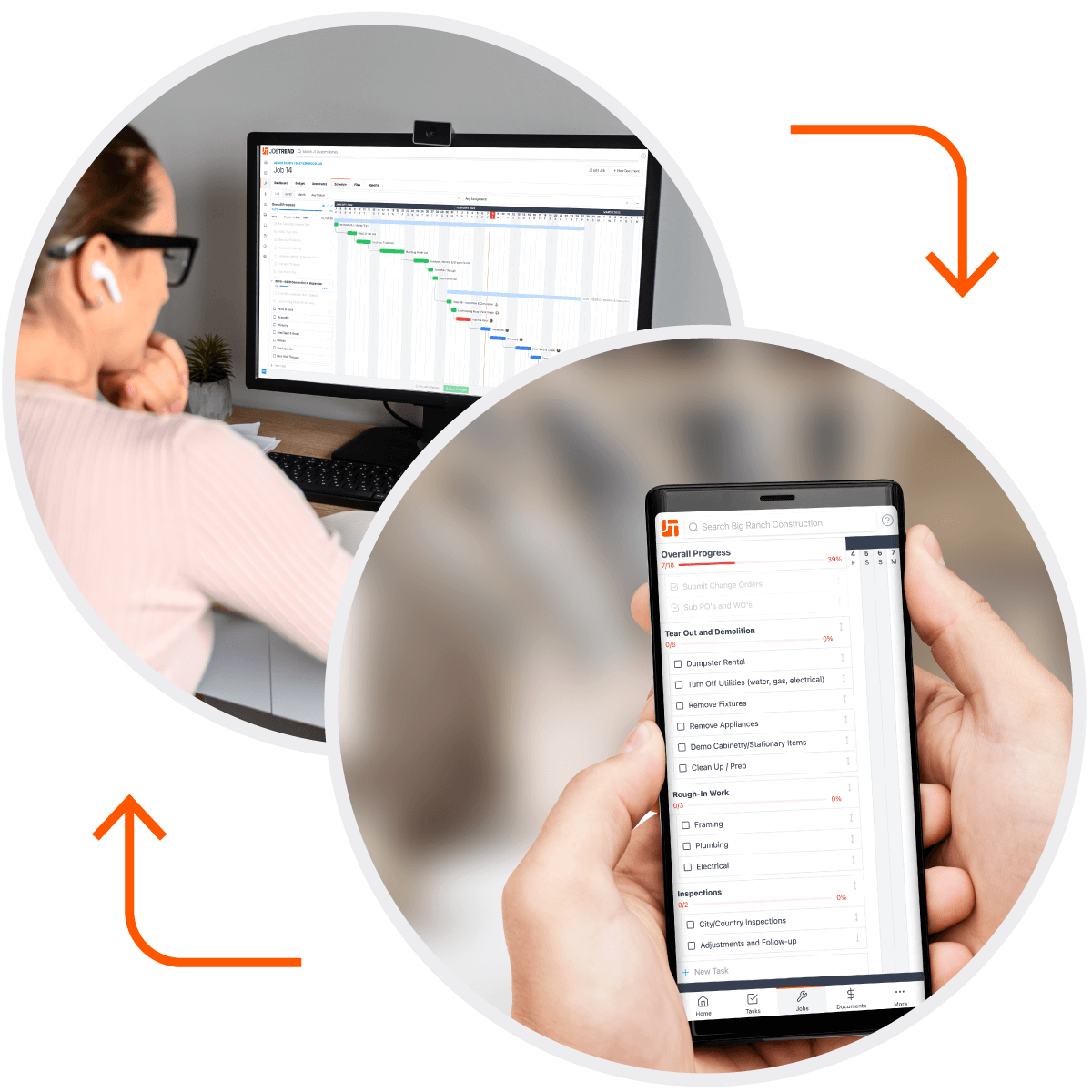
A phase plan is a one-page drawing and schedule that everyone works from. It shows each zone, the order they’ll be built in, the dates, where the temporary walls go, where customers enter and where crews and materials enter. It also marks utility shutdowns, inspections and the nights when loud work will happen. We review it with you before the first day and update it each week.
The plan should also name what happens if something slips. If a light fixture arrives late, can the next phase start anyway? If an inspection gets pushed, does the store still open on schedule? Thinking those questions through ahead of time keeps a single delay from rippling through the whole job. Our design-build approach keeps the drawings, phases and pricing tied together.
Protecting inventory, equipment and records
Dust gets into everything, so inventory and equipment near the work zone need protection or relocation. Retail stock is usually moved into finished areas or covered and sealed. Computers, point-of-sale terminals and printers should be moved or wrapped. Clinics and offices need to secure files and protect sensitive equipment before demolition starts.
We make a list with you before each phase: what moves, what stays, where it goes and who moves it. Our crews can move furniture and fixtures, and our carpentry team can build temporary storage or counters if a phase displaces your checkout. Planning the move saves hours of scrambling on the first night.
Keeping dust, noise and fumes away from customers
A temporary wall is the most important tool on a phased job. We build dust barriers from floor to ceiling, seal the edges, and use zippered doors or real doors for crew access. Negative air machines with filters keep dust on the work side. Floors in the customer area get protected walk-off mats so debris doesn’t track into the store.
Noise is harder to contain. We schedule loud work for closed hours and use quieter methods where possible during the day. Fumes from paints, adhesives and finishes are handled with low-odor products and ventilation. A good barrier and a clean site every morning do more for customer experience than anything else we do.
Safety and code while you’re open
When customers and staff share a building with a construction site, safety rules tighten. Exits have to stay open and clear. Fire alarms and sprinklers have to keep working, or the fire department has to approve a temporary plan. Extension cords, tools and materials can’t block aisles. We walk the open areas with you before each phase and after each workday.
Accessibility doesn’t pause during construction either. Customers who use wheelchairs still need a route to the door, the counter and a restroom. If a phase blocks the accessible route, we plan a temporary one. Our ADA compliance work often runs in phases for exactly this reason, and my post on ADA compliance for small businesses covers the planning side.
Restrooms, utilities and short shutdowns
Some work can’t happen with the lights on. Tying into the water main, swapping an electrical panel or connecting a new sewer line usually means a short shutdown of that utility. We plan those for closed hours and line up the plumber, electrician and inspector so the outage lasts hours instead of days.
Restrooms need extra thought. If your space has one restroom and it’s being rebuilt, customers and staff need an alternative. Options include phasing a new restroom before demolishing the old one, arranging access to a neighbor’s restroom or renting a portable unit if the landlord and city allow it. Our page on commercial restroom remodels explains why restrooms often set the schedule.
Communication with staff and customers
Your staff need to know what’s happening each week: which areas are closed, where to park, when it’ll be loud and who to call with a problem. We give owners a simple weekly look-ahead they can share. A daily check-in between our lead carpenter and your manager catches small issues before they turn into complaints.
Give your team one name to call. When a staff member notices a dusty shelf, a blocked door or a loud tool during business hours, they should know exactly who fixes it and how fast. On our jobs that’s the lead carpenter on site. Clear ownership keeps small irritations from becoming a reason to regret staying open.
Customers appreciate honesty. A clean sign that says what’s being improved and when it’ll be done turns construction into a reason to come back. Social posts showing progress do the same. The businesses that handle this well often see a bump when they reveal the finished space.
Landlord rules and lease terms
Before any phased job starts, read your lease. Many leases limit construction hours, require landlord approval of drawings and contractors, and set rules for deliveries, dumpsters and loading docks. Shared buildings may require insurance certificates and notice to other tenants. Getting those approvals early prevents a stop-work call on day one.
Landlords can also be partners. Some will contribute toward work that improves the building, especially restrooms, storefronts and systems. Our tenant improvement services page explains how allowances work, and my pre-lease checklist lists the construction terms worth negotiating.
What phasing does to cost and schedule
Phasing usually takes longer than doing the whole job at once, and it costs more. Crews set up and break down protection for each phase, work in smaller areas and sometimes return for punch lists more than once. After-hours labor costs more than daytime labor. Those added costs need to be weighed against the revenue you’d lose by closing.
The math often favors staying open for established businesses with steady sales. A brand-new store or a business in a slow season may find a short full closure is cheaper overall. My post on the commercial build-out timeline shows how long full closures typically run, and my guide to retail build-out costs explains the line items that matter most.
Choosing the right season in Michigan
Michigan’s calendar affects phased work. Retail stores usually want to avoid construction from November through the holidays, when sales are strongest. Restaurants and cafés may prefer slow months after the holidays. Offices often plan around fiscal year ends and vacation schedules. Interior work runs all winter, but storefront and exterior work is easier in spring, summer and early fall.
College towns add another layer. Ann Arbor and Ypsilanti businesses near campus see traffic swing with the academic calendar, which can open a quiet window in summer. Our pages for Ann Arbor renovation work and Ypsilanti renovation work show where we build most often.
Examples from our commercial work
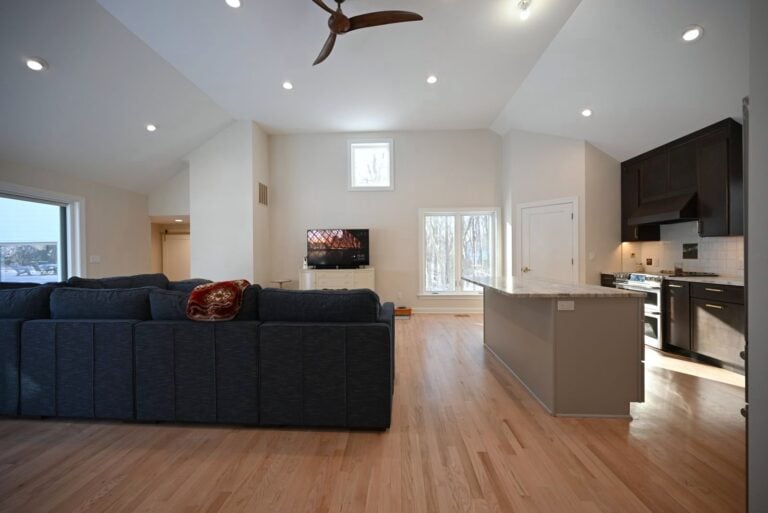
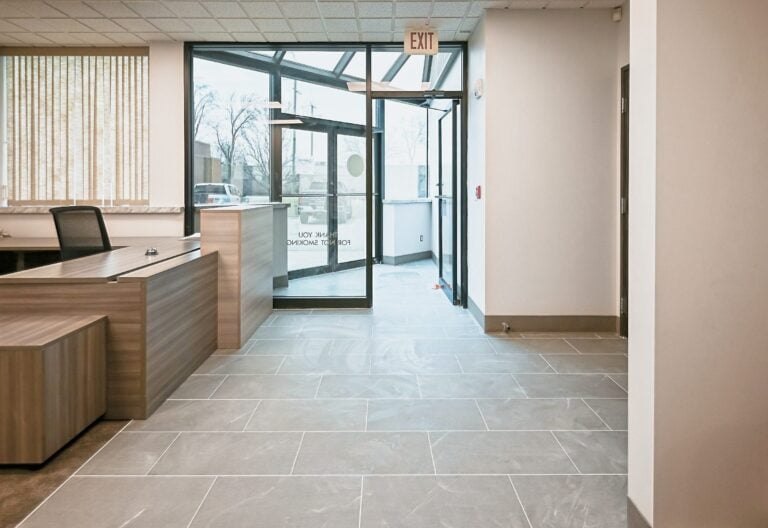
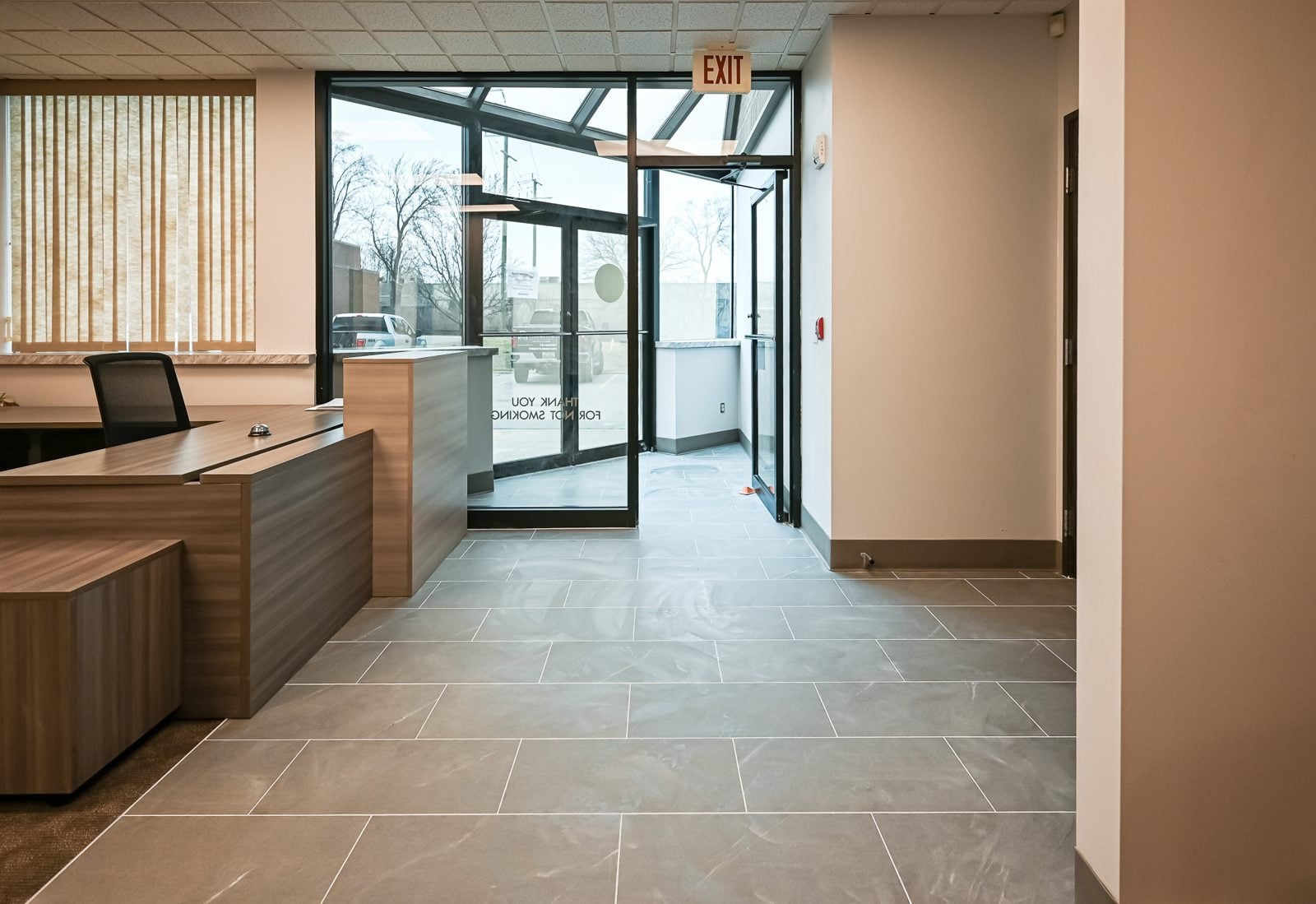
We rebuilt the Stewart Title office in Troy while the business kept working. Staff stayed productive through construction, and it’s the model for most office projects we take on.
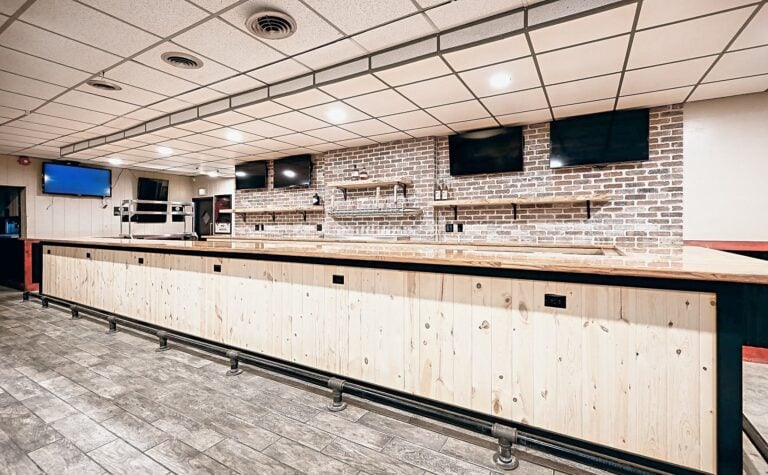
For a bar or restaurant, phasing looks different. Our work on the 342 Bar and Grill service bar involved new water, drain and electrical lines, the kind of work that needs careful coordination with operating hours. Our restaurant build-out page covers how we plan food service projects.
Business types that phase well
Some businesses are especially good candidates for staying open. In my experience these phase the most smoothly:
- Offices with several rooms or wings that can move staff around
- Retail stores with a stockroom that can hold displaced inventory
- Clinics that can close a few treatment rooms at a time
- Salons with stations that can shift while others are rebuilt
- Fitness studios that can move classes to another room or time
If your business is on that list, our pages on medical office renovation, salon build-outs and fitness studio construction go into more detail.
Store refreshes done in a few nights
Not every project needs months of phasing. A store refresh with new paint, lighting, flooring in sections and updated fixtures can sometimes happen over a series of nights and weekends. We stage materials offsite, bring in a larger crew for short windows and leave the store clean and ready to open each morning.
That kind of quick refresh is common for retail store renovation and for landlords preparing a space between tenants through our commercial suite turns. The key is a tight scope and decisions made before the first night.
Finishing the last phase and reopening fully
The final phase is usually the most visible one, so it gets the most attention. Once construction wraps, we walk every area with you and build a punch list of small fixes. Those get done after hours so customers never see a half-finished detail. We pull the temporary walls, deep clean the space and confirm final inspections are signed off.
Plan a reveal. Owners who stayed open through construction have earned a moment to show customers the result. A soft relaunch, a social post with before and after photos or a small event turns months of dust barriers into a story your regulars will repeat. Our client reviews page shows what other owners said after their projects.
Questions owners ask about staying open
Can I stay open during a renovation?
Usually, yes. Phasing, after-hours work and dust barriers let most offices, stores and service businesses keep operating. Some utility work may require short shutdowns during closed hours.
Does staying open cost more?
Generally. Phasing adds setup and protection, and after-hours labor costs more. Compare those costs against the revenue you’d lose by closing.
How do you keep dust out of the customer area?
We build sealed floor-to-ceiling barriers, use filtered negative air machines and clean the site daily so the open side stays clean.
Plan a renovation that keeps you open
The best phased projects start with a walk-through and an honest look at what can and can’t stay open. We plan the phases, the protection and the schedule together, and our financing options can help with larger projects. Check out our Portfolio to see commercial work we’ve built, or Contact us today to schedule a walk-through.