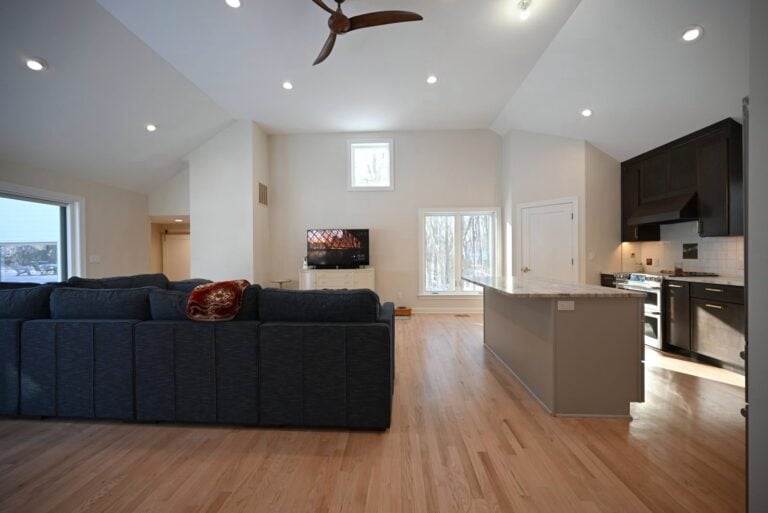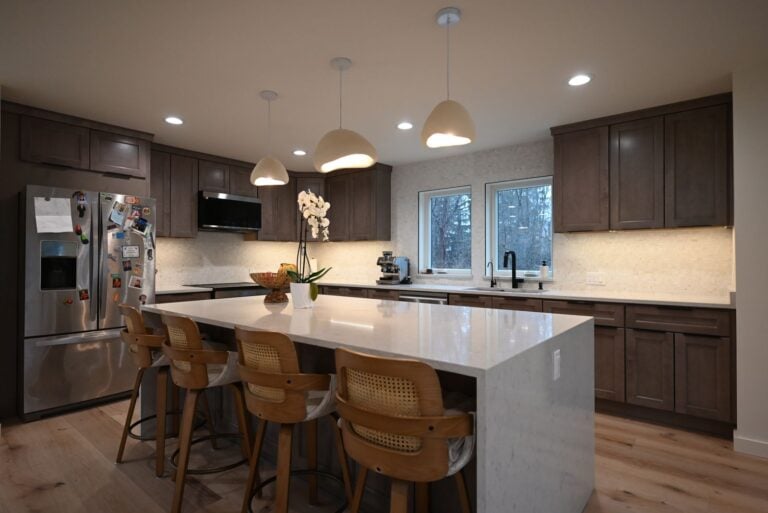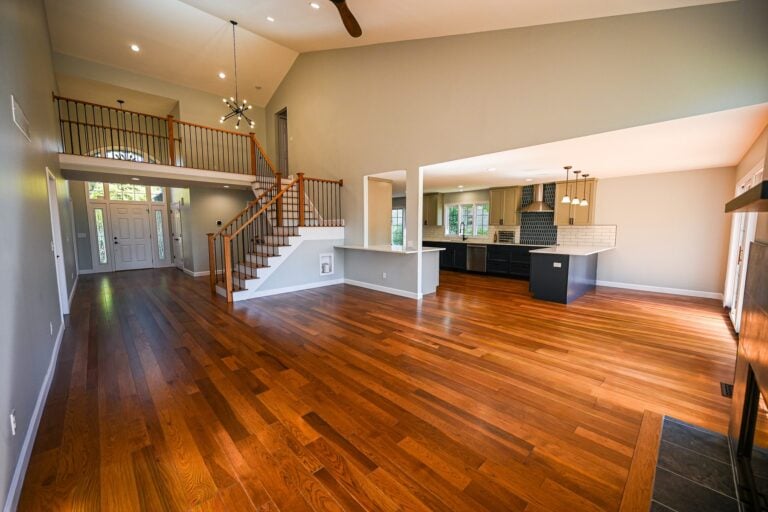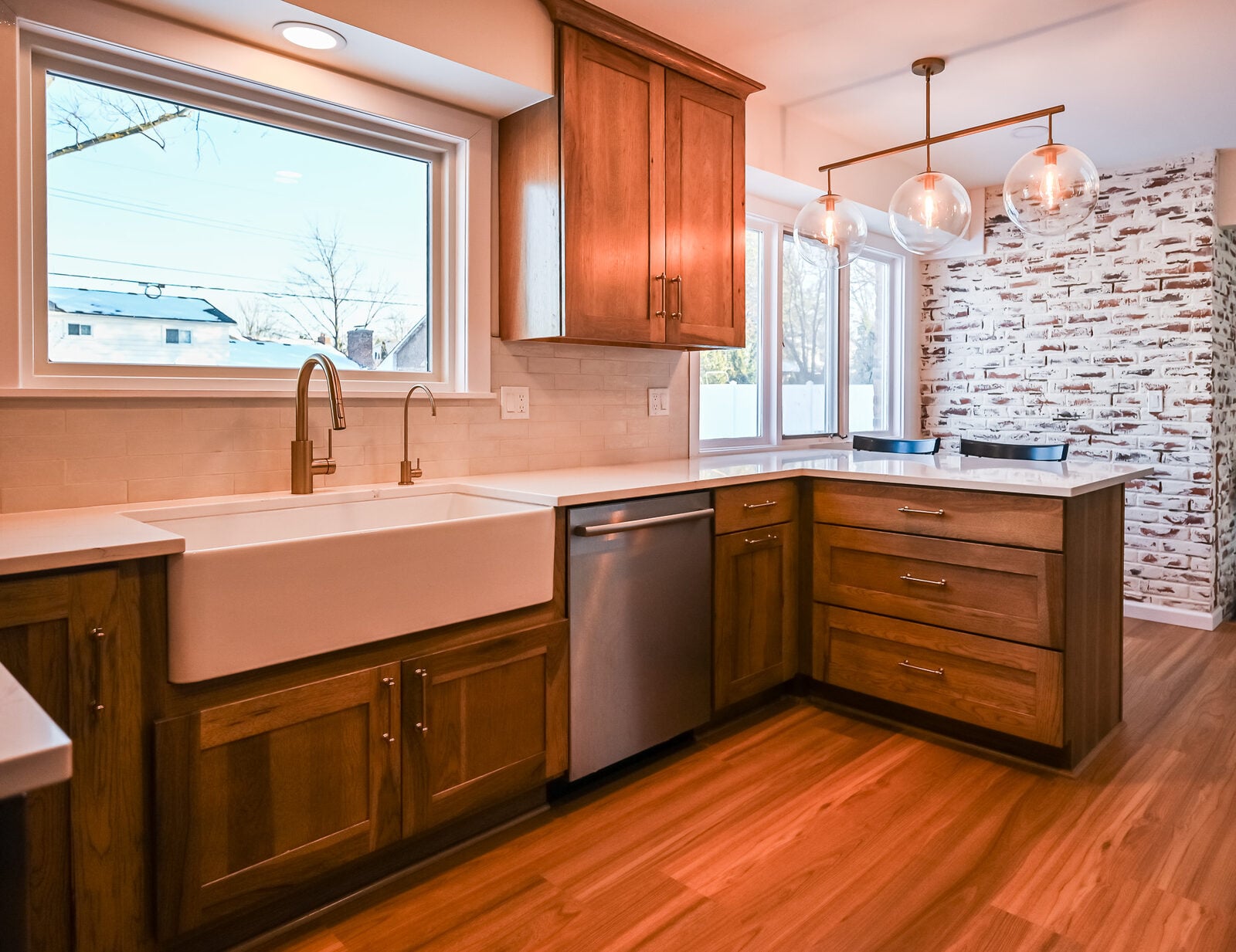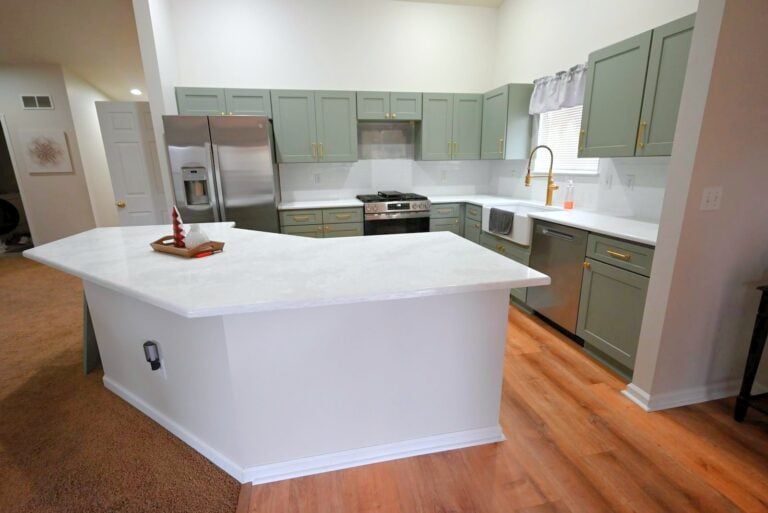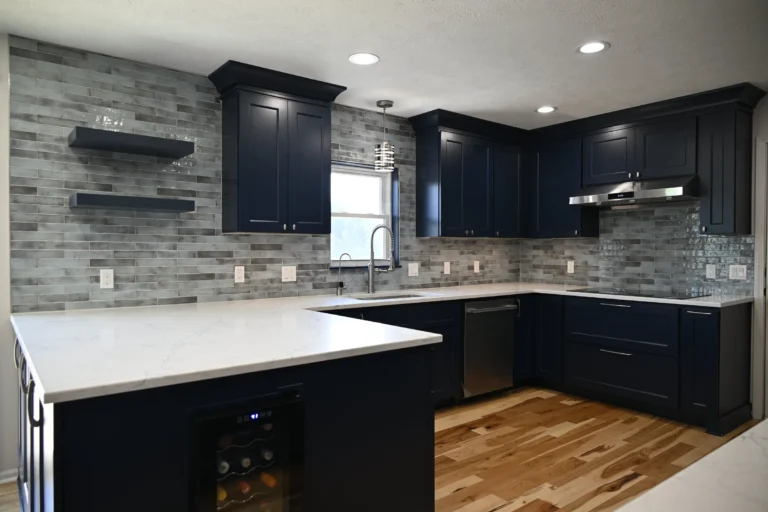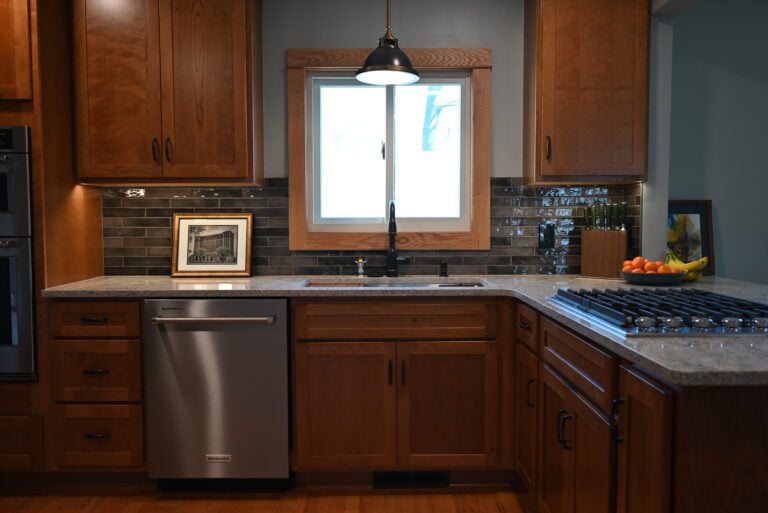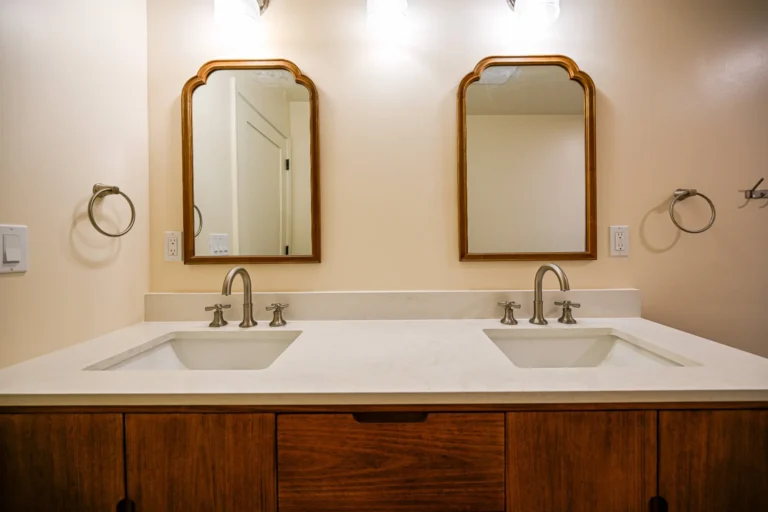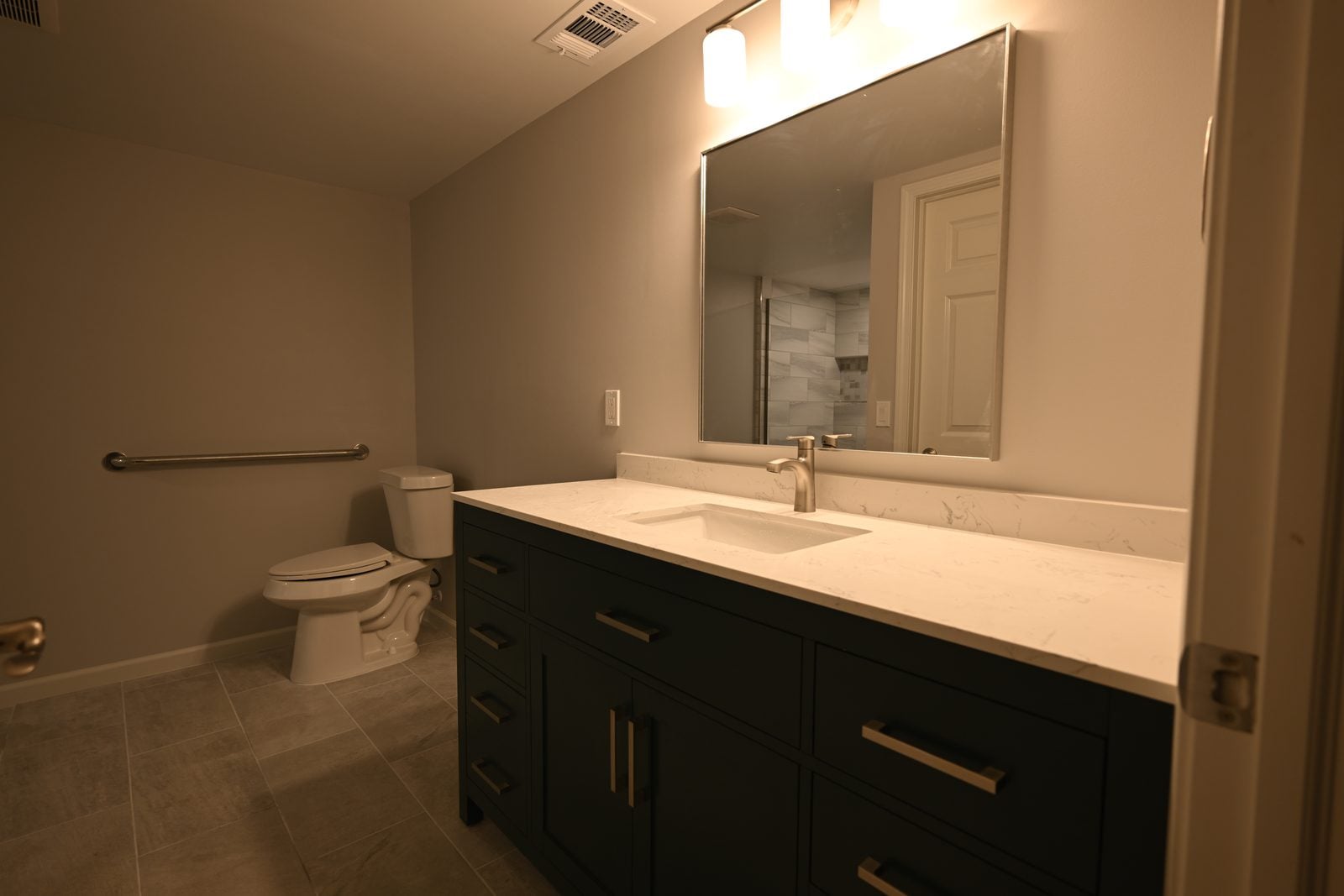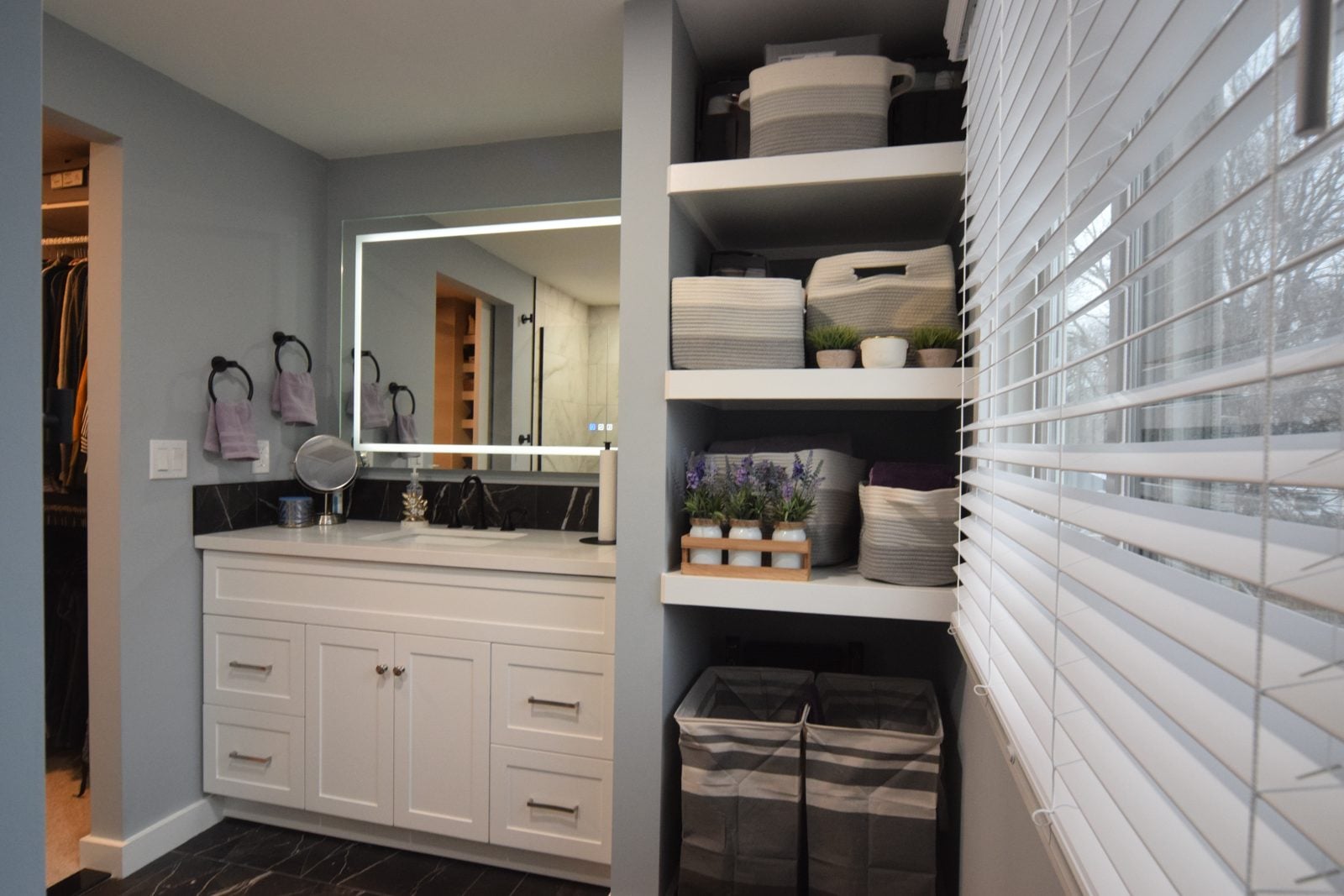
Kitchen countertop and backsplash surfaces are the most visible, most touched, and most scrutinized elements in any kitchen remodeling project. They set the color palette, define the material character, and take daily abuse from hot pans, sharp knives, citrus acid, and red wine spills. Wright’s Renovations designs and installs countertop and backsplash combinations across Southeast Michigan that hold up to real life in a working kitchen, not just the first three months after installation.
The difference between a surface that ages well and one that chips, stains, or dates within a few years comes down to material selection, fabrication precision, and proper sealing. A quartz slab cut a quarter-inch short leaves a visible gap at the wall. A backsplash installed before the countertop sits creates a lipline that traps water and breeds mold. The sequencing and tolerances matter as much as the stone itself.
Why countertops and backsplashes anchor the entire kitchen design
Countertops and backsplashes occupy the largest uninterrupted visual plane in most kitchens. When someone walks into the room, these surfaces register before cabinetry finish details or hardware selections. They carry the color temperature of the space, establish whether the kitchen reads warm or cool, and determine how light reflects across the room throughout the day.
From a functional perspective, countertops bear the mechanical load of food preparation, small appliance staging, and casual dining. Backsplashes protect the drywall behind cooktops and sinks from grease, steam, and water. Neither surface is decorative alone. Both perform structural and protective roles that directly affect the longevity of the surrounding materials, including the plumbing fixtures seated into the countertop and the electrical outlets cut through the backsplash.
Wright’s Renovations treats these two surfaces as a single design decision, not two separate selections made in isolation. The team templates, fabricates, and installs countertops and backsplashes as a coordinated pair because seam lines, edge profiles, and grout color all interact. A mismatch between a polished countertop edge and a matte backsplash tile creates a visual tension that cheapens the entire kitchen, regardless of what either material cost on its own.
Countertop materials Wright’s Renovations installs across Southeast Michigan
Material selection is the highest-impact decision in any countertop project. Each stone, composite, or natural material carries different maintenance requirements, heat resistance, stain resistance, and cost profiles. Wright’s Renovations guides homeowners through these tradeoffs using actual material samples and finished project references, not just catalog photos.
Quartz countertops
Engineered quartz accounts for the majority of countertop installations Wright’s Renovations completes across Ann Arbor, Canton, and Plymouth. The material combines crushed natural quartz with polymer resins and pigments, producing a nonporous slab that resists staining without periodic sealing. Major manufacturers including Cambria, Caesarstone, and Silestone offer hundreds of colorways ranging from solid whites to veined patterns that closely replicate natural marble without the maintenance vulnerability.
Quartz handles daily kitchen abuse well. It resists scratches from normal use, does not absorb liquids, and cleans with soap and water. The surface cannot withstand direct heat above 300 degrees, so trivets remain necessary near cooktops. For homeowners who want the visual character of marble without the etching risk from lemon juice and tomato sauce, quartz with a soft-vein pattern is the most common recommendation from the Wright’s design team.
Granite countertops
Granite remains a strong choice for Birmingham and Northville homeowners who want the depth and movement of natural stone. Each slab is unique, with mineral deposits, veining patterns, and color variations that cannot be replicated in engineered materials. Granite is harder than quartz, handles direct heat without damage, and holds up to heavy use when properly sealed on an annual basis.
The tradeoff is maintenance. Granite is porous. Without regular sealing, it absorbs liquids and can develop dark spots around sink areas where standing water sits repeatedly. Wright’s Renovations applies commercial-grade penetrating sealers at installation and provides homeowners with specific resealing instructions for their particular stone grade. The team also helps clients navigate slab selection at local stone yards, where choosing the right cut from a specific block determines the final appearance.
Marble countertops
Marble is a premium surface that Wright’s Renovations installs selectively, typically in kitchens where the homeowner understands the material and accepts its maintenance demands. Marble etches on contact with acidic substances, scratches more easily than granite or quartz, and requires frequent sealing. It also develops a patina over time that some homeowners consider a feature and others consider damage.
Where marble appears most often in Wright’s projects is as a baking station insert or a kitchen island surface paired with quartz perimeter countertops. This approach gives the homeowner the visual impact of Calacatta or Carrara marble where they want it most, while protecting the high-traffic prep and cooking zones with a more forgiving material.
Butcher block and specialty surfaces
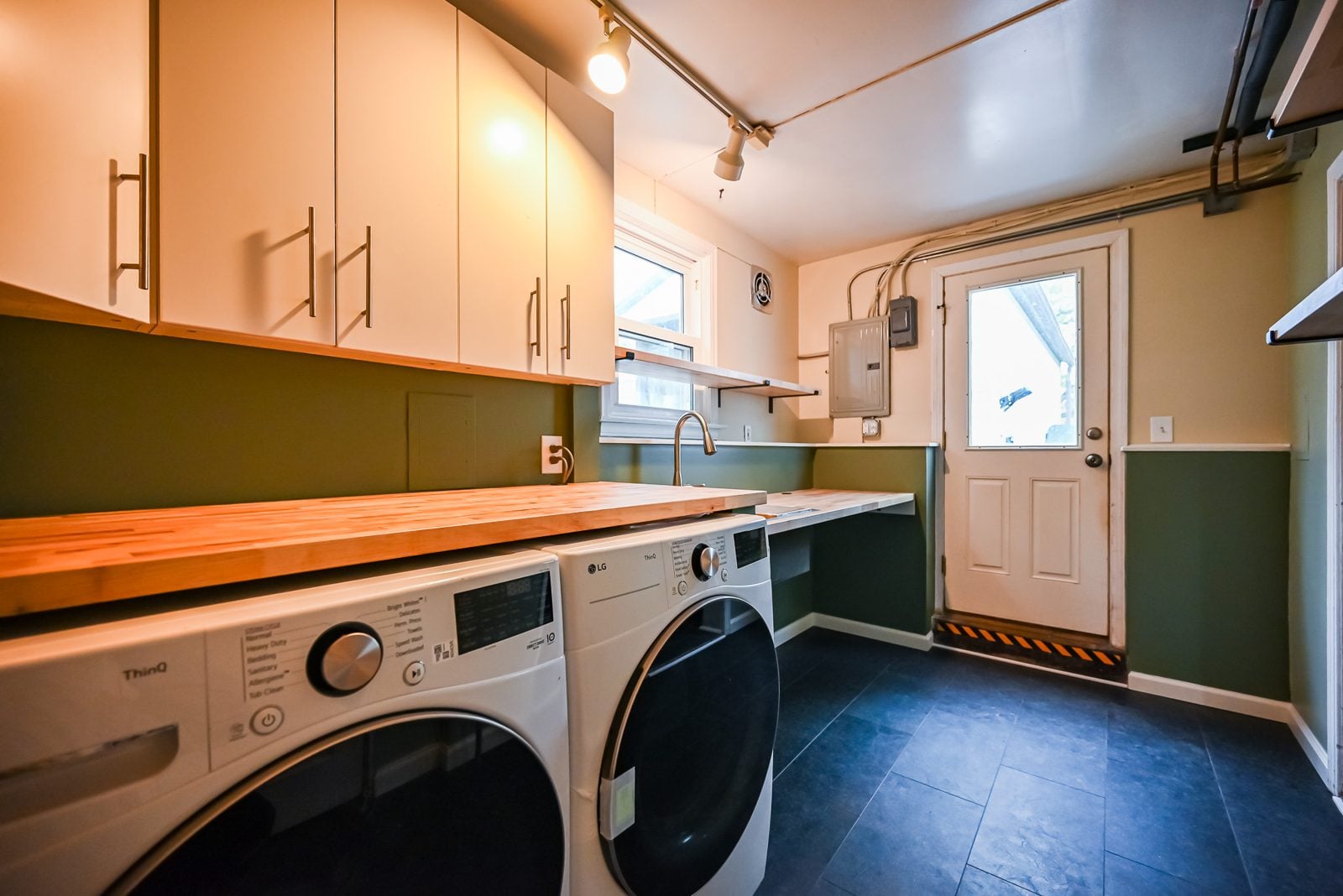
Solid wood countertops, particularly walnut and hard maple butcher block, appear in Wright’s projects as accent surfaces, island tops, or breakfast bar sections. Wood brings warmth and tactile variety to a kitchen dominated by stone and tile. It requires oiling every few months and can be sanded and refinished when scratched, which gives it a lifespan that rivals harder materials when properly maintained.
Specialty materials like soapstone, concrete, and recycled glass composites also appear in specific projects. Soapstone darkens naturally over time, developing a rich charcoal color that pairs well with traditional New England and farmhouse kitchen styles. Concrete allows custom coloring, integral drain boards, and unusual shapes, but requires professional sealing and can develop hairline cracks. Wright’s Renovations discusses these options during the kitchen design consultation so homeowners understand both the appeal and the realistic maintenance before committing.
Backsplash materials and design approaches for Michigan kitchens
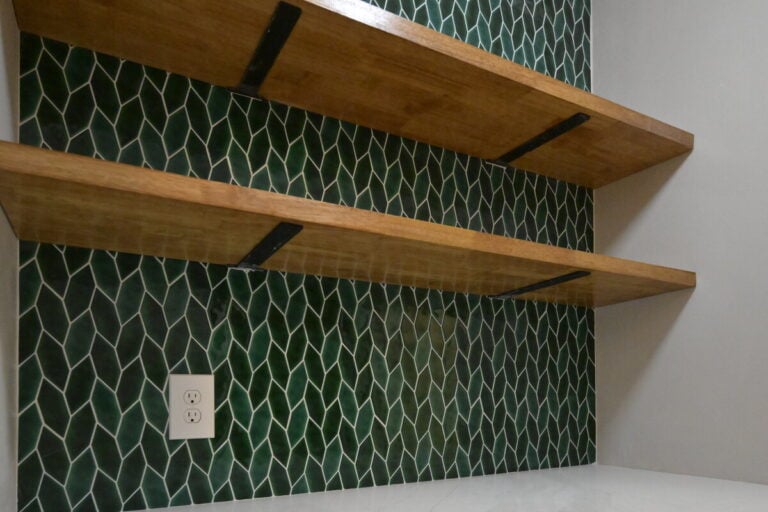
The backsplash occupies the vertical space between countertop and upper cabinets, typically 15 to 18 inches in standard kitchen configurations. In kitchens with open shelving or no upper cabinets, backsplash tile can extend to the ceiling, creating a feature wall that transforms the entire room. Wright’s Renovations designs backsplash layouts that work with the countertop edge profile, cabinet color, and kitchen lighting placement as one integrated composition.
Ceramic and porcelain tile
Ceramic and porcelain tile offer the widest range of pattern, color, size, and price options for kitchen backsplashes. Subway tile in a 3-by-6-inch format remains the most requested backsplash in Wright’s kitchen projects, chosen for its clean lines and compatibility with both contemporary and traditional Canton and Plymouth kitchen styles.
Porcelain tile fires at higher temperatures than ceramic, producing a denser, more water-resistant product suited to the area directly behind sinks and cooktops where steam and splashing occur constantly. Large-format porcelain in 12-by-24-inch or 24-by-48-inch panels minimizes grout lines and creates a sleeker, more contemporary look. Wright’s Renovations installs large-format tile using a thin-set mortar system with leveling clips to ensure a flat, lippage-free surface across the entire backsplash run.
Glass tile and mosaics
Glass tile backsplashes reflect light differently than ceramic or stone, adding a luminous quality that changes throughout the day as natural light shifts. Mosaic sheets in 1-inch or 2-inch squares create intricate patterns with minimal grout lines, while linear glass tiles in stacked or offset layouts offer a modern geometric effect.
Installation requires specialized adhesive because glass is nonporous and does not bond to standard thin-set the way ceramic does. Wright’s Renovations uses white or light-colored adhesive behind glass tiles because dark adhesive shows through translucent material, altering the intended color. Grout selection also matters more with glass than with opaque tile, since the grout color becomes part of the visible design rather than just a filler.
Natural stone slab backsplashes
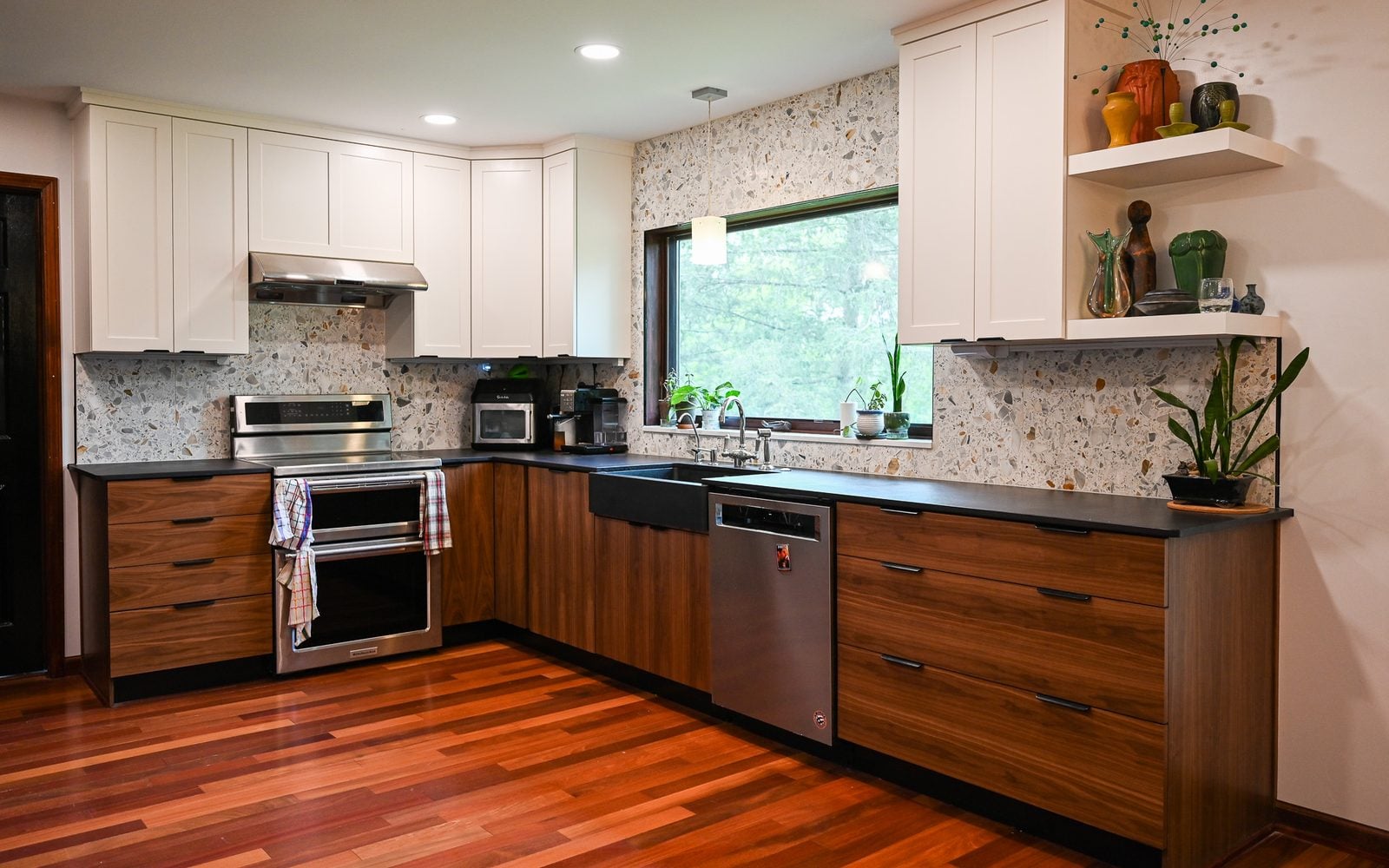
Full-slab backsplashes, cut from the same stone block as the countertop, create a continuous visual flow from the horizontal work surface up the wall. This approach eliminates grout lines entirely in the backsplash area and produces a dramatic, high-end look popular in Oakland County luxury kitchen renovations. Wright’s Renovations coordinates slab backsplash cuts during the countertop templating process to ensure veining patterns align across the L-shaped junction where the countertop meets the wall.
The cost of slab backsplashes runs higher than tile because the stone waste is greater and the installation requires precise cutting to work around outlets, switches, and window openings. However, for homeowners investing in premium stone or tile surfaces throughout their kitchen, a matched slab backsplash delivers visual continuity that tile cannot replicate.
Pairing countertops with backsplashes for a cohesive kitchen
The relationship between countertop and backsplash determines whether a kitchen reads as intentionally designed or accidentally assembled. Wright’s Renovations approaches the pairing as a single material decision by bringing physical samples of both surfaces together under the actual lighting conditions of the kitchen before any materials are ordered.
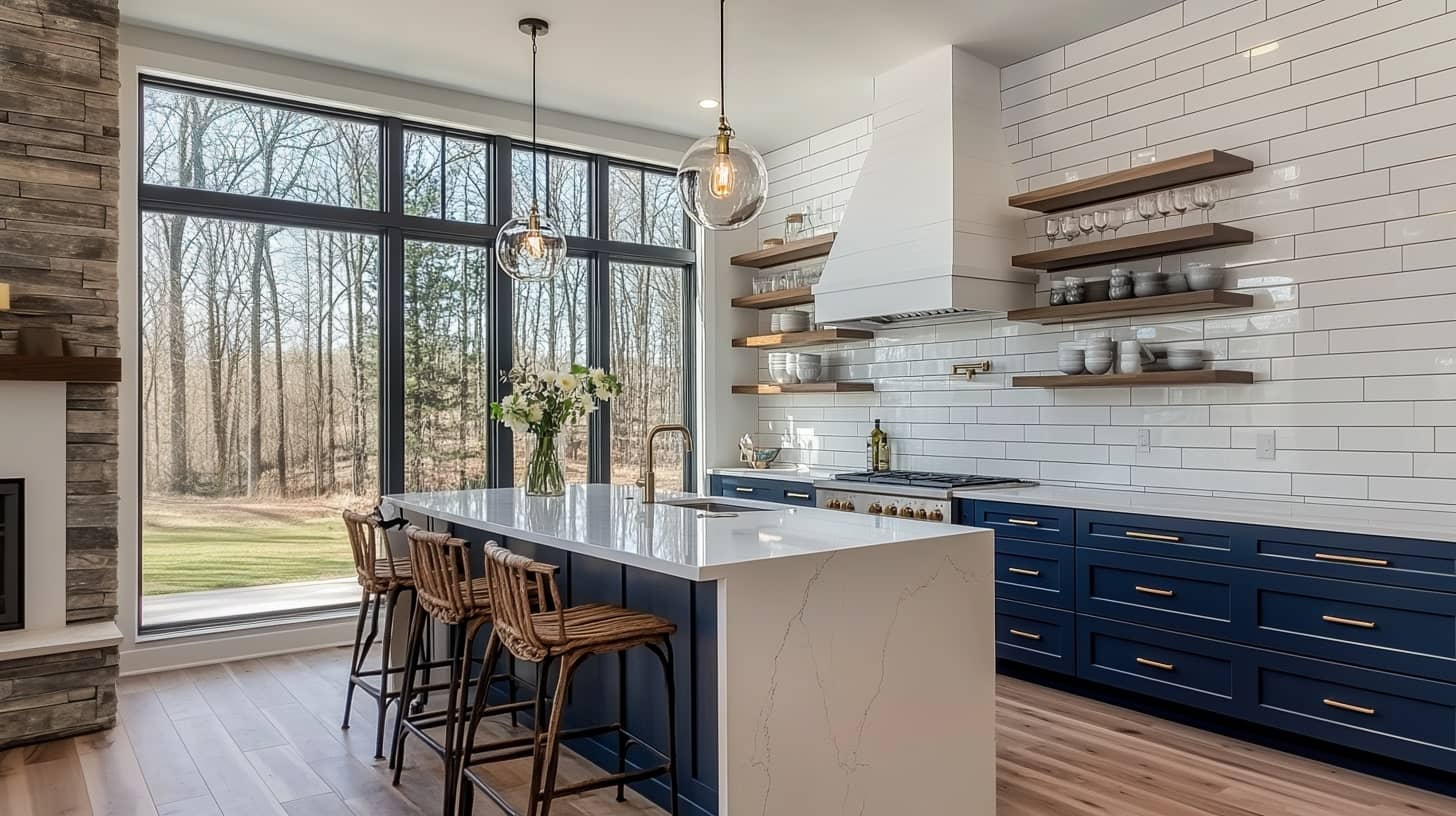
Contrast pairing places a bold backsplash against a neutral countertop, or vice versa. A white quartz countertop under a dark blue ceramic subway tile backsplash creates strong visual separation that defines the horizontal and vertical planes of the kitchen. This approach works well in smaller kitchens where the contrast adds perceived depth to the space.
Tone-on-tone pairing uses materials from the same color family at different textures or sheens. A honed marble countertop with a polished marble mosaic backsplash, both in warm grey tones, creates a layered, sophisticated look without competing patterns. This approach suits larger kitchens in Northville and Birmingham where the scale of the room supports subtlety over high contrast.
Wright’s Renovations also considers the relationship between surface materials and the surrounding elements: kitchen flooring, cabinet finish, appliance color, and natural light direction. A south-facing kitchen with warm afternoon light reads differently from a north-facing kitchen with cool, even light, and material colors shift accordingly. The team accounts for these environmental factors during material selection rather than discovering them after installation.
What countertop and backsplash projects cost in Southeast Michigan
Costs for countertop and backsplash work vary by material grade, linear footage, edge profile complexity, and the amount of demolition required to remove existing surfaces. The ranges below reflect actual project costs from Wright’s Renovations projects across Washtenaw County, Wayne County, and Oakland County.
- Quartz countertops installed: $55 to $120 per square foot, depending on manufacturer, color, and edge profile. A typical 40-square-foot kitchen runs $2,200 to $4,800 for the countertop alone.
- Granite countertops installed: $50 to $150 per square foot. Exotic granites with rare mineral patterns push toward the higher end, while common grades like Ubatuba or New Venetian Gold sit closer to $50.
- Marble countertops installed: $75 to $200 per square foot. Calacatta Gold and Statuario command the highest prices due to limited quarry availability and veining consistency.
- Tile backsplash installed: $15 to $40 per square foot for ceramic or porcelain. Glass and natural stone tile run $25 to $75 per square foot including labor.
- Slab backsplash installed: $40 to $100 per square foot, cut and finished from the same stone as the countertop. This includes material, fabrication, and precision installation.
These prices include material, fabrication, delivery, installation, and sealing where applicable. They do not include demolition of existing countertops or any plumbing disconnection and reconnection required around sinks and dishwashers. Wright’s Renovations provides itemized pricing during the consultation process so homeowners see exactly where each dollar goes, with no hidden charges.
For homeowners planning a kitchen remodel in Birmingham or other Oakland County communities, countertop and backsplash selections typically represent 15% to 25% of the total kitchen renovation budget. Investing in durable, well-installed surfaces protects the rest of that budget by preventing water damage, staining, and premature replacement that cheap or poorly installed materials cause.
The installation process from template to finished surface
Countertop and backsplash installation follows a strict sequence that Wright’s Renovations has refined across hundreds of kitchen projects. Skipping steps or reversing the order creates fit problems that are expensive to fix after the fact. The process runs approximately two to three weeks from templating to final sealing, depending on material lead times and fabrication complexity.
Templating happens after cabinets are fully installed and leveled. A technician creates a precise digital or physical template of every countertop section, including sink cutouts, cooktop openings, outlet locations, and edge profile specifications. This template goes to the fabrication shop, where CNC machines or skilled stoneworkers cut the slabs to within one-sixteenth of an inch of the final dimensions.
Installation day begins with dry-fitting each countertop section to verify alignment and seam placement. The team applies adhesive, levels each section, and joins multi-piece countertops with color-matched epoxy that becomes invisible once cured. Sink and cooktop cutouts receive a polished edge treatment before plumbers and electricians return to make their final connections. The backsplash installation follows the countertop, using the finished countertop edge as the baseline reference for the first tile course.
Wright’s Renovations applies penetrating sealer to natural stone countertops and backsplashes immediately after installation, then allows 24 hours of cure time before the kitchen returns to active use. The team provides homeowners with a care guide specific to their installed materials, including recommended cleaning products, resealing intervals, and actions to avoid, such as placing hot pots directly on quartz surfaces or using acidic cleaners on marble or granite.
Michigan-specific considerations for kitchen surfaces
Southeast Michigan homes experience temperature swings of 100 degrees or more between winter lows and summer highs. This thermal cycling affects stone and tile materials differently than it affects homes in more temperate climates, particularly in kitchens with exterior walls where insulation quality varies by the age of the house.
Older homes in Ypsilanti and Ann Arbor built before the 1960s often have uninsulated or under-insulated exterior walls behind the kitchen backsplash zone. Cold wall temperatures in January can cause condensation behind tile that is not properly sealed, leading to mold growth invisible until the tile is removed. Wright’s Renovations inspects the wall assembly during demolition and addresses insulation or vapor barrier deficiencies before any new backsplash tile goes up.
Michigan water supplies also vary in mineral content by municipality. Hard water in communities served by well systems leaves calcium and lime deposits on stone surfaces over time. The team recommends specific stone sealers formulated for high-mineral-content water when the project location warrants it, rather than applying a generic sealer that may not hold up under local conditions.
Seasonal scheduling also factors into project planning. Countertop fabricators and tile suppliers in Southeast Michigan experience peak demand from May through October. Homeowners who finalize material selections during the winter months often receive faster fabrication turnaround and broader slab availability than those who begin the process in spring when every kitchen project in the region competes for the same production capacity.
How countertop and backsplash work connects to the full renovation
Surface installation rarely happens in isolation. Most Wright’s Renovations countertop and backsplash projects are part of a larger kitchen renovation that includes cabinetry, flooring, lighting, and plumbing work. The sequencing of trades matters because countertop templating cannot happen until cabinets are installed, backsplash tile cannot start until countertops are set, and final plumbing connections depend on both being complete.
For homeowners who are replacing countertops and backsplashes as a standalone update without a full kitchen gut, Wright’s Renovations coordinates the smaller scope with the same attention to sequencing. Existing countertop removal requires disconnecting sinks and cooktops, which means a licensed plumber and electrician participate even in surface-only projects. The team manages this coordination so the homeowner is not scheduling subcontractors independently.
Countertop and backsplash choices also influence adjacent renovation decisions. A thick, eased-edge granite countertop with a full backsplash tile run requires different cabinet depth and upper cabinet clearance than a thin quartz slab with a four-inch stone splash. Wright’s Renovations reviews these dimensional relationships early in the design process to prevent conflicts that show up at installation when it is too late to adjust.
Related kitchen services
Serving homeowners across Southeast Michigan
Wright’s Renovations installs kitchen countertops and backsplashes throughout six Southeast Michigan counties. The team serves homeowners in communities where kitchen surface materials need to perform in real Michigan conditions, from the high-humidity summers that test grout and sealant to the dry winters that stress adhesive bonds.
- kitchen projects in Ann Arbor and renovation services in Ypsilanti across Washtenaw County
- luxury renovations in Birmingham and Novi home remodeling across Oakland County
- Canton kitchen and bath services and Plymouth renovation projects across Wayne County
- Livonia home improvements and Northville remodeling services across county lines
Schedule a kitchen surface consultation
The right countertop and backsplash combination starts with understanding how the kitchen is used, what maintenance commitment the homeowner is comfortable with, and how the surfaces relate to the rest of the room. Wright’s Renovations provides a detailed consultation that includes material samples, cost estimates, and a project timeline specific to the scope of work.
Call (734) 540-0347 or request a consultation online to discuss countertop and backsplash options for an upcoming kitchen project.
Related countertop work
For a surface that is poured rather than cut, concrete countertop installation covers forms, sealing and the maintenance it asks for.