
Design-build in Southeast Michigan
Commercial repairs and punch lists in Southeast Michigan

Commercial repairs and punch lists for Southeast Michigan businesses
A failed inspection, a landlord walk-through on Friday or an opening date that won’t move. That’s when most business owners go looking for commercial repairs and punch list help, and it’s when a renovation company with its own crews earns its keep. Wright’s Renovations handles quick-turn repair work for offices, shops, clinics and rental buildings across Southeast Michigan, from a dozen drywall patches to a full pre-opening punch list. It’s the small-job side of our commercial renovation services, run by the same design-build team based in Ypsilanti.
The work is small, but the stakes usually aren’t. A tenant can lose a security deposit over scuffed walls and broken blinds. A new shop can’t get its certificate of occupancy until the last handrail and exit sign issue is closed. An office manager just wants the door that sticks and the stained ceiling tiles fixed before a client visit. Each of those is a short list with a firm deadline, and that’s the kind of job this page covers.
Who calls for quick-turn commercial repairs
Most calls come from people who manage a space rather than people building one. They don’t need a designer or a six-week schedule. They need a contractor who shows up, prices the list in writing and finishes it. These are the clients who call most often:
- Business owners with an inspection date, a health department visit or an opening day coming up
- Office and facility managers keeping a building presentable between larger projects
- Landlords and property managers turning a vacant unit or closing out a tenant’s move-out
- Tenants restoring a space to lease condition before they hand back the keys
- General contractors and owners finishing a punch list someone else left open
Landlords with a whole unit to refresh should also look at suite turns for vacant commercial space, which bundle paint, flooring, lighting and restroom updates into one priced package. Owners of apartment buildings will find unit and common-area work on the multifamily renovation page.
Commercial punch list services before an inspection, opening or move-out
A punch list is the short, specific list of items that stand between a space and its next milestone. On a new build-out, it’s what the architect or inspector flags at the final walk. At lease end, it’s what the landlord writes down during the move-out inspection. Either way, the list is usually a mix of trades: a little drywall, a little paint, a door closer, a missing cover plate, a loose grab bar. Wright’s crews handle that mix in one visit wherever they can, instead of sending a different sub for each line.
Pre-inspection and pre-opening punch lists
Building inspectors and fire officials look at the details owners tend to overlook. Doors that don’t latch, missing outlet covers, damaged ceiling tiles, loose handrails and restroom accessories at the wrong height all show up on final inspection reports. Wright’s walks the space with the inspector’s notes or the architect’s list in hand, then prices each item separately so the owner can see where the money goes. For a new shop, that last list is often the only thing holding up the commercial build-out timeline and the day the doors open.
Move-out and lease-end punch lists
Most commercial leases require the tenant to return the space in its original condition, minus normal wear. That usually means patching anchor holes from shelving and signage, repainting, replacing damaged ceiling tiles and base, and fixing whatever broke over a five-year lease. A written scope and before-and-after photos give both sides a clear record. Tenants about to sign their next lease can avoid the same surprise by working through a commercial lease checklist first.
Finishing a punch list another contractor left open
Sometimes the original contractor has moved on, gone quiet or simply run out of patience with a short list. Wright’s can pick up those remaining items, though it prices them as new work and doesn’t take over another company’s warranty. The crew documents the condition of each item before starting, so it’s clear what was finished, what was repaired and what was already in place.
Small commercial repairs Wright’s handles
The repair list for a business looks a lot like the one for a house, with tougher materials and more people using every door and fixture. Most of these jobs are also offered to homeowners through Wright’s Repairs, the company’s small-job division, and the trade pages there explain each one in more detail.
Walls, ceilings and commercial painting touch-ups
Walls in a business take a beating from carts, chairs, deliveries and signage changes. Crews patch holes and dents, re-tape cracked seams and match existing texture, then prime and paint so the repair disappears. The drywall repair page covers patch sizes and texture matching. Stained or sagging ceiling tiles get swapped, and damaged drywall ceilings get cut out and rebuilt through ceiling repair. Larger repaints are handled as interior painting with paint lines kept clean around fixtures and trim.
Doors, locks and hardware
Commercial doors get opened thousands of times a week, so hinges sag, closers leak and latches stop catching. Crews adjust and rehang doors, replace closers and hinges, and swap worn hardware. Door repair covers sticking, sagging and rubbing doors. Lock and deadbolt installation handles rekeys and new hardware for tenant changes, and a lever door handle conversion replaces round knobs that many people can’t grip.
Restrooms, fixtures and tile
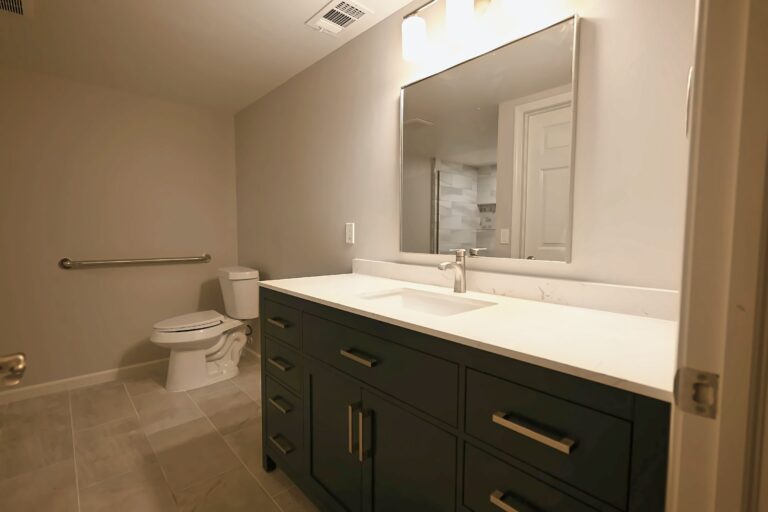
Restrooms draw complaints faster than any other room in a business. Running toilets, loose seats, cracked tile, failed grout and missing accessories are all quick fixes. Toilet repair covers flush valves, seals and loose bowls. Tile repair and regrouting brings tired floors and walls back. When the restroom needs more than a fix, the commercial bathroom remodel page explains layout changes, fixture counts and finishes built for heavy use.
Floors, base and trim
Lifted planks, cracked tile and missing base are trip hazards and eyesores in a space customers walk through every day. Crews replace damaged sections, reset transitions and install new base where it’s been kicked loose or removed. Floor repair explains what can be patched and what needs replacing, and baseboard installation covers new trim runs after a wall or flooring fix.
Lighting and electrical devices
Dead fixtures, cracked lenses and loose outlets make a space look neglected. Like-for-like swaps of light fixtures and outlets and switches are routine. New circuits, panel work and anything that needs an electrical permit are scoped separately and handled by a licensed electrician, so the job passes inspection the first time.
Quick ADA fixes for existing businesses
Accessibility problems are some of the most common items on a commercial punch list, and many of them are cheap to fix. Federal rules expect existing businesses to remove barriers when that’s readily achievable, meaning it can be done without much difficulty or expense. Typical fixes include lever hardware, grab bars on proper blocking, insulated pipe covers under restroom sinks, lowered mirrors and dispensers, raised-character signs and door closers adjusted so the door opens with less force.
Small changes at the entrance count too. A threshold ramp can solve a raised sill, and grab bar installation covers anchoring that holds a person’s full weight. Bigger issues, like a restroom that’s too small or an entrance with steps, move into ADA compliance renovations. Owners who want the background first can read this guide to ADA requirements for small businesses.
How a quick-turn commercial repair job runs
Speed comes from a clear process, not from rushing the work. Wright’s starts with a walk-through of the space, either with the owner or with the inspector’s list, the landlord’s move-out notes or a set of photos. Each item gets a line in a written scope with its own price, so the owner can approve the whole list or pick the items that matter most before a deadline. Nothing gets scheduled until the scope is signed.
Crews document each area before and after the work, which matters when a landlord, tenant or inspector needs proof that an item was fixed. If a repair turns up something hidden, like rotted framing behind a damaged wall, the office calls with photos and a price before the crew goes further. That’s the same way Wright’s runs its design-build process on larger jobs, scaled down to a short list.
Working around your business hours
Most businesses can’t close for a repair list, and they shouldn’t have to. Wright’s plans the order of work so noisy and dusty items land during slow hours, keeps work areas taped off and cleans up each day. Scheduling around open hours, deliveries and patient or customer traffic is settled at the walk-through. The guide to renovating a business without closing explains how phasing works on larger projects.
What commercial repairs don’t cover
Wright’s stays inside the trades its own crews do well. HVAC, roofing, gutters and insulation sit outside the company’s scope, and so does insurance restoration for water, fire or mold damage. Fire alarm, sprinkler and specialty systems belong to licensed specialists. The list of what Wright’s doesn’t do spells out the boundaries, so owners can call the right trade first instead of waiting on a callback that ends in a referral.
When a commercial repair list turns into a renovation
A long punch list is often a sign that a space needs more than repairs. If the list includes moving walls, new restrooms, new flooring throughout or a change in how the space is used, it’s time to plan it as a project. That’s where tenant improvement build-outs come in, along with focused pages for office renovations, retail store renovations and restaurant build-outs.
The Troy office Wright’s built for Stewart Title shows what the next step looks like, from planning through the final walk. Read the Troy commercial office renovation case study for the details. Landlords with an empty unit can also read about getting vacant commercial space ready to lease before deciding between a repair list and a fuller refresh.
Commercial repairs in Ann Arbor, Ypsilanti and nearby towns
Wright’s is based on Platt Road in Ypsilanti and serves businesses across Washtenaw, Wayne, Oakland, Macomb, Livingston and Monroe counties. Quick-turn work is easiest to schedule close to the shop, which makes Ann Arbor and Ypsilanti the busiest areas. Wright’s has also finished commercial projects in Saline, Troy and Dearborn Heights. Salons, cafes, clinics and small offices each have their own page, including salon build-outs, coffee shop build-outs and medical office renovations.
Smaller businesses that want one contractor for everything from a sticking door to a new storefront can start with the small business renovation page. It explains how Wright’s helps owners plan repairs now and bigger improvements later without paying twice for the same work.
What affects the price of commercial repair work
Every list is priced line by line, so the total depends on what’s on it. Access is the biggest variable. A ground-floor office with open parking is faster to work in than a second-floor suite with one elevator and a loading dock that’s booked all morning. Matching existing finishes matters too. A discontinued ceiling tile, a custom paint color or a tile line that’s no longer made can mean extra time sourcing, or a small area replaced instead of patched.
Grouping items saves money. One visit that covers a dozen fixes costs less per item than four trips for three fixes each, which is why many owners keep a running list and call when it’s long enough to justify a day. Work that needs a permit, a licensed specialist or after-hours scheduling is noted on the scope with its own price, so there are no surprises when the invoice arrives. Clinics, dental offices and veterinary clinics often add infection control steps, which are priced the same way.
Commercial repair questions owners ask
Is there a minimum size for a commercial repair job?
Short lists are welcome, but a single small item may not cover the cost of sending a crew. Most owners bundle five or six items into one visit, and that’s usually the most affordable way to work. If an inspection or a move-out is driving the date, send everything on the list at once so it can be priced and scheduled together.
Do commercial repairs need a permit?
Most patch, paint, hardware and like-for-like fixture work doesn’t. Moving walls, adding circuits, changing plumbing or altering an exit route usually does, and so can work in a space that’s changing how it’s used. When a permit is needed, it’s noted on the scope and built into the schedule. Child care operators and fitness studio owners in particular face extra reviews, and the child care center renovation page explains how state licensing visits fit in.
Can repair work happen outside business hours?
Crews usually work weekdays. When work has to happen before opening or after closing to keep a business running, say so at the walk-through. It’ll be priced and scheduled that way on the written scope, so the owner can decide whether the convenience is worth the cost before anything is booked.
Get your commercial repair list priced
Send the list, the inspection report or a few photos, and tell us the date that matters. Wright’s will walk the space, price each item in writing and give you a start date before you commit. For a look at finished work, view our Portfolio. When you’re ready to move, contact us now for a free quote on your commercial repairs or punch list.
Free consultation
Start with a conversation
Tell us what you’re planning. We’ll follow up within one business day with next steps and an honest read on budget and timing.
Prefer the phone? Call (734) 540-0347, Monday to Friday, 8 a.m. to 4 p.m.