Deck staining and maintenance in Southeast Michigan
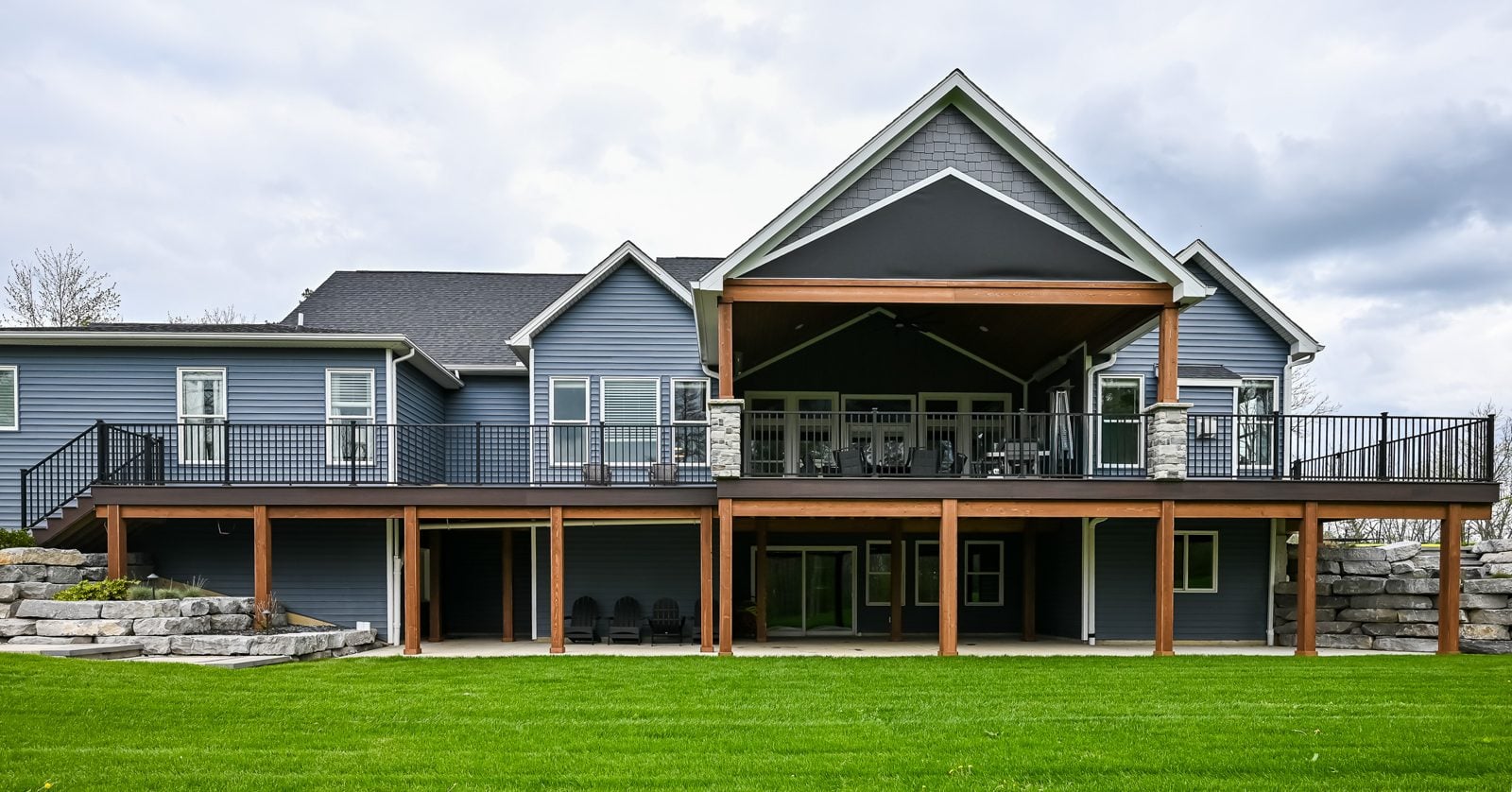
Michigan weather is hard on a wood deck. Sun dries the boards out in July, snow sits on them from December to March, and every freeze and thaw works water a little deeper into the grain. Deck staining is how you keep that cycle from turning into rot. Wright’s Renovations cleans, repairs, sands and restains wood decks across Southeast Michigan, and we tell you plainly when a deck has gone past the point where stain is worth the money.
This page explains how often a deck here needs attention, what a proper refinish involves, how to choose a stain, and how to care for composite boards that never need one. If you are planning a new deck instead, start with our Southeast Michigan deck builder page, which covers materials, structure and cost.
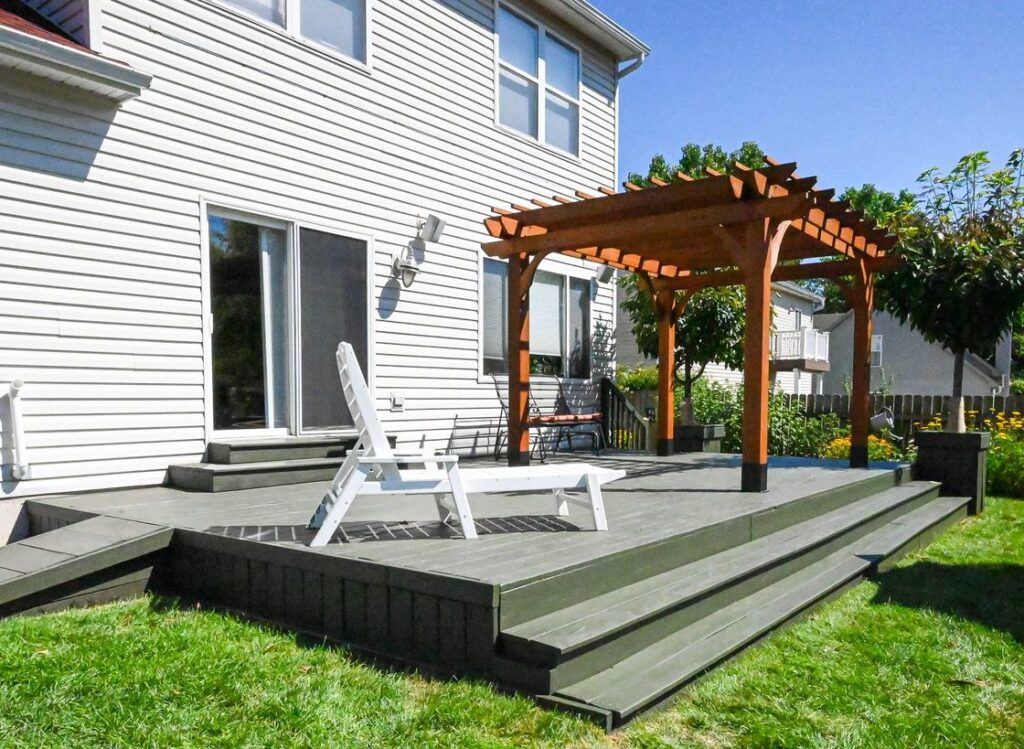
How often a wood deck needs staining in Michigan
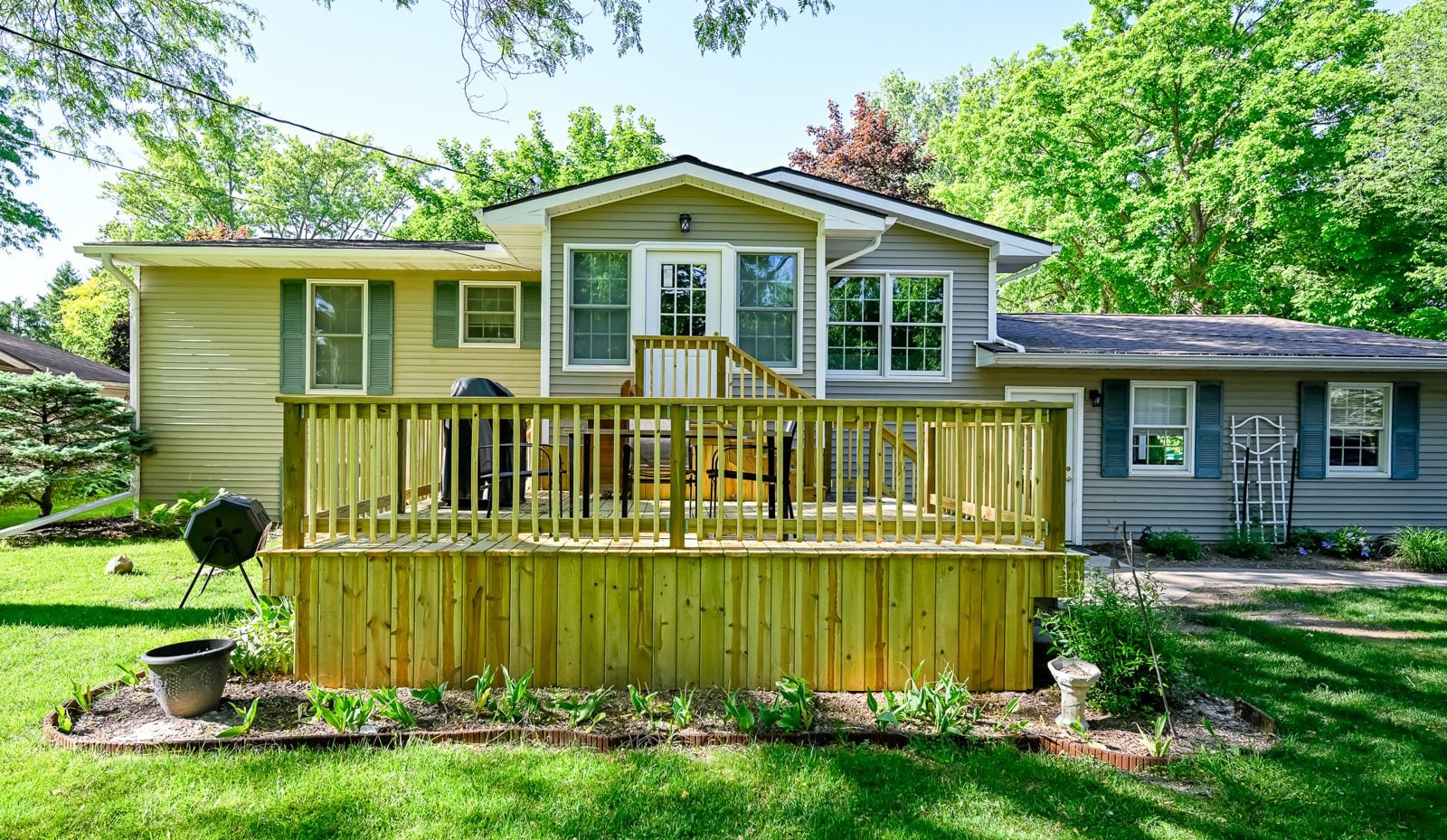
Most wood decks in Southeast Michigan need a fresh coat of stain every two to three years. Horizontal surfaces wear fastest, because they take direct sun, standing snow and foot traffic. Railings and posts often last a year or two longer between coats. A deck on the south or west side of the house, with no shade, usually sits at the short end of that range.
The product matters too. Transparent and semi-transparent stains soak into the wood and fade gradually, which makes the next coat easier. Solid stains look like paint and last longer on vertical surfaces, but on a deck floor they tend to peel in patches, and peeling finish has to be stripped before you can recoat. We usually steer homeowners toward a penetrating semi-transparent stain on the walking surface for that reason.
Signs your deck is due for stain
You do not need a calendar to know when the deck needs work. The boards will tell you, and a few minutes on a dry afternoon is enough to check. Walk the sunniest part of the deck first, since it always fails before the shaded corners do. Look for these signs:
- Water soaks in: sprinkle water on the boards; if it darkens the wood instead of beading, the finish is gone.
- Gray surface: sun has broken down the top layer of wood fibers, which stain will not stick to well.
- Splinters and raised grain: the surface has dried and checked, and bare feet will find it.
- Green or black patches: mildew and algae are holding moisture against the boards.
- Soft spots: a screwdriver sinks into the wood, which points to rot that stain cannot fix.
The first four signs mean it is time to refinish, and the sooner the better, since each wet season without protection opens the grain further. The last one means the deck needs a closer look before anyone picks up a brush. Soft boards or framing call for replacing damaged deck boards or, when the rot runs deeper, a broader deck repair assessment first.
How we refinish a wood deck
A good stain job is mostly preparation. The brushwork at the end takes a day. The work before it decides whether the finish lasts three years or peels by next summer, so we do not skip steps to hit a price.
Inspection and repairs first
We start by walking the whole deck with a moisture meter and a screwdriver. We check boards, joists, the ledger connection at the house, stair stringers and railing posts. Loose railings get re-anchored, popped nails get replaced with screws, and any board that is cracked through or soft gets swapped out. There is no point in sealing a board that will need to come out next year.
Cleaning and stripping
Next the deck gets a deep clean with a deck cleaner and a low-pressure rinse. High pressure tears up soft wood fibers and leaves a fuzzy surface, so we keep the wand moving and the pressure modest. If an old solid stain or film-forming sealer is peeling, a stripper comes first to take it down to bare wood. Stain applied over flaking finish fails with it.
Sanding and brightening
Once the wood is clean and dry, we sand the walking surface and the handrails to knock down raised grain and splinters. A wood brightener, usually an oxalic acid product, restores the natural color after stripping and opens the pores so stain can soak in evenly. The deck then dries, often for two days, before any stain touches it.
Applying the stain
We apply stain in thin, even coats, working a few boards at a time along their full length to avoid lap marks. Brushes and pads push stain into the grain better than a sprayer alone, so even when we spray, we back-brush. End grain and board edges get extra attention, because that is where water gets in first. Most stains need a day to dry before light foot traffic and a few days before furniture goes back.
Choosing a deck stain
Stain choice comes down to how much wood grain you want to see and how often you want to recoat. Transparent finishes show the most grain and need the most frequent care. Semi-transparent stains add color while letting the grain through, and they are the best balance for most Michigan decks. Solid stains hide the grain and blotches, which can make sense for an older deck with mismatched replacement boards.
Oil-based stains soak deep and are forgiving to apply. Water-based stains dry faster, clean up with water and hold their color longer in sun. Either works when the prep is right. We match the product to the wood species, the deck’s exposure and the finish already on it, since some stains do not play well over others. Our Michigan deck maintenance guide goes deeper on products and schedules.
Staining new pressure-treated wood
New pressure-treated lumber arrives wet from the treatment process, and stain will not soak into wood that is already full of water. Most new treated decks need to dry for several weeks to a few months before the first coat. The same water test works here: when drops soak in within a few minutes, the wood is ready. Kiln-dried treated lumber can take stain sooner.
Waiting too long has its own cost, since a new deck left bare through a full Michigan winter will already be graying and checking by spring. We usually recommend the first coat in the season after the build. When we install deck skirting or new boards on an older deck, we stain the new wood on the same schedule so the colors settle together.
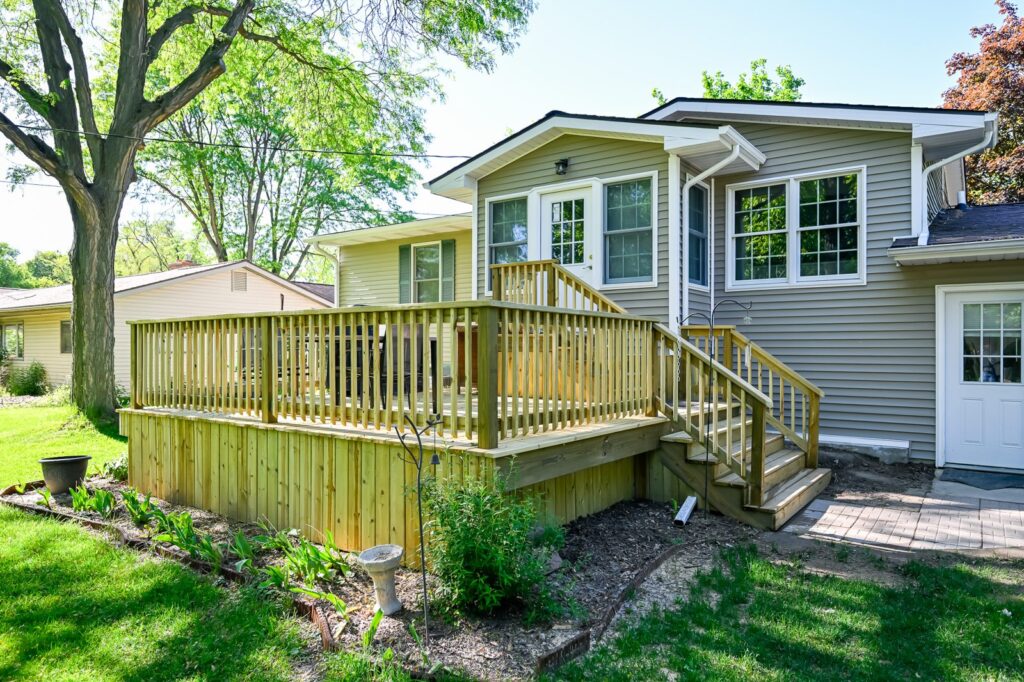
Cedar posts, beams and railings
Vertical wood holds up better than a deck floor, but it still needs attention. Post wraps, beams and railings take sun and wind-driven rain, and the bottom of every post sits where water collects. A stain with a clear topcoat, plus flashing where the wood meets the deck surface, keeps those parts looking right for years. When trim or wraps need rebuilding, our finish carpentry crew handles it before the stain goes on.
On one Ann Arbor home, weather had worked into the wood wrapping the deck and porch structure. The crew stripped the posts back and rebuilt the look in rough-sawn cedar, then stained, sealed and flashed it. That cedar post and beam wrap shows how much the structure under a deck affects how the whole back of a house reads. Railings that have loosened can be handled through our railing repair service before staining.
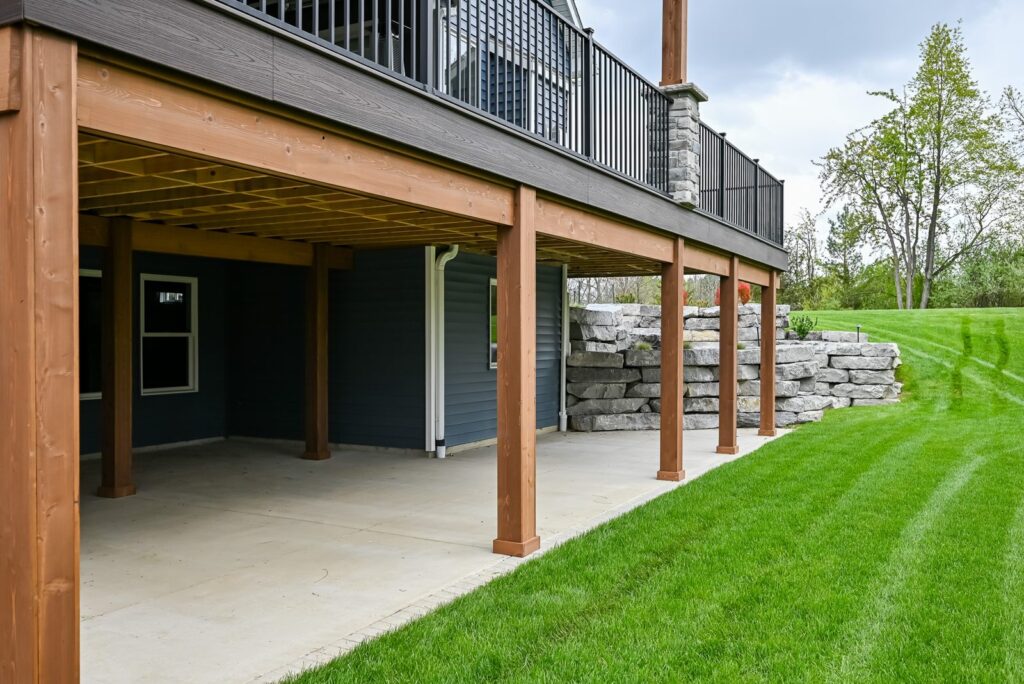
Caring for a composite deck
Composite decking does not need stain, and it should not get any. Maintenance is simpler: sweep off leaves and seed pods so they do not leave tannin stains, and wash the boards each spring and fall with a soft brush and a cleaner made for composite. Rinse well. A pressure washer is usually fine on a low setting with a fan tip held a foot or more from the surface, but check your board maker’s instructions first.
Winter care is where composite owners get into trouble. Use a plastic shovel, not a metal one, and push with the boards instead of across them. Many manufacturers allow calcium chloride ice melt but not sand, which scratches the cap. Still deciding between materials? Our composite versus wood decking guide compares upkeep over 20 years.
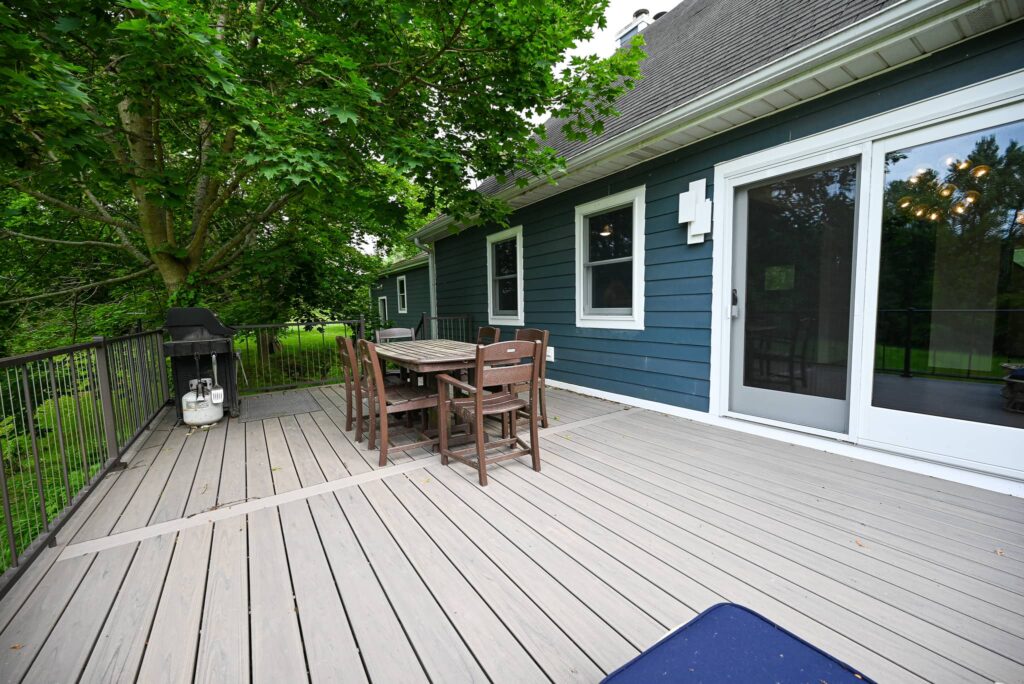
The best time to stain a deck in Michigan
Stain needs dry wood, dry weather and moderate temperatures. Most products call for air and surface temperatures between about 50 and 90 degrees, with no rain for a day or two after. In Southeast Michigan that points to late May through June and again from late August into early October. Midsummer works on cooler, overcast days, but full afternoon sun can dry stain before it soaks in.
Fall is our favorite season for it. The humidity drops, the sun is lower, and a fresh coat going into winter protects the boards during the months that do the most damage. Book early, though. Refinishing slots and rooftop deck projects both compete for the same dry fall weeks before temperatures fall too far.
What skipping deck maintenance costs
A refinish costs a small fraction of a new deck. Skipping it for a few cycles is how a sound deck becomes a replacement. Once water gets into the wood, boards cup, fasteners loosen and rot starts at the joist tops where water sits. By then you are paying for new boards, often new framing, and sometimes new footings.
Stairs tend to fail first because treads take the most traffic and water drains toward them. Soft or split treads are a safety issue, and our deck stair repair crew handles them as a small job. Keeping the finish up is the least expensive way to push all of this further down the road.
What drives the price of deck staining
We quote deck staining after we see the deck, because condition changes the labor more than size does. A deck with a faded penetrating stain and sound boards needs a clean, a light sanding and a coat. One with peeling solid stain needs stripping first, which can double the prep time. Railings, balusters and stairs add hours too, since every vertical piece gets brushed by hand.
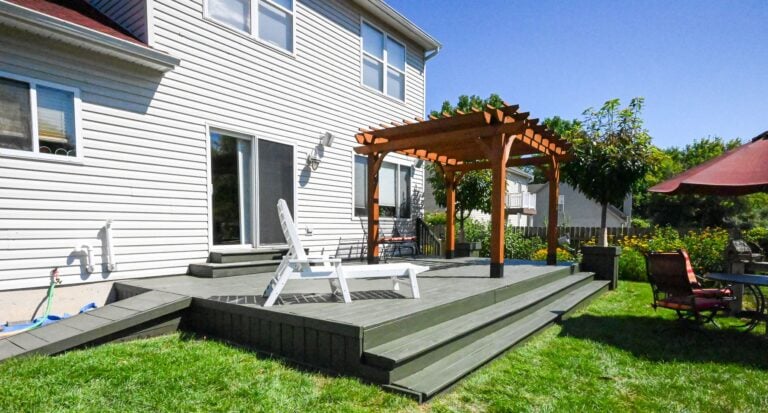
Repairs are priced separately so you can see them on their own lines. Covered structures add their own work, and a deck that sits beneath a pergola or gazebo usually gets its overhead wood finished during the same visit so the colors match.
When refinishing no longer makes sense
Some decks reach a point where another coat of stain buys very little time. If many boards are cracked, cupped or soft, or if the stain has worn off faster every cycle, the wood itself is near the end. A re-top replaces the surface boards and railing while keeping sound framing, and switching to composite at that point ends the staining cycle for good.
If the framing is also tired, a full rebuild is the better investment. You can get a working budget from our deck cost estimator before we visit, and our Michigan deck building guide explains what goes into a new deck from footings to railing.
Where we stain and maintain decks
Our crews work out of Ypsilanti and refinish decks across Washtenaw, Wayne, Oakland, Macomb, Livingston and Monroe counties. Many of our deck staining jobs are close to home, in Ann Arbor, Ypsilanti, Saline, Dexter and Chelsea. We also work in Canton, Plymouth, Brighton and Livonia, where many 1990s and 2000s decks are now on their third or fourth finish.
Deck staining questions we hear most
How long does deck staining take?
Most decks take two to four days from start to finish. Cleaning and any repairs come first, then the wood needs to dry, often for a day or two, before sanding and stain. The application itself usually takes one day. Weather is the main variable, since we will not stain wet wood or apply stain with rain in the forecast.
Can you stain over my old stain?
Sometimes. If the old finish is a penetrating stain that has faded evenly, a thorough cleaning and a fresh coat of a compatible product can work. If it is a solid stain or sealer that is peeling, it has to be stripped first. We test a small area before we recommend a product, so you are not paying for a finish that flakes off by spring.
Should I stain my deck or replace the boards with composite?
It depends on the wood and the framing. If the boards are sound and you like the look of wood, staining is the lower-cost choice. If a lot of boards are failing or you are tired of the staining cycle, a composite re-top on healthy framing costs more now and less later. We will show you both numbers side by side.
Schedule your deck refinish
If your deck is gray, splintered or soaking up water, now is a good time to get on the calendar. We will look at the whole structure along with the surface and tell you what it needs. Call (734) 540-0347, Monday through Friday from 8 a.m. to 4 p.m., or book a free on-site consultation. View our Portfolio or Contact us now for a free quote.