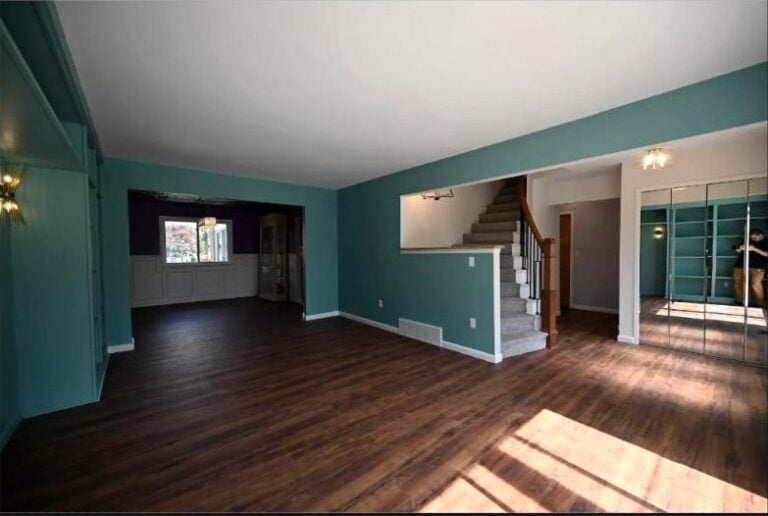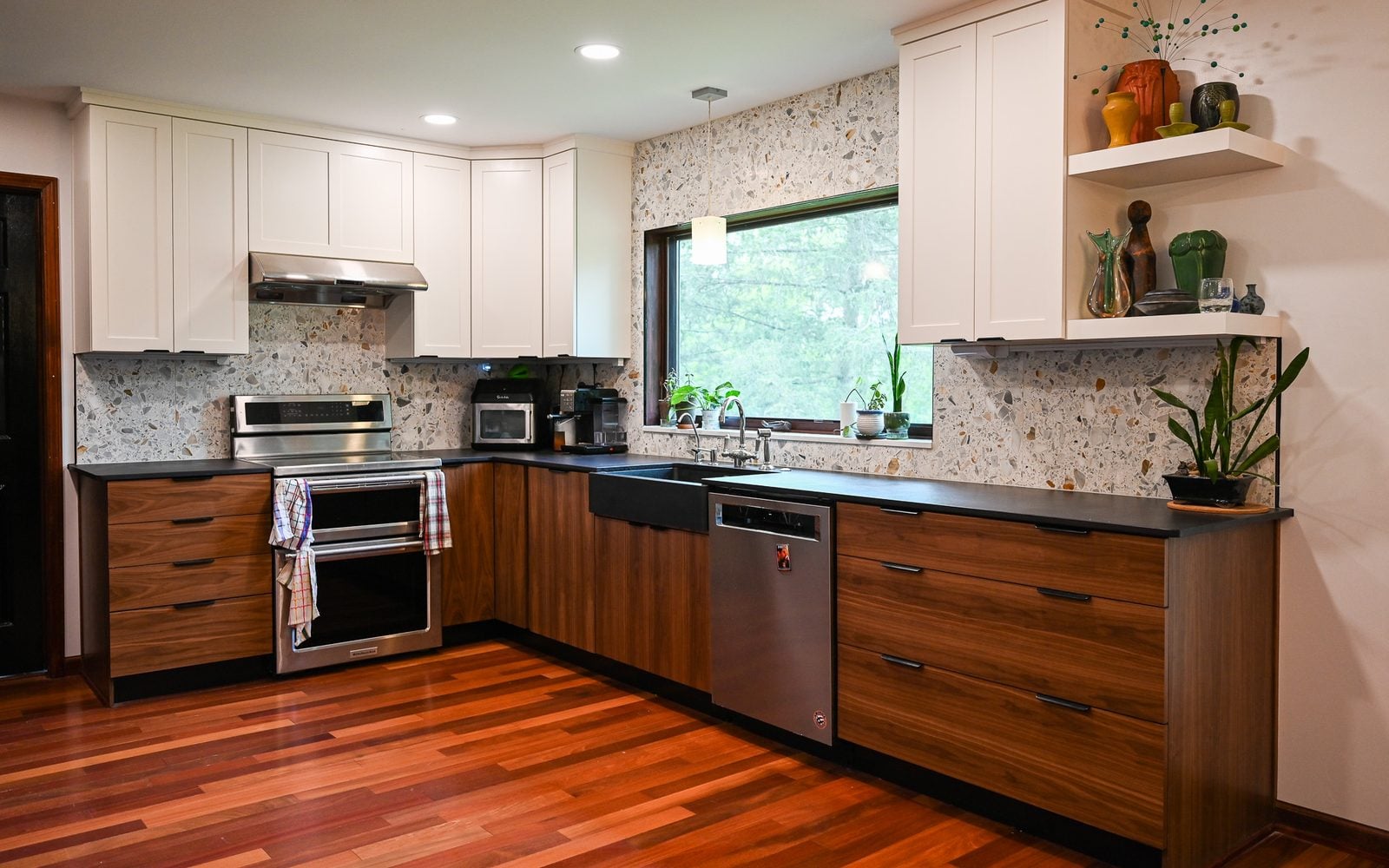
Most people do not think about drywall until it fails. A hairline crack opens above a door frame. A brown ring shows up on a bedroom ceiling. A doorknob goes through a hallway wall and suddenly you are searching for drywall repair on a Tuesday night. Wright’s Renovations handles wall and ceiling work across Southeast Michigan, from a single patch in a Ypsilanti ranch to hanging and finishing every wall in a new second story addition.
We are a design-build contractor, not a franchise dispatcher. The same crew that frames a wall finishes it. That matters more than it sounds, because most bad drywall is not bad drywall at all. It is good drywall hung over a problem nobody looked for.
Drywall installation and finishing in Southeast Michigan
Wright’s works in Washtenaw, Wayne, Oakland, Macomb, Livingston and Monroe counties. Drywall shows up in almost everything we build, so we do not treat it as an afterthought handed to whoever is available. Wall and ceiling finish is the last thing you see and the first thing a guest notices.
The work splits into three honest categories. Repair, where something is already wrong and needs to look like it never happened. Installation, where new walls go up as part of a basement finishing project or an addition. And finishing, the taping, mudding and sanding that decides whether your walls look flat under a west-facing window in February.
What we repair
Cracks at door and window corners. Nail pops and screw dimples that telegraph through paint. Doorknob and furniture holes. Ceiling stains where a bathroom above once leaked. Failed tape joints along a hallway. Popcorn ceiling removal down to a smooth finish. Corner bead that got clipped by a vacuum for fifteen years and finally gave up.
We also repair what other people patched badly. A patch that reads as a shadow on the wall was mudded too small, sanded too hard, or feathered over too short a distance. Fixing that means going wider than the damage, which feels wrong to a homeowner and is the only thing that actually works.
What we install
New walls in finished basements. Ceilings in attic and loft conversions. Full rooms in home additions. Soundproofed assemblies between a shared wall and a bedroom. Moisture-resistant board behind tile in a bath. Fire-rated board where code requires it between a house and an attached garage.
Looking for a patch, a crack or a water-damaged board rather than new wall? Our drywall repair service covers that work on its own schedule, with a crew sized for a single room.
What drywall repair costs in Michigan, and why the range is wide
Nobody likes a page that says costs vary. So here is the shape of it. A small patch inside an existing room, one or two holes, is a half-day of labor plus material and paint. A single room hung and finished after new framing runs into the low thousands once you account for board, screws, tape, compound, corner bead, sanding, dust control and two coats of primer.
The range is wide for four reasons, and each one is something you can actually see in your own house.
- Ceilings cost more than walls. Board goes up overhead, mud gets sanded overhead, and every seam is lit from the side by whatever fixture is nearby.
- Texture is expensive to match. A flat wall is easy. Knockdown, orange peel and old hand-troweled plaster are not, and a mismatch is more visible than the original damage.
- Access decides labor. A wall behind a stairway or above a stairwell landing takes scaffolding, and scaffolding takes time.
- Whatever caused it may still be happening. A stained ceiling is a plumbing or roof question first and a drywall question second.
There is also a point where patching stops being the cheaper option. Once a ceiling carries four or five separate repairs, each feathered into slightly different texture, replacing the board costs less than the labor of matching all of them and looks better when it is done. We will tell you when you have crossed that line instead of selling you a sixth patch.
If the number matters before you commit, our estimate process gives you a line-item budget rather than a single figure with no math behind it. You see the board, the labor, the paint and the contingency separately.
Why Michigan houses crack drywall in the first place
This is the part most contractors skip. Southeast Michigan is hard on wall assemblies, and the reasons are specific rather than general.
Freeze and thaw, every single year
Our soil holds water, freezes, expands and settles back. Foundations move a little each year. That movement travels up through framing and shows up as diagonal cracks at the weakest point in a wall, which is almost always the corner of an opening. A door frame in a Canton colonial that cracks every spring is not a drywall defect. It is a building telling you what the ground did in January.
Humidity swings between seasons
A house at 55 percent humidity in August and 25 percent in January is a house whose framing lumber shrinks and swells twice a year. Nail pops down a long hallway are usually this. So are the fine cracks that reappear in the same three places after every repaint.
Plaster walls in older Ann Arbor and Ypsilanti homes
The 1920s and 1930s housing stock around Ann Arbor and Ypsilanti was not built with drywall. It was built with lath and plaster, and a lot of it has been patched with drywall since. That creates a joint between two materials that move at different rates, which is why the patch line reopens.
Working with plaster means keying new material into sound lath instead of screwing board to whatever is behind it, and it means accepting that a wall built in 1928 is never going to be perfectly flat. We would rather tell you that up front than sand for three days chasing a standard the house never had. If you want the longer version, we wrote about the difference between drywall and sheetrock and where each term actually applies.
Basements, which are their own category
Michigan water tables sit high. A basement wall that gets damp will destroy standard board from the back, and no amount of surface repair fixes that. Finishing a basement properly means managing water first, then insulating, then framing off the foundation, then hanging board that is rated for the space. Our basement insulation approach and our soundproofing assemblies both exist because we got tired of seeing finished basements fail at the wall line.
The drywall work that comes with a bigger project
Most of the drywall we hang is not sold as drywall. It arrives inside something else, and it is worth knowing where.
Basements and lower levels
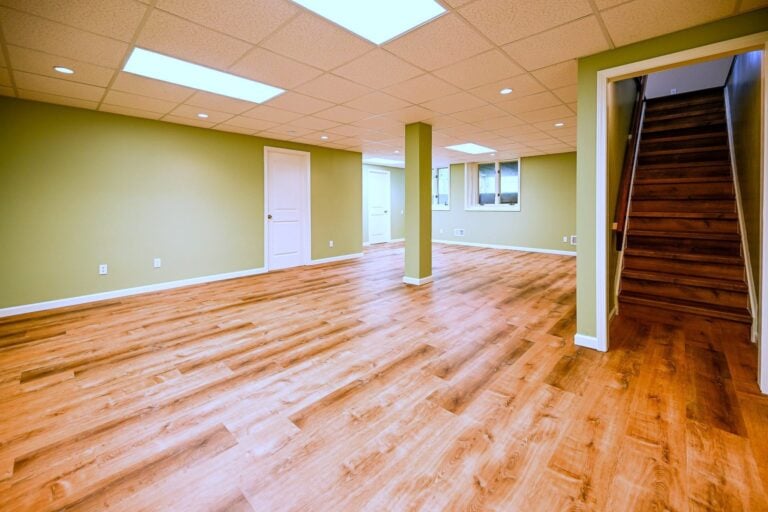
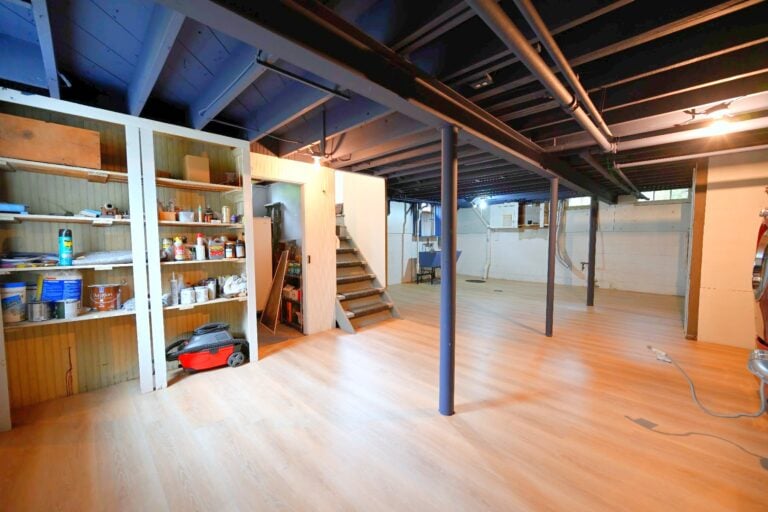
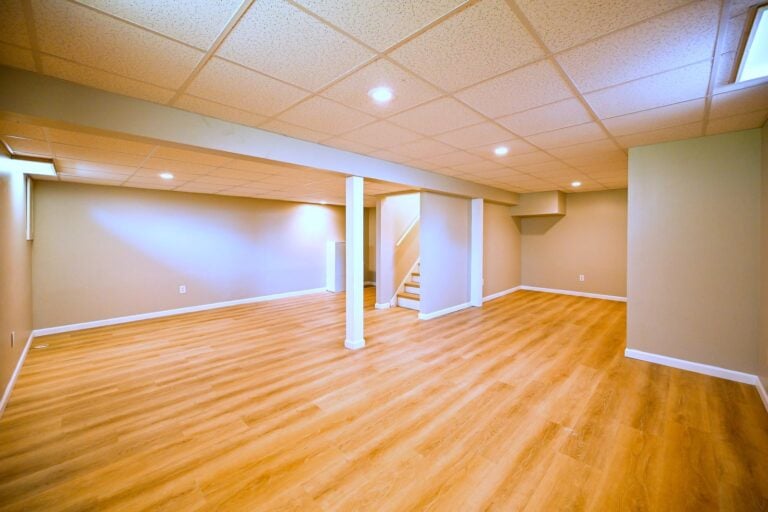
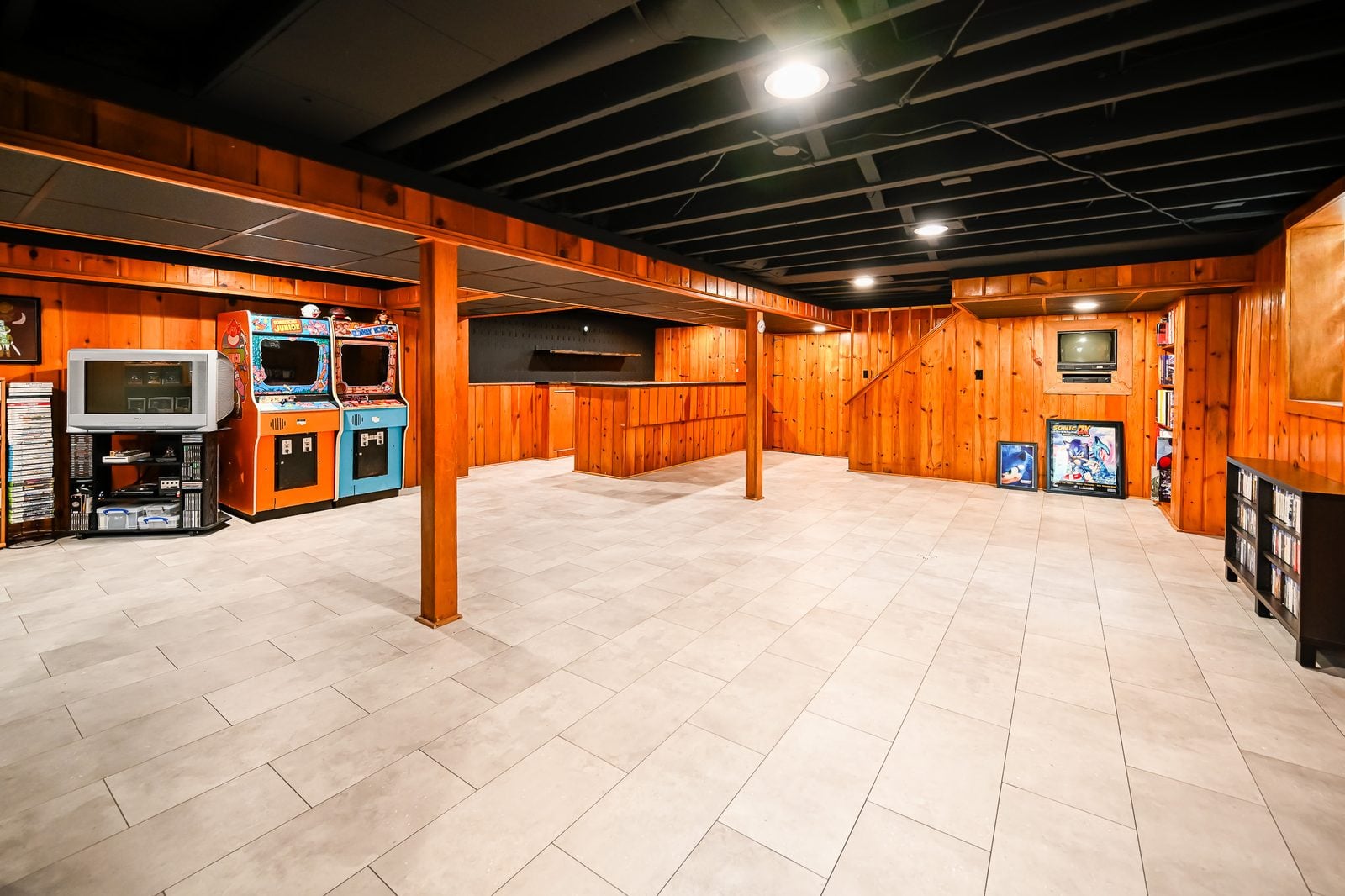
A finished basement is mostly drywall by surface area. Framing off block, insulating, hanging, taping and finishing is the bulk of the schedule, and it interacts with recessed lighting layout and flooring choices more than people expect. A ceiling decision made in week one changes what you can do with fixtures in week six, which is why we cover the drop, drywall and exposed ceiling tradeoff before anything gets ordered.
Additions and second stories
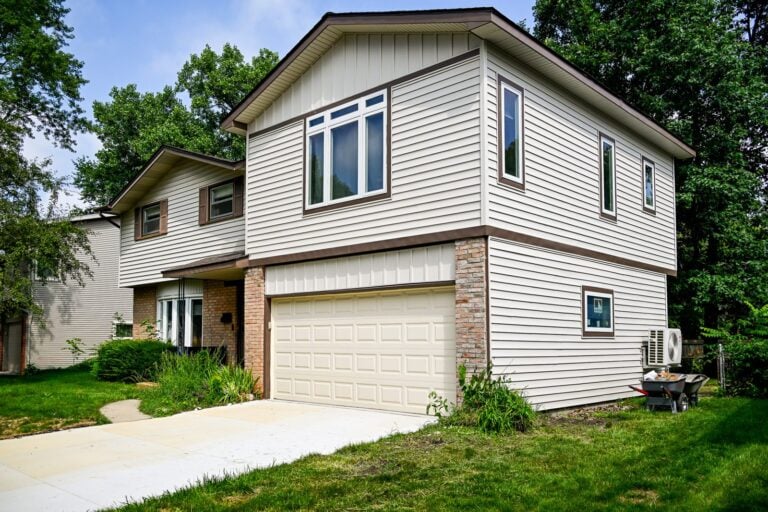
New square footage is new walls. In an addition, the interesting drywall problem is the seam where new framing meets old, because the new structure will settle on a different curve than the hundred-year-old house next to it. We detail that joint deliberately rather than mudding across it and hoping.
Kitchens, baths and the rooms in between
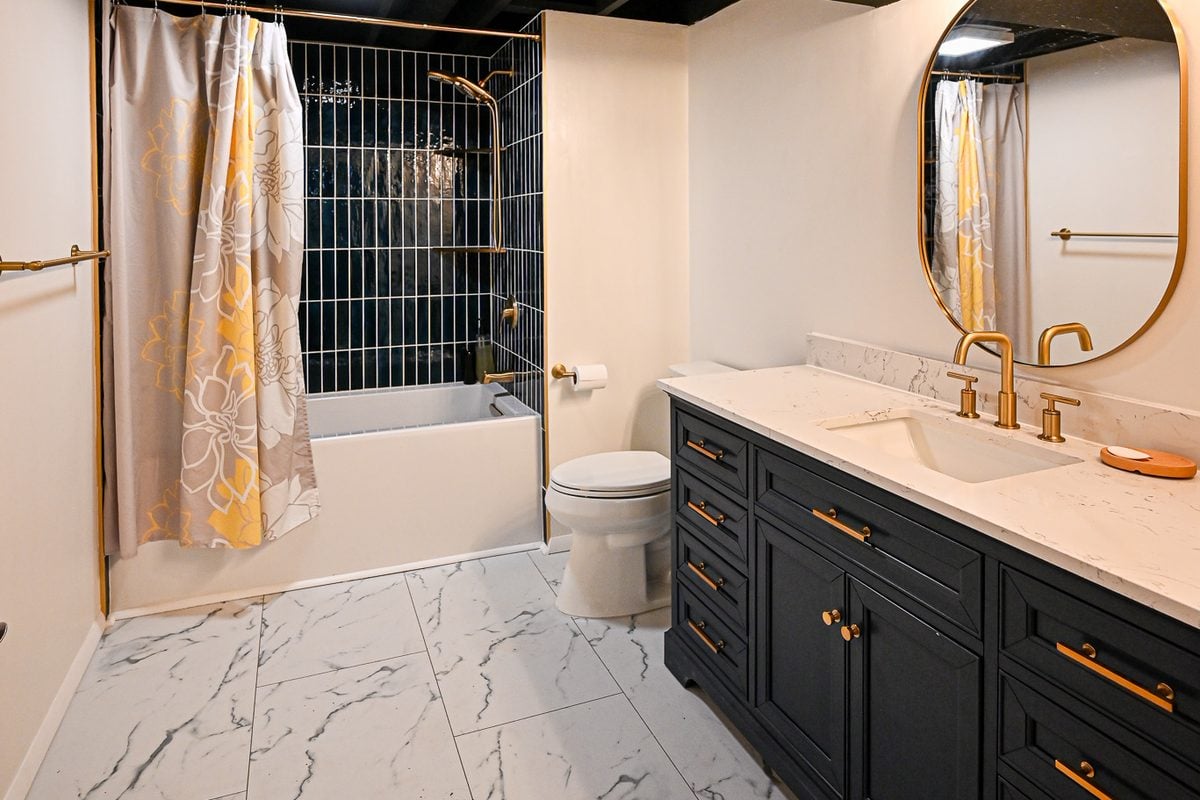
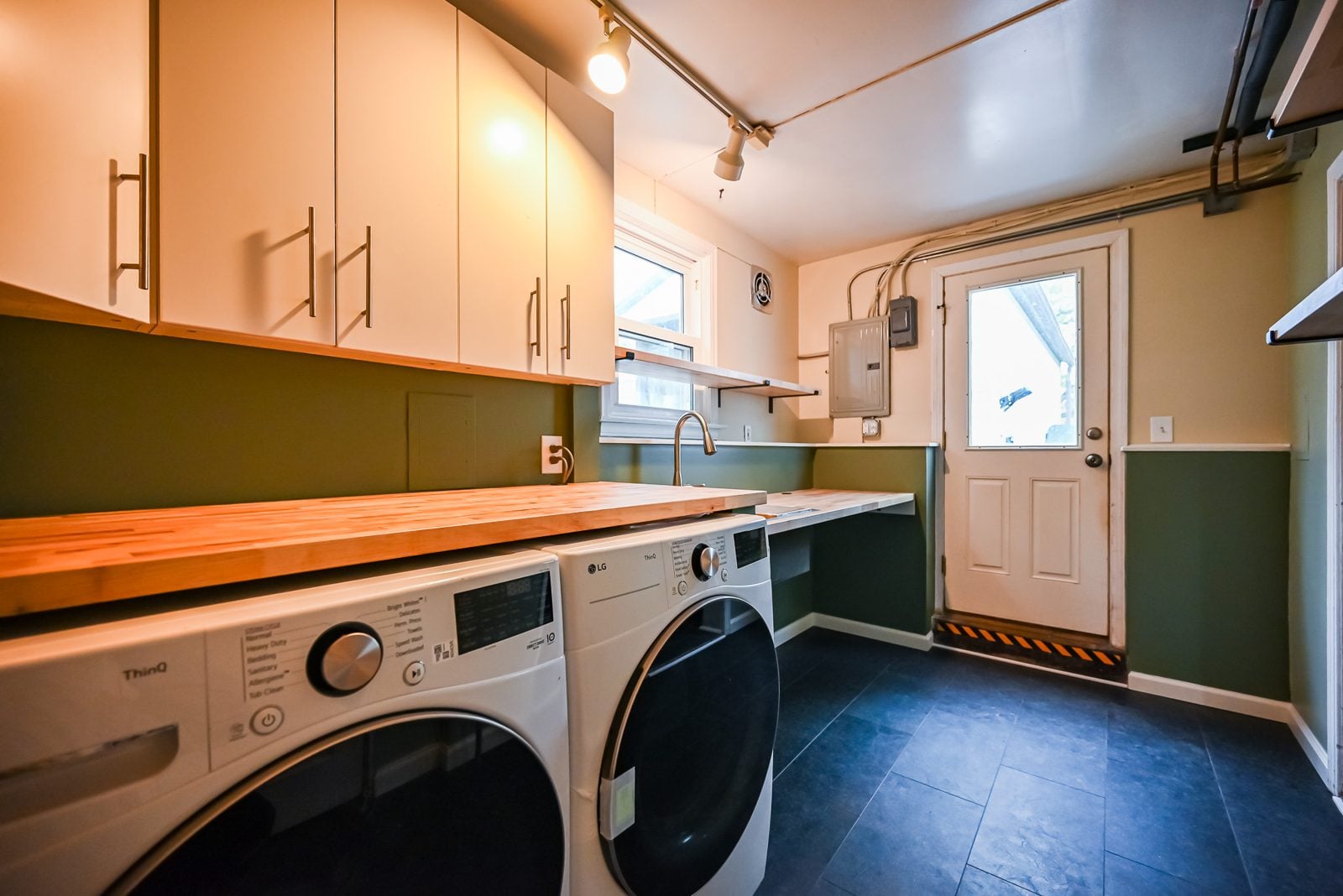
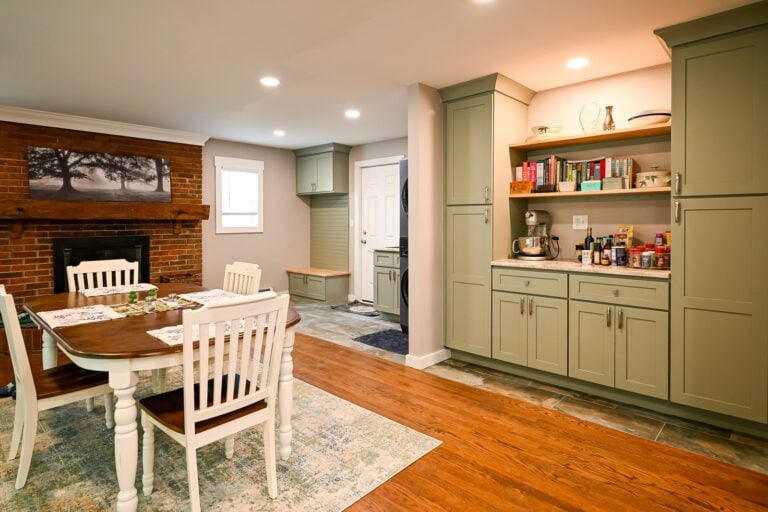
Opening a walled-off kitchen means patching where a wall used to be, and a patched ceiling in a kitchen remodel is one of the most visible surfaces in a house. Baths need moisture-resistant board behind tile work. A home office, a mudroom, a laundry room and a custom closet all end with the same question, which is how flat the walls are when the light hits them.
Garages, commercial spaces and everything else
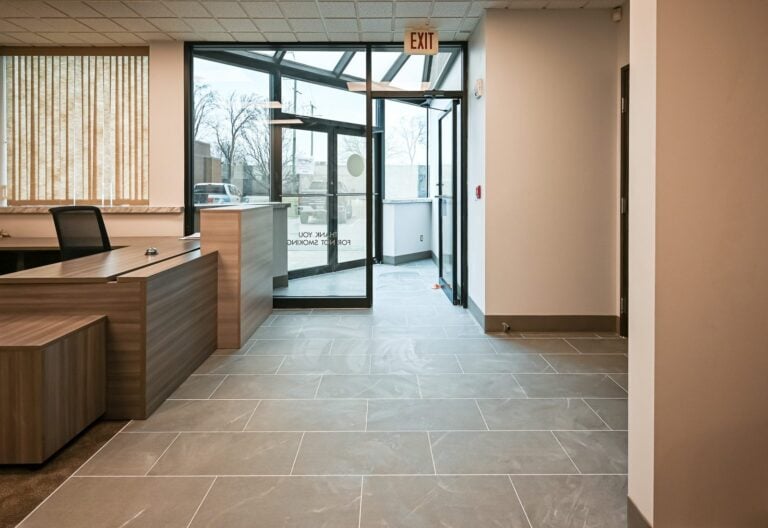
A garage conversion needs insulation, a conditioned envelope and finished walls, and the code requirements at the house wall are stricter than most homeowners realize. On the commercial side, office renovation work is often almost entirely partitions and ceilings, and our commercial team works around tenants who still have to answer phones.
Hanging, taping and finishing, explained without the jargon
Three stages, and the last one is where jobs are won or lost.
Hanging is board on framing. It is fast, it is loud, and it looks finished to nobody. Screws go on a pattern, seams land on framing members, and butt joints get placed where light will not rake across them if there is any choice in the matter.
Taping is tape and the first coat of compound over every seam and every inside corner, plus bead on the outside corners. This is the structural part of the finish. Tape is what keeps a seam from cracking when the house moves next winter.
Finishing is two or three more coats, each wider than the last, then sanding. The goal is that you cannot find the seam with your eye or your hand. Contractors describe this in levels, and the level you need depends on what goes on top. A wall getting heavy texture hides a lot. A wall getting flat paint in a room with a big south window hides nothing at all.
We finish to the level the room actually requires and we say which one we are doing. That conversation happens during our design-build process, not after the fact when you are standing in the room noticing something.
Dust, and why we talk about it before we start
Sanding drywall compound makes fine dust that travels. In an occupied house that is the single biggest quality-of-life issue in the whole trade, and it is the thing homeowners complain about long after they have forgotten what the walls cost.
We seal the work area, cover returns, run negative air where it makes sense, and use vacuum-assisted sanding on interior work. It is slower. It also means your kitchen two rooms away is not gray on Saturday morning. If you are living in the house during the project, say so early and we plan the sequence around it.
Why homeowners hire Wright’s for wall and ceiling work
Wright’s Renovations has completed more than 550 projects out of our shop at 7101 Platt Rd. in Ypsilanti. We are a design-build firm, which means you are not coordinating between a designer, a general contractor and a subcontractor who each blame the other two.
- One crew, start to finish. The people who open your wall are the people who close it.
- A line-item budget. You see what board, labor, finish and paint each cost instead of one lump sum.
- Daily photo updates. Progress is documented, so you are not guessing what happened while you were at work.
- A written one-year warranty. If a seam we finished cracks in the first year, we come back.
- We name the cause. If your ceiling is stained because of a roof, we say that, even though roofing is not work we take.
That last one costs us jobs and we keep doing it. Patching a wall over an active leak is billable and dishonest, and we would rather refer you out and keep the relationship. You can read more about who we are and see how we prepare in what to expect before we meet.
Where drywall meets the rest of your house
Wall finish never lives alone. If the crack you are looking at sits under a window, the honest question may be the window rather than the wall, which is where window replacement comes in. If it sits at an exterior corner, look at siding condition and the exterior envelope before blaming the plaster. Doors that stick and crack the wall above them often need door replacement rather than another patch.
Inside, drywall runs up against trim and cabinetry constantly. Our custom millwork and trim and carpentry work both depend on walls being flat and square enough to land a piece of casing cleanly. Rooms with heavier finish requirements, like a primary bedroom or a bathroom, get held to a tighter standard than a utility space.
For small standalone jobs that do not need a design phase, Wright’s Repairs is being built for exactly that kind of call. Larger scopes stay on the design-build side where they belong.
Serving Washtenaw County and the surrounding area
We work across the region and know the housing stock. Post-war ranches in Saline, farmhouses and newer builds around Dexter, older homes in Chelsea, and everything in between across Washtenaw County. A 1955 ranch and a 1928 bungalow crack for different reasons, and the fix is different too.
Winter is the right time for interior work. Wall and ceiling repair does not care about weather, the crew has capacity between exterior seasons, and you get the project done while your deck and siding wait for spring.
Talk to us about your walls
Bring us a photo of the crack, the stain or the hole. We will tell you what we think caused it and what it takes to make it right, including the times the answer is that you have a plumbing problem rather than a drywall problem.
Call (734) 540-0347 or contact us today. You can also check out our Portfolio to see finished rooms where the walls do exactly what they are supposed to do, which is disappear.