
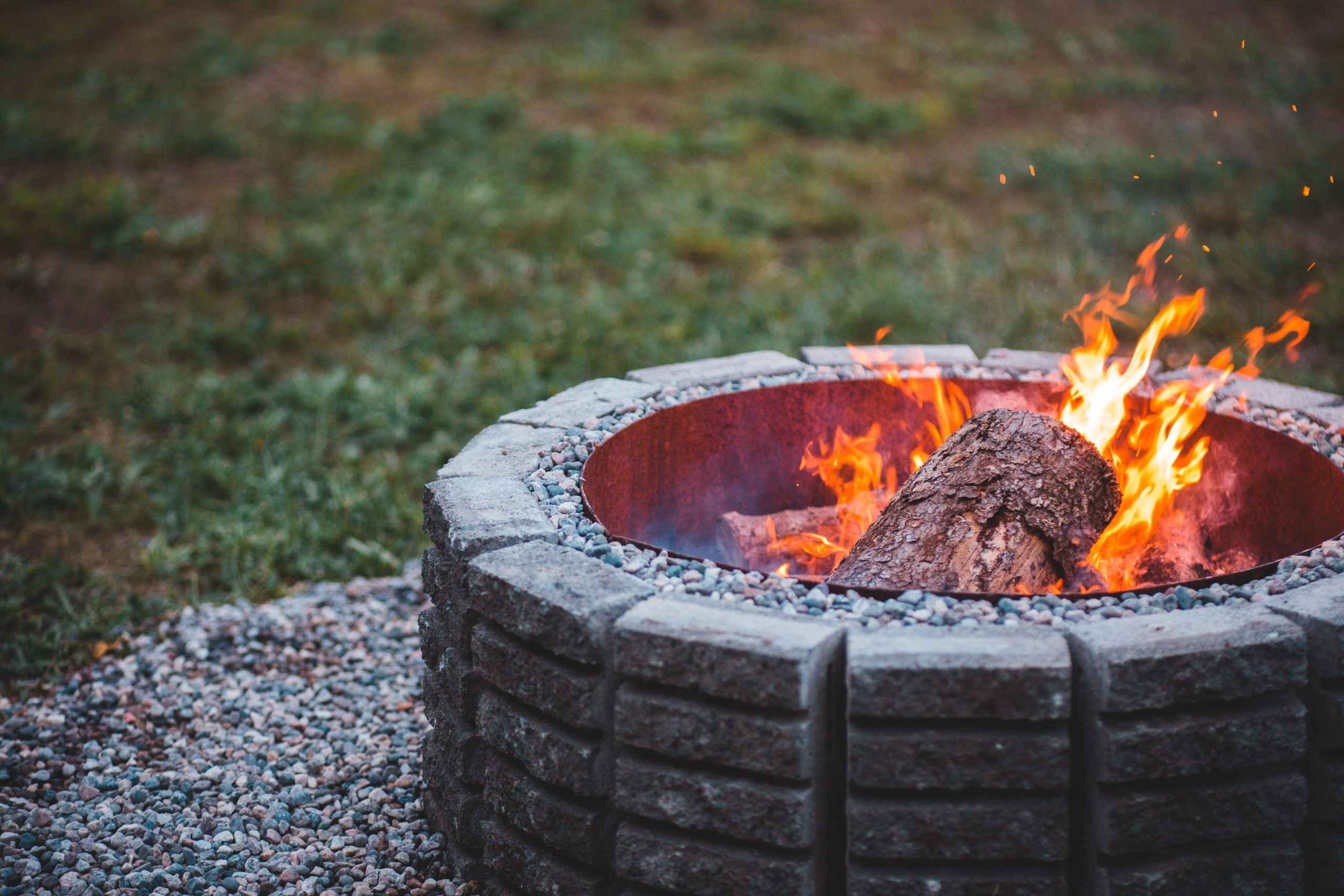
Fire pit vs. outdoor fireplace in Michigan: cost, codes and a longer season
Every October somebody tells me the same thing: the patio was great in July, and now it’s a place to store the grill cover. A fire feature is usually the fix. The real question is which one. A wood fire pit, a gas fire table and an outdoor fireplace all throw heat, but they behave very differently on a cold night, cost very different amounts, and face different rules. Our fire pit and outdoor fireplace installation work starts with that choice, so let’s walk through it.
I’m Connor Wright, and I run Wright’s Renovations out of Ypsilanti. We design and build the whole outdoor living space around the fire, which means a fire feature never shows up as a lonely object in the grass. It ties into the patio, the seating, the lighting and the path from the back door. If you’re still sketching the bigger picture, our page on outdoor living projects in Southeast Michigan shows how the pieces connect before anyone digs a hole.
Fire pit or outdoor fireplace: the short version
A fire pit puts people in a circle around open flame. It’s social, it’s cheaper, and it warms you on all sides if you sit close. An outdoor fireplace is a wall with a firebox. It throws heat in one direction, blocks wind, and gives a patio a sense of being a room. That’s why fireplaces show up so often in an outdoor living room with a covered seating area, while fire pits tend to anchor an open gravel or paver circle farther out in the yard.
Neither one is the right answer for every lot. A narrow Ypsilanti backyard behind a 1920s Craftsman bungalow may only have room for a small gas table. A deep suburban lot in Canton can handle a sunken pit with a seat wall. A big terrace in Birmingham might call for a full masonry fireplace that faces the house. The right pick depends on space, how many people you host, and how far you want your season to stretch.
Wood vs. gas fire pits for Michigan yards
Wood fire pits are what most people picture: crackle, smell, marshmallows. They’re also the most work. You buy or split firewood, you deal with smoke that follows whoever sits downwind, and you have to put the fire fully out before bed. Gas pits light with a switch and shut off the same way, with no ash and very little smoke. The tradeoff is less heat per dollar and a flame that looks tidier than wild.
Industry cost guides put most fire pit installs in a wide band. HomeAdvisor’s fire pit cost guide lists a typical range of $200 to $3,000, with wood-burning pits around $300 to $1,000 and natural gas pits around $400 to $3,000. In-ground built-in pits land around $1,000 to $3,000 and can top $5,000. Those are national numbers, and they don’t include the patio under the fire or the seating around it.
What a gas line adds to the job
A gas fire pit needs fuel. Some homeowners use a propane tank hidden in the base, which is fine for occasional use but means swapping tanks. Most people who use the pit weekly want a natural gas line run from the meter. The same HomeAdvisor guide puts gas line runs at $15 to $25 per linear foot. A pit 40 feet from the house adds real money, and the trench has to cross whatever lies between.
Gas piping is permitted work in Michigan, and it’s done by a licensed mechanical or plumbing contractor, then inspected and pressure tested before anything gets buried. On our jobs, the design-build side plans the route so it doesn’t cut through a future planting bed or a spot where you’ll want a post footing later. If you’re also planning an outdoor kitchen with a gas grill, run both lines in one trench and one permit.
Outdoor fireplace options: masonry or prefab
An outdoor fireplace comes in two broad builds. A site-built masonry fireplace uses concrete block, a firebrick-lined box and a stone or brick veneer, with a chimney tall enough to draw. A prefab unit is a factory-made firebox, often refractory concrete, that gets set on a base and wrapped in your choice of stone. Prefab is faster and usually cheaper. Masonry gives you more freedom on size, shape and hearth height.
HomeAdvisor’s outdoor fireplace cost guide lists an average around $3,000 and a typical range of $1,500 to $8,000, with custom projects reaching about $21,000. It puts natural stone material alone at $1,800 to $5,000. In my experience, a fully built masonry fireplace with a footing, chimney and seat walls in Southeast Michigan lands in the upper part of that published range or beyond it, which is why we price it line by line.
Footings, frost depth and the weight problem
Masonry is heavy. A stone fireplace can weigh several tons, and it sits outside where Michigan’s freeze-thaw cycles push soil up every winter. That means it needs a real concrete footing that extends below frost depth, which Michigan’s residential code sets at 42 inches in most cases. Skip it and the chimney cracks or leans within a few winters. Prefab units are lighter but still want a solid base. Our patio and hardscaping construction crews plan that footing with the paver base so the two don’t fight each other.
How each option stretches your season into November
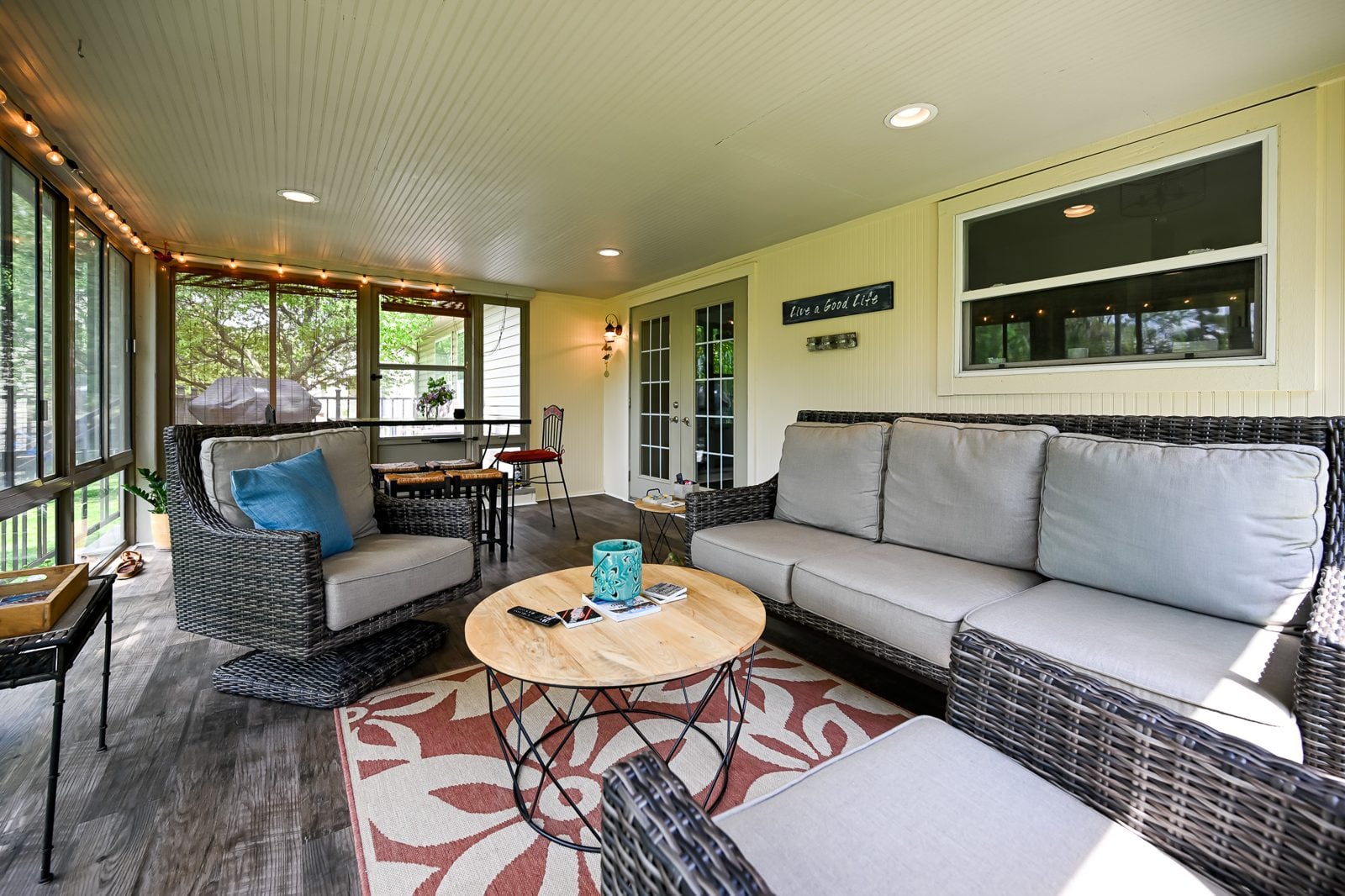
Here’s the honest test I give clients. On a 45-degree evening in late October with a breeze off the west, who’s still outside after an hour? A fire pit keeps you warm if you’re close and facing the flame, but your back gets cold. A fireplace with a hearth and a seat wall behind you holds people longer, because it blocks wind and reflects heat forward. Add a roof overhead, or put the fire just outside a screened porch enclosure, and you’ve got a space that works into November.
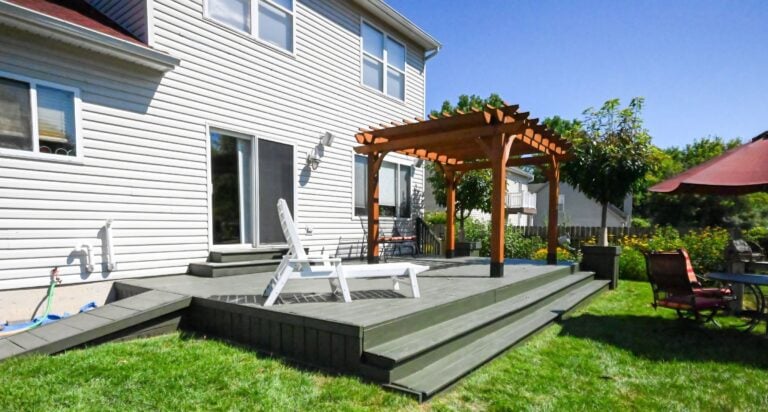
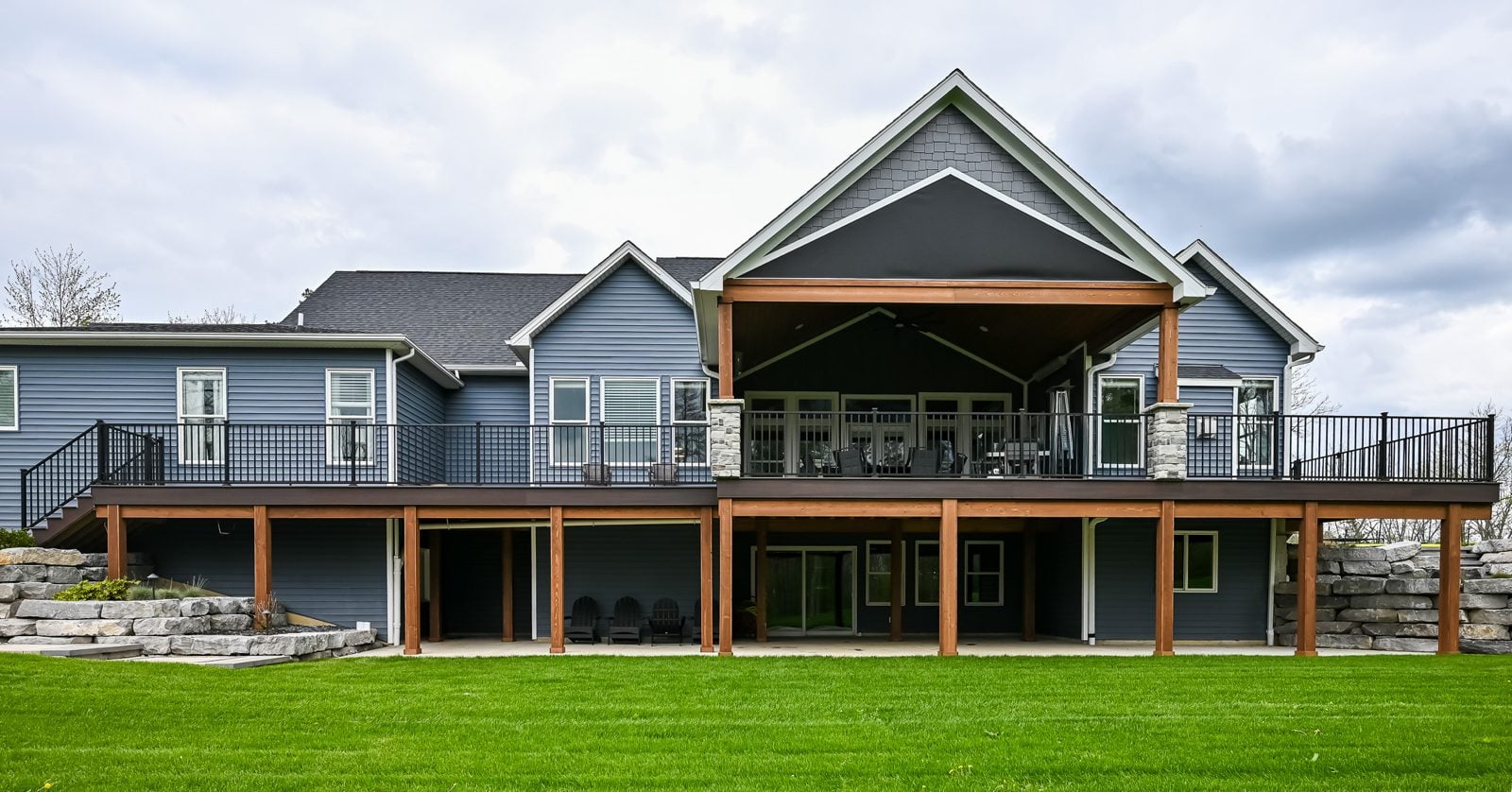
Pairing a fire feature with overhead structure makes the biggest difference. A fireplace at the end of a covered patio, or a gas table under a custom pergola or gazebo build, keeps light rain off and holds a bit of warmth. Our blog post comparing a pergola vs. gazebo for Michigan winters covers which roof styles tolerate heat and which ones don’t. Open pergola slats are fine above a low gas flame, though wood fire under any roof needs clearances the manufacturer and the code both spell out.
Lighting matters as much as heat in fall, because it’s dark by 6:30 p.m. A fire gives glow but not enough light to walk by. Low path lights, step lights and a couple of downlights on the house keep the space usable without killing the mood. We plan outdoor lighting for patios and paths at the same time as the gas and electrical runs, so the trenching happens once.
Setbacks and local burning rules in Southeast Michigan
Open flame comes with rules, and they’re local. Michigan’s Department of Environment, Great Lakes, and Energy (EGLE) points homeowners to their local ordinances, because some communities restrict outdoor burning heavily. Townships and cities across Washtenaw, Wayne and Oakland counties each set their own recreational fire rules, and many follow the International Fire Code with local changes, the same way they adopt the Michigan building codes homeowners deal with. Before we draw a fire pit on a plan, we look up the rules for that address.
Ann Arbor is a good example of how specific these rules get. The Ann Arbor Fire Department’s recreational fire rules say a campfire may not be held within 25 feet of a structure or combustible materials. Portable fireplaces and fire pits must follow the manufacturer’s instructions, fires must be attended at all times, extinguishing equipment has to be close at hand, and smoke can’t become a nuisance to neighbors. If you live in Ann Arbor’s older neighborhoods, that 25-foot rule rules out a lot of small backyards for wood fire.
Why gas often wins on tight city lots
Gas units usually come with manufacturer clearances that are much smaller than a wood campfire setback, and they don’t throw sparks. That’s why gas fire tables are so common on narrow lots near downtown Ypsilanti, in Plymouth’s historic downtown blocks and around older parts of Royal Oak. If your yard can’t give a wood fire 25 feet of clear space in every direction, a listed gas unit with the right clearances may be the only legal path to a flame.
Placement relative to the house and the wind
Even when the code allows it, I don’t like fire close to siding, soffits or overhanging trees. Vinyl siding warps from radiant heat well before it catches. Smoke drifts into open windows and attic vents. On most Southeast Michigan lots, prevailing winds come from the west and southwest, so I try to put a wood fire downwind of the house and the main seating, and I look at where the neighbors’ bedroom windows are, too.
Fireplaces are easier here because the chimney carries smoke up and away, as long as it’s tall enough to draw well. We usually face the firebox toward the house so the people sitting on the patio get the heat and the view. On a lot that slopes away from the house, a fire pit on a lower terrace can work nicely, with steps and a wall that doubles as seating. A good custom outdoor space design sorts these sight lines out on paper first.
Fire features and decks: the rule I won’t bend
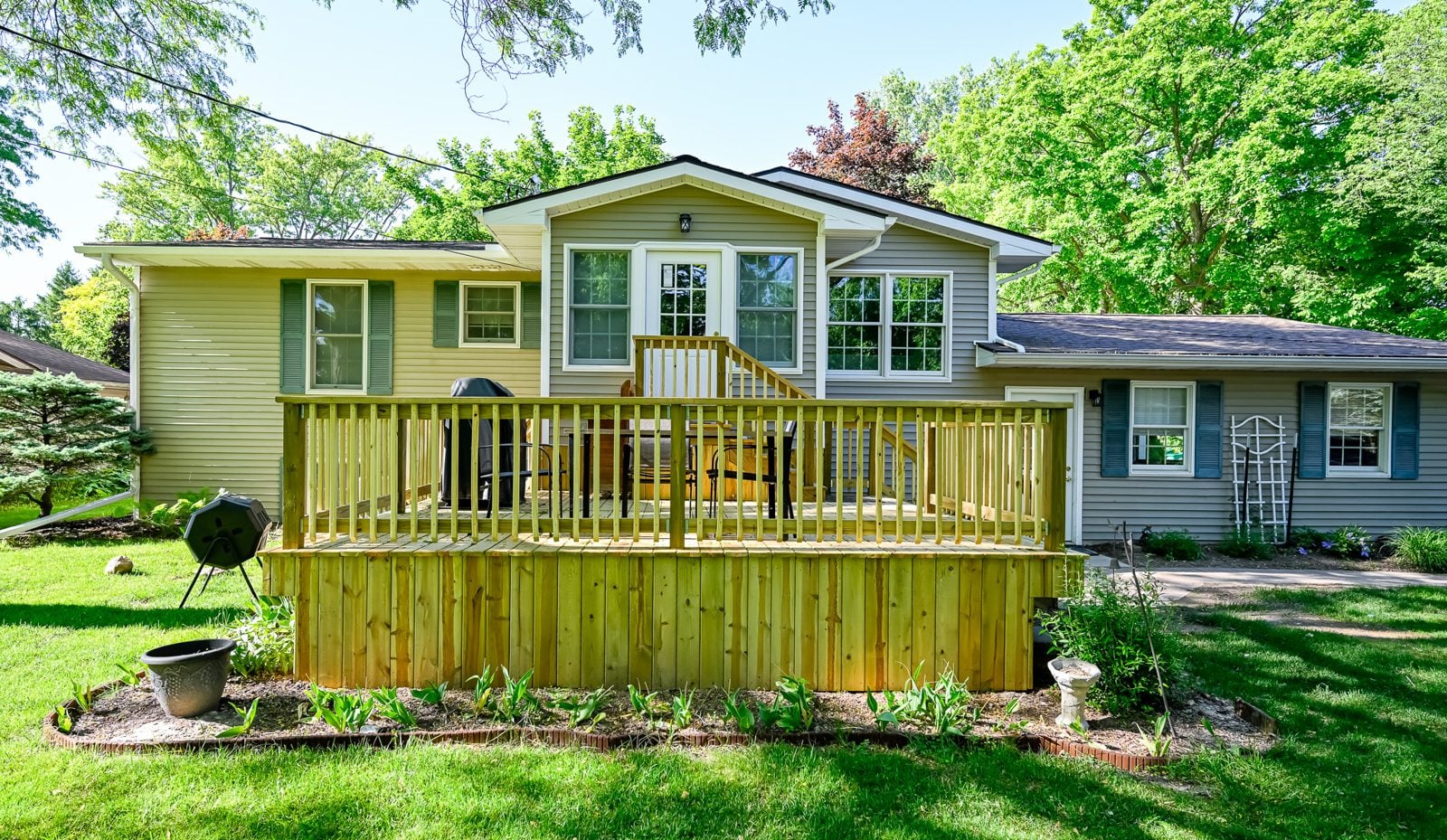
I get asked about a fire pit on a wood deck more than almost anything else. My answer is no, unless it’s a gas unit rated for use on a deck, set on whatever protective pad its listing requires, with the clearances the manufacturer calls for. A wood-burning pit on pressure-treated or cedar decking is how decks catch fire. Even composite deck boards can scorch, melt or void the decking warranty under radiant heat.
If you want fire and a deck, there are good ways to do it. Put a paver landing off the bottom of the stairs and build the fire there. Or step down from the deck to a stone patio with a built-in pit. Our post on patio vs. deck costs and upkeep in Michigan explains why a lot of homeowners end up with both. When we handle new deck construction in Southeast Michigan, we plan that transition in the same drawing set.
Seating that keeps people by the fire
Seating decides whether a fire feature gets used. For a fire pit, plan a ring with the seat edge about 4 to 7 feet from the flame, so people can feel heat without scooting chairs back and forth. Built-in seat walls at 18 to 20 inches high double as a wind block and keep the circle from drifting. Leave a gap so people can walk in without stepping over anything.
For a fireplace, think like you would indoors: a sofa facing the hearth, two chairs on the sides and a low table that can take a drink and a plate. That’s where an outdoor entertainment room layout earns its keep. If cooking is part of the plan, our guide to outdoor kitchens in Michigan covers how to place a grill station so the cook isn’t standing alone 30 feet from the fire.
Outdoor fireplace and fire pit costs side by side
Using the published ranges, a simple wood pit kit sits at the low end of the market, a built-in gas pit with a gas line sits in the low thousands, and an outdoor fireplace starts in the low thousands for prefab and climbs well into five figures for custom stone. What those numbers leave out is the stuff around the fire: the patio, the footing, the seat walls, lighting, drainage and any roof.
That’s where budgets drift if nobody’s watching. On our projects, every one of those items shows up as its own line in the budget, so you can see what the fireplace costs separately from the paver patio it sits on. If you’d like to spread payments out, we offer financing for outdoor and remodel projects, and our post on renovation budget planning in Michigan shows how to set a number before design starts.
When to build a fire feature in Michigan
Footings and concrete want ground that isn’t frozen, and mortar and stone veneer don’t cure well in hard cold. That puts most masonry fireplace work between April and early November, weather permitting. Gas pits and prefab units have a little more flexibility, but trenching for gas gets harder once the ground freezes. If you want to sit by a fire next October, the time to design it is winter, and the time to build it is spring or summer.
Permits add time, too. A gas line, a masonry structure with a footing, or a fireplace under a roof can each trigger plan review depending on the township. Our post on home renovation permits in Southeast Michigan covers what most building departments ask for. As a design-build remodeling firm, we pull the permits and schedule inspections as part of the job, so you aren’t running paperwork between the township office and the gas company.
Frequently asked questions about outdoor fireplaces and fire pits
Is an outdoor fireplace or a fire pit better for a Michigan fall?
An outdoor fireplace usually keeps people outside longer on cold, windy nights because it blocks wind and pushes heat toward the seating. A fire pit is cheaper and more social, but your back stays cold. If you want to use the yard into November, a fireplace paired with a roof or pergola tends to win. For casual summer evenings, a fire pit is often all you need.
How far does a fire pit need to be from my house in Ann Arbor?
Ann Arbor’s fire department says a campfire can’t be within 25 feet of a structure or combustible materials. Portable fireplaces and fire pits must be used per the manufacturer’s instructions, and every fire must be attended. Other Southeast Michigan communities set their own rules, so check your city or township before you build. We look up the rules for your address during design.
Can I put a fire pit on my wood deck?
Not a wood-burning one. A gas fire table rated for deck use, set on the protective pad its listing requires and kept to the manufacturer’s clearances, is the only fire feature I’ll consider on a wood or composite deck. A safer layout puts the fire on a stone patio or paver landing just off the deck stairs, with seating around it.
Does a masonry outdoor fireplace need a footing?
Yes. A stone or brick fireplace is heavy, and Michigan’s freeze-thaw cycles move soil every winter. A concrete footing that extends below the frost line, which Michigan’s residential code sets at 42 inches in most cases, keeps the chimney from cracking or leaning. Prefab units weigh less but still need a solid, well-drained base.
Start planning your outdoor fireplace
If you’re picturing a fire on the patio next fall, the best move is to talk it through while there’s still snow on the ground. We’ll look at your lot, the wind, your local burning rules and where gas and power can run, then put a line-item price in front of you. You can book a design consultation with our team or call (734) 540-0347. Check out our Portfolio to see how we build.