
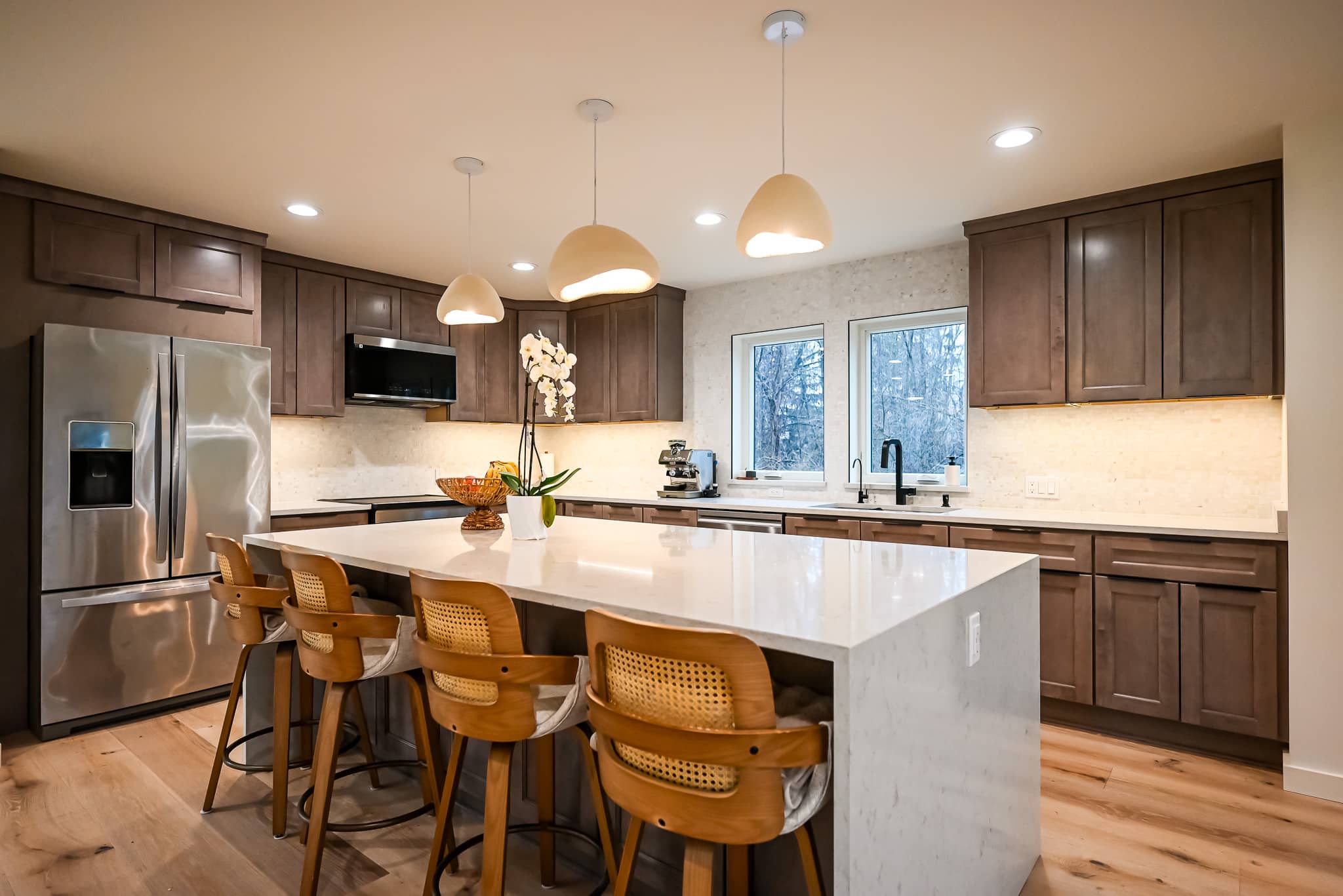
How to budget a renovation in Michigan
Money is the conversation underneath every renovation, and the one people are most nervous to have. I would rather have it openly and early, because a renovation built on a budget you do not trust is a renovation headed for trouble. Most of the budget disasters I have seen trace back to the same few mistakes, and all of them are avoidable with honest planning. Let me walk you through how to build a renovation budget that actually holds up in Southeast Michigan.
Table of contents
- Start with what you actually want
- Understand where the money goes
- Build in a contingency
- Lock selections early to protect the number
- Financing and paying for the work
- Value engineering without cheapening the result
- Comparing quotes the right way
- The hidden costs to plan for
- Making the money work
- Where to splurge and where to save
- Financing without derailing the plan
- Common questions about renovation budgets
- Build a budget you can trust
A good budget is not just a number you hope to hit. It is a plan that accounts for the work you want, the surprises a house will hide, and the choices that quietly drive cost up or down. Get it right and a renovation is a controlled investment. Get it wrong and it becomes a stressful spiral of overruns. If you want a starting figure for your project, our project cost calculator is a good first step, and this guide explains how to build the full picture.
The right builder also protects your budget by catching problems early, before they become expensive change orders, and by ordering materials in time to lock current pricing. That combination of thorough planning and honest numbers is what separates a project that lands on budget from one that spirals, and it is why the design stage earns its place at the front of every project we plan through our team and price with our budget calculator.
Start with what you actually want
Before any numbers, get clear on the scope. A vague wish to update the kitchen leads to a vague budget, which leads to surprises. A specific plan, new cabinets, quartz counters, a relocated island, better lighting, leads to a real number. The clearer you are about what you want, the more accurate your budget will be, and the fewer expensive mid-project changes you will make.
This is why we invest so much in the design and planning stage. Nailing down the scope and the selections on paper, before construction, is what keeps a budget from drifting. We help you define exactly what you are building, whether it is a kitchen, a bath, or a finished basement, so the budget reflects reality rather than a guess.
Understand where the money goes
Every project type concentrates cost differently, and knowing this helps you plan. In a kitchen, cabinets and countertops usually dominate, with appliances and labor close behind. In a bathroom, tile, fixtures, and the labor to install them carry the load, and any plumbing relocation adds up fast. In a basement, the framing is modest but waterproofing, egress, and mechanical work drive the number. In an addition, you are paying for foundation, framing, roof, and full systems.
Understanding this tells you where a smart choice saves real money and where it barely moves the total. Downgrading a faucet saves little, while choosing stock over custom cabinets moves the budget meaningfully. We show you these levers openly during design, the same way we do on a kitchen island project, so your dollars land where they count most.
Labor versus materials
Homeowners often assume materials are the bulk of a renovation, but in this market skilled labor is frequently the larger and more variable cost. Good tradespeople are in demand, and quality work commands a fair rate. When a quote comes in higher than expected, it is often labor and complexity, not a sheet of drywall. This is not a reason to chase the cheapest crew, because a bargain crew gets expensive the moment something goes wrong. I dig into this in my guide to renovation material and labor costs.
Build in a contingency
This is the single most important line in any renovation budget, and the one people most want to skip. Set aside a cushion beyond the quoted number, because renovation reveals surprises behind walls and under floors, especially in the older homes common across Southeast Michigan. A realistic contingency turns a stressful overrun into a planned expense you were ready for.
How much depends on the age and condition of the home and the scope of the work. An older home getting a major renovation warrants a larger cushion than a newer home getting a cosmetic update. We help you set a sensible contingency based on what your specific house is likely to hide, the same forward planning we bring to a historic home renovation where surprises are the norm.
Lock selections early to protect the number
A budget is only as real as the selections behind it. Leave your materials open, and the quote is an estimate that drifts with every choice you delay and every price that moves. Lock your selections early, and the budget becomes a real budget, and your long-lead items get ordered in time to protect both cost and schedule.
The longer selections stay open, the more exposure you carry to price changes and delays. We push to nail down choices up front so the number you approve is the number that holds. This is the same process behind timing a custom shower build, where a late selection can hold up the whole bathroom and drift the cost.
Financing and paying for the work
Not everyone pays from savings, and there are smart ways to finance a renovation. Some homeowners use financing to complete a project on a sensible timeline and lock in current pricing rather than deferring and paying more later. We work with financing partners who offer options across a range of project sizes, and we will lay out the paths at your consultation so you choose what fits your situation.
Phasing is another way to manage cash flow, spreading a large renovation over time so you pay as you go. It costs slightly more per dollar but makes a big project affordable. I cover how to sequence that in my guide to a phased whole-home renovation, and we build a budget for the whole plan and each phase.
Value engineering without cheapening the result
When a budget is tight, value engineering finds savings without gutting quality. Maybe stock cabinets with a premium counter instead of the reverse. Maybe a beautiful mid-range tile instead of imported stone. Maybe phasing the work. We do this openly, showing you where a dollar buys the most and where it buys very little, so you cut cost without cutting the result you care about.
The goal is a renovation you love within the budget you have, not a stripped-down version that disappoints. We would rather help you spend wisely than watch you overspend on the wrong things or cut the things that matter. That honest guidance runs through every project, from a modest update to a full luxury home renovation.

Comparing quotes the right way
When you gather quotes, the temptation is to line up the bottom-line numbers and pick the lowest. That is how people get burned, because a low bid often leaves out costs that reappear as change orders, or reflects a crew that cuts corners you will pay for later. The right way to compare is on scope and quality, making sure each quote covers the same work to the same standard. A quote that is thorough and a little higher often costs less in the end than a cheap one full of gaps.
We give detailed quotes that spell out the scope, so you can see exactly what you are paying for and compare apples to apples. That transparency is part of how we work, and it protects you from the surprise costs that sink under-planned projects. It is the same clarity we bring to a kitchen project or any other, where you should never wonder what is included.
The hidden costs to plan for
Certain costs surprise homeowners because they are easy to forget. Permits and fees. Temporary living arrangements if a phase displaces you. Disposal and dumpster costs for demolition. Upgrades required by code once you open a wall, like bringing old wiring current. These are real, and a budget that ignores them is a budget that overruns. We build them in from the start so nothing blindsides you mid-project.
The surprises behind the walls are the other category, and they are why the contingency matters. Older Southeast Michigan homes hide outdated systems and the occasional structural issue that has to be fixed before we move on. Planning for the likely surprises in a home of a given age is part of an honest budget, the same forward planning behind a older home renovation.
Making the money work
Beyond savings and contingencies, there are smart ways to structure how you pay. Financing lets you complete a project on a sensible timeline and lock in current pricing, and we work with partners offering options across a range of project sizes. Phasing spreads a large renovation over time so you pay as you go, trading a little efficiency for manageable payments. We lay out these paths at your consultation so you choose what fits, the same options I cover in my guide to a phased whole-home renovation here.
Whatever path you choose, the goal is a budget that reflects reality and holds up through the project. We would rather help you spend wisely than watch you overspend on the wrong things. That honest guidance runs through every project we take on, as you can see across our finished work.
Where to splurge and where to save
Not every dollar in a renovation buys the same value, and knowing where to spend and where to hold back is what makes a budget feel smart. The general rule is to invest in the things that are hard or expensive to change later, and economize on the things that are easy to swap. Structure, layout, plumbing locations, and quality of installation are worth spending on, because redoing them is costly and disruptive. Finishes, fixtures, and hardware are easier to upgrade down the road, so they are fair places to economize when the budget is tight.
In a kitchen, for example, spending on a well-built layout and solid cabinetry pays off for decades, while you can start with a mid-range faucet and upgrade later. A custom kitchen island that anchors the room is worth doing right the first time. In a bathroom, the waterproofing and the plumbing behind the wall matter more than the towel bars, which is why we never cut corners on what a custom shower build here hides behind the tile.
We walk you through these tradeoffs during design, showing where a dollar buys lasting value and where it barely moves the result. This keeps you from overspending on things that do not matter while underspending on the things that do. It is the same honest guidance I bring to material choices in my guide to renovation material costs, where the goal is always a result you love within the budget you have.
Financing without derailing the plan
Paying for a renovation does not always mean paying from savings, and the right financing lets you complete a project on a sensible timeline while locking in current pricing. Deferring a project to save up can mean paying more later as material and labor costs rise, so for many homeowners, financing the work now is the more economical path. We work with financing partners who offer options across a range of project sizes, and we lay out the paths at your consultation so you can choose what fits your situation. Running your project through our cost estimate tool gives you a number to plan the financing around.
Phasing is another way to manage cash flow, spreading a large renovation over time so you pay as you go rather than all at once. It costs slightly more per dollar because of the repeated mobilization, but it makes a big project affordable without financing the whole thing at once. I cover how to sequence that in my guide to a phased renovation, and we build a budget for both the full plan and each phase. Whether you finance, phase, or pay outright, the goal is the same, a plan you can afford and a result you love, the same standard behind every high-end renovation we take on. Learn how we approach every project on our company page.
Common questions about renovation budgets
How big should my contingency be
It depends on the home’s age and the scope, but a meaningful cushion beyond the quote is essential, larger for older homes and major work, smaller for newer homes and cosmetic updates. We help you set a realistic figure for your specific house rather than a generic percentage. The point is to be ready for the surprises a renovation always turns up behind walls and under floors, which is where budgets most often go sideways.
Should I take the cheapest bid
The cheapest bid usually gets expensive, because it often leaves out costs that reappear as change orders, or reflects a crew that cuts corners. We price our work to do it right the first time and back it with a five-year workmanship warranty. Compare bids on scope and quality, not just the bottom line, and make sure each covers the same work to the same standard before you decide.
How do I avoid going over budget
Plan the scope thoroughly, lock selections early, build in a real contingency, and avoid mid-project changes. Those four habits prevent the vast majority of overruns. A clear plan up front is worth more than any single cost-cutting trick, and it is why we invest so heavily in the design and planning stage before any demolition begins.
Build a budget you can trust
A renovation budget that holds up starts with a clear scope, accounts for where the money goes, builds in a real contingency, locks selections early, and comes from a builder who gives straight numbers. Reach out for a free consultation* and a real estimate for your project. Run your idea through our cost calculator first for a ballpark, browse our completed remodeling work, and pair this with my guide to renovation timelines in Michigan. Learn how we work on our how we work.
