
Bathroom plumbing and fixture installation in Southeast Michigan
Everything you touch in a bathroom is a fixture, and everything behind the wall is the plumbing that makes it work. Wright’s Renovations handles bathroom plumbing and fixture installation across Southeast Michigan, from a single faucet swap to a full re-plumb during a bathroom remodel. The finish fixtures get the attention, but the valves, supply lines and drains behind them decide whether the room works quietly for twenty years or drips into a ceiling downstairs.
Plumbing splits into two stages, and knowing the difference helps you plan. The rough-in is the pipe in the walls and floor, set before the drywall goes up. The finish is the visible fixtures, set at the end. Moving anything is a rough-in job and belongs early; swapping a faucet on existing lines is a finish job you can do any time. We handle both, and we tell you which one your project actually needs.
From a Google review
Our master bathroom was mangled by the previous owners and we were left with cracked, loose, and uneven tiles, a leaking shower, and all sorts of fun surprises behind the walls with the framing.
The whole crew at Wright's Renovations was great from start to finish. They were always honest, punctual, and genuinely seemed concerned with making sure we got exactly what we wanted.
Master bathroom remodel · Google review · Read the full review on Google
The fixtures a bathroom lives on
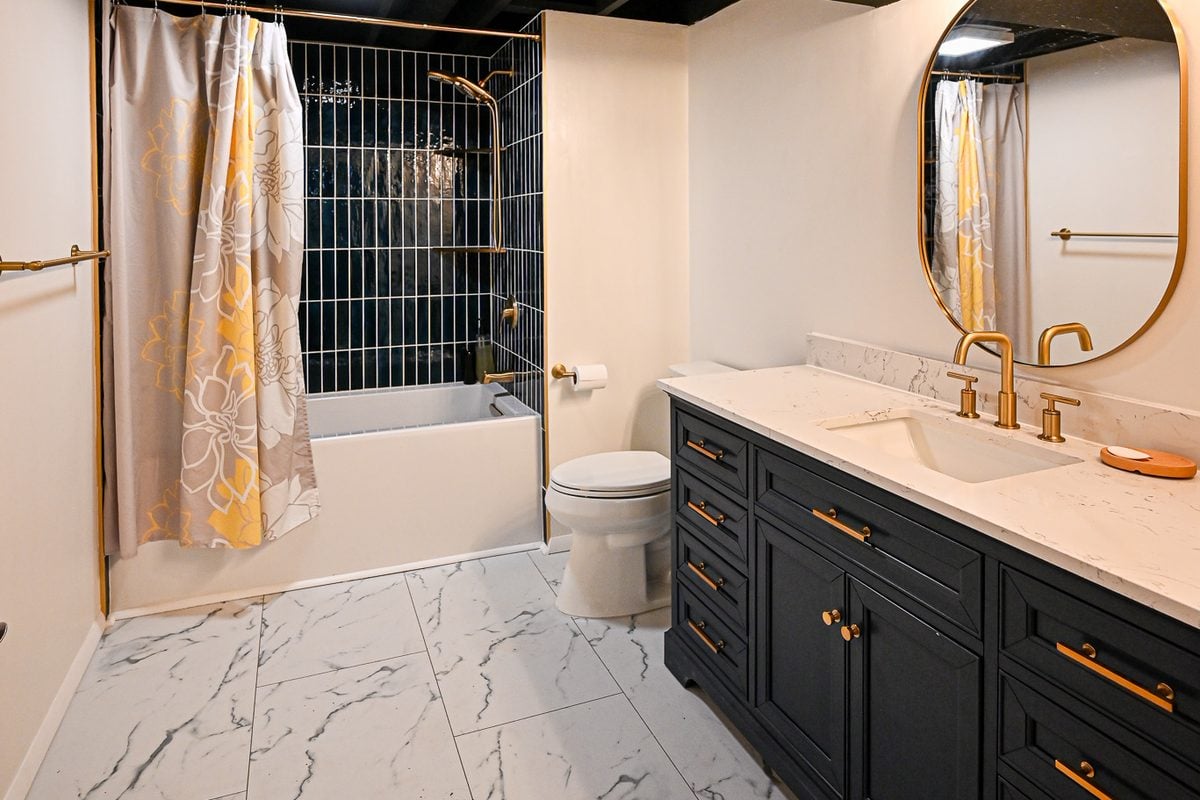
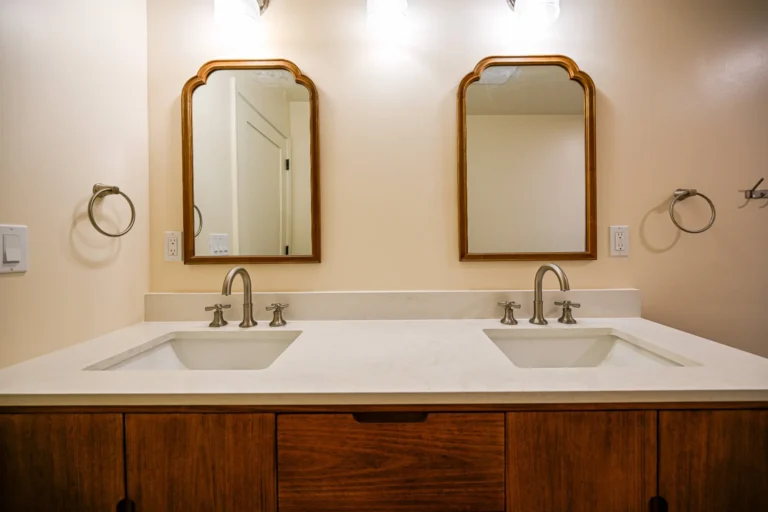
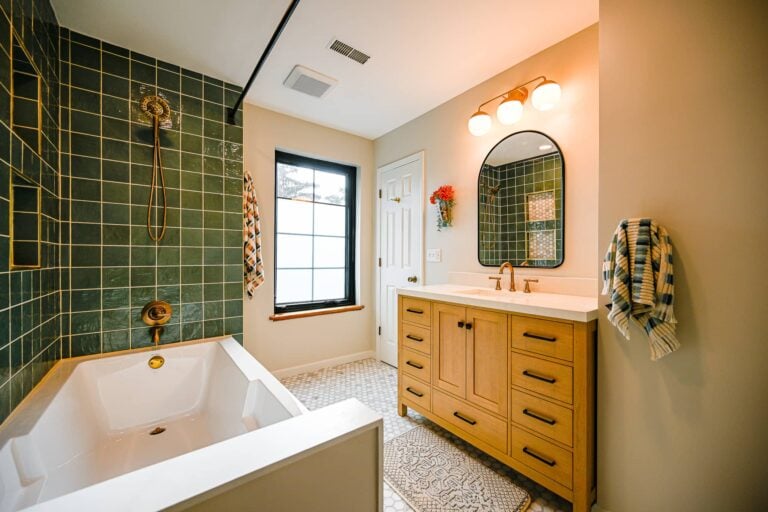
A bathroom runs on a handful of fixtures, and each one is a choice about function as much as looks. The faucet, the toilet, the tub, the shower valve and the sink all come in grades that range from builder-basic to precise and quiet. The finish, whether brushed nickel, chrome, matte black or brushed gold, should agree across all of them so the room reads as one decision.
- Faucets: single-hole, widespread or wall-mounted, matched to the sink
- Toilets: standard or comfort-height, one-piece or two-piece, water-saving
- Shower valves: pressure-balance or thermostatic for steady temperature
- Tub fillers: deck-mounted, wall-mounted or floor-standing for a freestanding tub
- Sinks: undermount, drop-in, vessel or integrated
We coordinate those fixture finishes with the rest of the room, so the faucet, the shower door hardware and the towel bars match rather than clash. It is a small thing that separates a finished bathroom from a collection of parts.
Grade is worth spending on where it counts. The faucet and the shower valve get used every day and are the ones that leak or drip when they are cheap, so they reward a step up. A high-end look, whether a wall-mounted faucet or a matte-black rain head, is where a luxury bathroom upgrade shows itself, and it only works when the plumbing behind it was roughed in to support it.
The shower valve most people never think about
The valve behind the shower wall is the fixture that matters most and gets noticed least. A basic valve lets the water swing hot when someone flushes elsewhere in the house. A pressure-balancing valve holds the temperature steady through that, which is a comfort upgrade and a scald-safety one. A thermostatic valve goes further, letting you set an exact temperature and run more than one shower head at once.
Choosing the valve is a rough-in decision, because it lives in the wall and cannot be upgraded later without opening the tile. That is why we settle it during design, especially on a larger shower with a rain head and a handheld, where the valve has to feed all of it. It is the same care that makes a walk-in shower feel like a spa instead of a trickle.
Toilets, and the water closet question
A new toilet is one of the higher-value, lower-cost fixture upgrades. Comfort-height bowls are easier to stand from, one-piece models wipe clean with no seam to trap grime, and modern low-flow designs use a fraction of the water older toilets did without the weak flush that gave early low-flows a bad name. A quality toilet is quiet, efficient and easy to clean, and it earns its place every day.
Moving a toilet is a bigger job than swapping one, because the drain has strict rules about slope and distance. Relocating it a few feet to build a private water closet or open up a layout is real plumbing that we map during design, so a master bathroom remodel gets the layout it wants rather than the one the old pipes dictated.
Tubs, tub fillers and the weight underneath
Tubs range from a simple alcove unit to a freestanding soaker that becomes the room’s centerpiece. The plumbing follows the tub: an alcove tub uses a standard wall valve and spout, while a freestanding tub needs a filler that reaches it, often a floor-mounted one plumbed up through the subfloor before the tub arrives. That filler is a rough-in decision that cannot wait until the end.
Weight matters too. A cast-iron or stone tub full of water and a person is heavy, and in an older home we check that the floor framing can carry it before anyone falls in love with a particular tub. Catching that during design is cheap; catching it after the tub is set is not.
Supply lines, shutoffs and the parts that fail
The unglamorous parts under the sink are the ones that flood a house. Shutoff valves that have not been turned in twenty years seize up, and old supply lines go brittle and let go. Any time we have a vanity out or a wall open, we replace those while they are easy to reach, because a two-dollar part now beats a soaked cabinet later. It is the kind of quiet, correct work that does not show but keeps the room dry.
In homes around Ann Arbor and the older parts of the region, we often find original galvanized supply lines that have narrowed with age and choke the water pressure. Replacing them during a remodel is the fix, and it is far easier while the walls are open than as an emergency later.
Hard water, pressure and what Michigan does to fixtures
Southeast Michigan’s water is hard, and that shortens the life of cheap fixtures. Minerals clog aerators, spot the finish and wear out valve cartridges faster. A quality faucet and shower valve with ceramic-disc cartridges shrug that off far better than a bargain fixture, which is why the grade of the fixture matters more here than in a soft-water area. We steer you toward fixtures that last in local water rather than the ones that look identical on the box and fail in two years.
Water pressure is the other local variable. If your shower has always been weak, the cause is usually the valve, the supply line or an old showerhead, and a remodel is the chance to trace and fix it rather than live with it. We diagnose the real cause instead of just swapping the head and hoping.
Venting, drains and the parts behind the wall
Every drain needs a vent, and a bathroom that drains slowly or gurgles usually has a venting problem rather than a clog. The vent lets air into the pipe so water flows instead of glugging, and it keeps sewer gas out of the room. When we open a wall, we check that the venting is correct, because a bathroom added or reworked years ago was not always vented to code, and it is the kind of hidden fault that never fixes itself.
Moisture is the other thing that lives behind the wall. A quiet, properly sized exhaust fan pulls damp air out before it soaks into the framing, and it is not optional in a Michigan bathroom where the window stays shut half the year. We size the fan to the room and vent it outside, not into the attic, so the moisture actually leaves the house instead of feeding mold above the ceiling. A fan on a timer or a humidity sensor runs long enough to clear the room without anyone remembering to switch it off.
Fixtures for a bathroom that works as you age
The right fixtures make a bathroom easier to use at every age. A comfort-height toilet, a lever or touchless faucet that works without a firm grip, a handheld shower on a slide bar, and a pressure-balancing valve that guards against scalds are all fixture choices that read as convenience now and as safety later. They belong in an accessible bathroom upgrade, and none of them looks clinical when it is chosen with the rest of the room in mind.
These choices cost little more than the standard versions when they go in during a remodel, and far more when they are retrofitted later. Planning them into a guest bathroom or a primary bath now is the cheapest time to do it, and it is the kind of forward thinking we raise during design rather than leaving you to discover it later.
The licensed work, and why the inspection matters
Plumbing that moves, and any new drain or vent, is licensed work under Michigan code, and it gets inspected. That inspection is not red tape; it is the record that the work was done to code, and it is the thing a buyer’s inspector looks for when you sell. Wright’s pulls the permits and schedules the inspections as part of the job, so the plumbing is on the books rather than a hidden liability behind the tile.
Electrical near water rides alongside the plumbing here. New outlets by a sink have to be GFCI outlets, and a bathroom exhaust fan has to move enough air to keep moisture from rotting the room. We coordinate the plumbing, the electrical and the venting so the whole rough-in passes together rather than in a series of return trips.
Small jobs done right
Not every plumbing job is a remodel. A leaking faucet, a running toilet or a fixture that has finally given out is a real problem that does not need a designer or a permit. A straight faucet replacement or a toilet swap is a job we are glad to do on its own, and we will tell you when the simple fix is the right one rather than talking you into a project you do not need.
If a small fixture job turns out to be hiding a bigger problem, like a drain that keeps clogging because of an old vent or a leak that has been feeding rot behind the wall, we tell you what we find and what it takes to fix it properly. Honesty about scope is the whole point of the way we work.
The reverse is true as well. Sometimes what feels like a big problem is a cheap fix, a worn cartridge rather than a failed valve, and we will save you the cost of a full replacement when the small repair is the honest answer. Either way you get the real diagnosis, not the most expensive one, and you decide how far to take it.
What bathroom plumbing and fixtures cost here
A finish fixture swap on existing lines is the least expensive work, because nothing moves. Adding or relocating plumbing costs more, since it means opening walls or floors and passing inspection. The fixtures themselves range widely, from builder-basic to precise and quiet, and the grade you choose drives a large part of the total. Most of the spread comes down to whether pipes move and how good the fixtures are.
- Fixture swap on existing lines, or new and relocated plumbing
- The grade of the faucets, valves and toilet
- Whether a shower valve is basic, pressure-balancing or thermostatic
- New GFCI outlets, switches and exhaust venting
- Permits and inspection for moved plumbing
To set a budget against your own room, the 2026 bathroom remodel costs page and the bathroom cost calculator both help. Fixtures are usually chosen alongside the bathroom design, so the finishes and the rough-in agree before the first pipe moves.
Questions homeowners ask about bathroom plumbing
Can you move the shower or sink to a new spot
Usually, within the limits of the drains and vents. Moving a sink is easier than moving a toilet, because a toilet drain has strict slope and distance rules. We map what your existing plumbing allows during design and price the move honestly, whether it is part of a full remodel or a targeted change.
Do I need a permit to replace fixtures
A like-for-like fixture swap on existing lines generally does not, while moving or adding plumbing does. We handle the permits and inspections for the work that needs them, so the record is clean for the day you sell. When a job is a simple swap, we say so rather than add cost.
Why is my water pressure so low
Most often it is an old valve, a narrowed supply line or a clogged aerator, all of which are fixable. In older homes it can be original galvanized pipe that has closed up with age. We trace the real cause during the work rather than guessing, and a full remodel is the natural time to correct it for good.
Plumbing and fixture projects across our six counties
Wright’s handles bathroom plumbing and fixtures throughout Washtenaw County and Oakland County, including homes in Plymouth and Birmingham, along with Wayne, Livingston, Macomb and Monroe. Whether it is a single faucet or a full re-plumb, the licensed work is pulled, inspected and done to code.
From a Google review
I could not be more pleased with the craftsmanship, attention to detail and diligence of Charles in building our Steam Shower in our basement. The design team with MacKenzie and Nick was also great. I use it as often as possible and love it.
Steam shower in a basement bathroom · Google review · Read the full review on Google
Start your plumbing and fixture project
Tell us what is leaking, weak or dated, and whether you want to move anything, and we can talk scope and rough numbers in a first call. View our Portfolio for the bathrooms this work lives inside, then Contact us now for a free quote or book a consultation to walk the room with us. You can also call (734) 540-0347, and we will tell you honestly whether it is a swap or a project.