
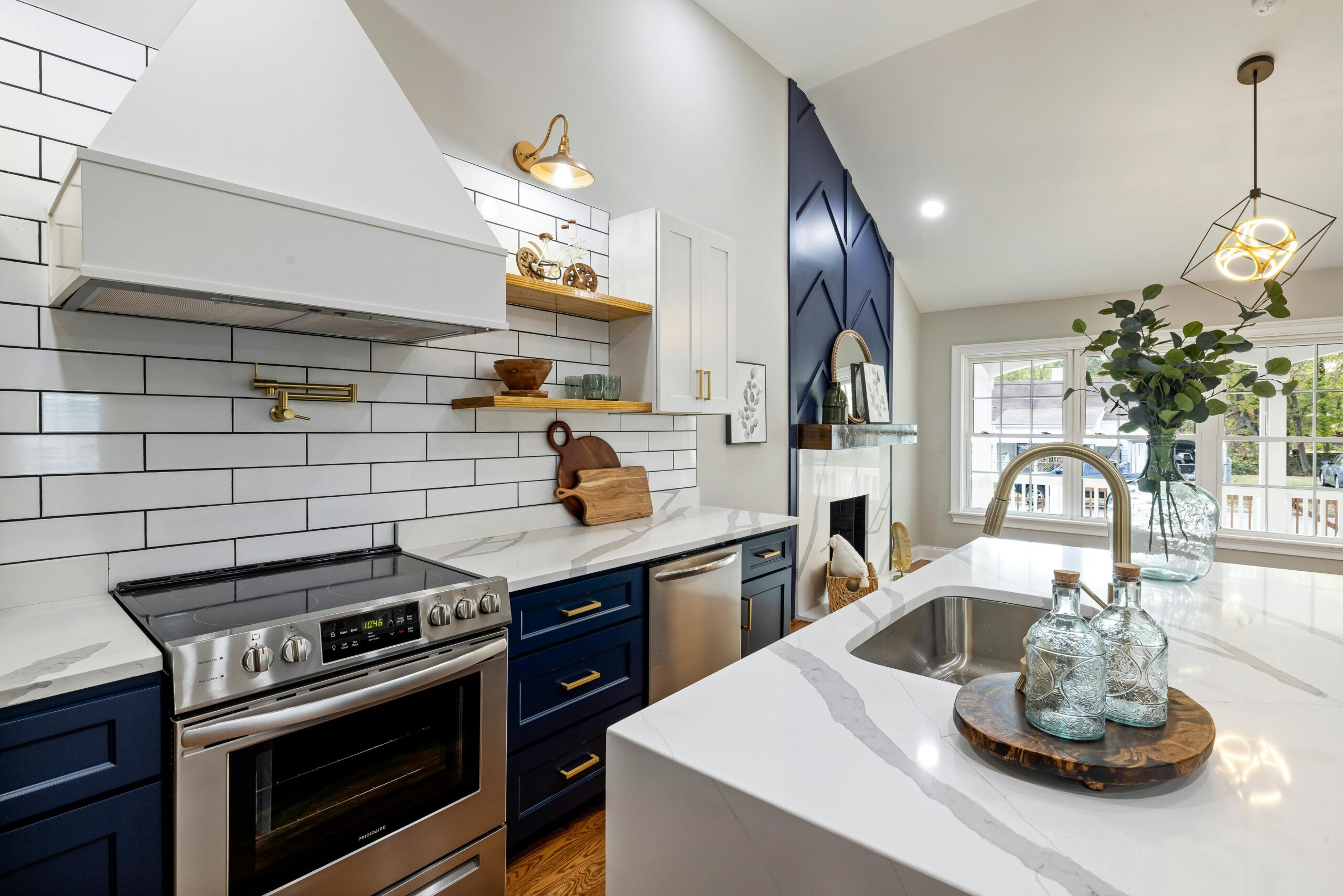
Kitchen remodel ROI in Michigan: is it worth the investment
Table of contents
- Kitchen remodel ROI in Michigan starts with the right numbers
- What the national data says about kitchen remodel ROI
- How Michigan kitchen remodel costs break down
- The ROI math at each price point
- Why Michigan ROI looks different from national averages
- Where your kitchen remodel dollars have the highest impact
- The ROI of not remodeling: what inaction costs
- How to maximize kitchen remodel ROI in your specific situation
- Kitchen remodel ROI compared to other renovation projects
- What I tell homeowners who are on the fence
Kitchen remodel ROI in Michigan starts with the right numbers
If you are reading this, you are probably asking yourself whether a kitchen remodel is worth the money. I get that question on almost every initial consultation I run at Wright’s Renovations’ kitchen remodeling division. The short answer on kitchen remodel ROI in Michigan is yes, but the long answer depends on what you spend, where your house sits, and how the work gets done. I have remodeled hundreds of kitchens across Southeast Michigan, and the ROI math is more nuanced than the national averages you see online. Let me walk you through the real numbers.
What the national data says about kitchen remodel ROI
Every year, Zonda Media publishes a Cost vs. Value report that contractors and real estate agents treat as gospel. The 2025-2026 numbers show a midrange major kitchen remodel recovering about 50-60% of its cost at resale nationally. An upscale major remodel lands in the 40-55% range. A minor kitchen remodel, where you keep the footprint and swap surfaces and fixtures, sits closer to 70-80%. Those numbers are useful as baselines, but they flatten the story. A $45,000 remodel in a $780,000 Ann Arbor home and a $45,000 remodel in a $250,000 Belleville home are not the same investment, even if the cabinets are identical.
National averages also ignore the fact that Michigan’s cost of living sits about 6% below the national average. That means your labor and material dollars stretch further here. The kitchen you would pay $85,000 for in suburban Chicago might cost $65,000-$75,000 in Canton or Plymouth. Lower input cost, similar resale lift: that is where Michigan homeowners have an advantage.
How Michigan kitchen remodel costs break down
I want to ground this in real Southeast Michigan numbers because vague ranges help nobody. Here is what we see across our design-build projects in Washtenaw, Wayne, Oakland, Macomb, Livingston, and Monroe counties:
- Minor kitchen remodel (keep the footprint, new cabinets, countertops, appliances, flooring, paint): $25,000-$45,000
- Midrange major remodel (layout changes, new plumbing or electrical runs, semi-custom cabinets, stone countertops): $45,000-$85,000
- Upscale major remodel (structural changes, custom cabinetry, premium appliances, designer finishes): $85,000-$130,000+
The single biggest variable is cabinetry. Custom cabinets can account for 35-45% of your total budget. Stock cabinets start around $5,000 for a mid-size kitchen. Custom cabinets for the same space can run $25,000 and up. That one decision swings the project cost dramatically, and it directly affects the ROI calculation because buyers notice cabinet quality the moment they open a door.
The ROI math at each price point
Let me use real numbers from Ann Arbor, where median home values sit around $433,000-$489,000 depending on the neighborhood, with central Ann Arbor homes averaging closer to $785,000.
Minor kitchen remodel: $30,000 spend in a $450,000 home
A minor remodel is the sweet spot for ROI. You are spending about 6.5% of your home value, which falls well within the 5-15% range that appraisers and real estate agents recommend for kitchen investment. At 70-80% recoup, you are looking at $21,000-$24,000 in added resale value. But the number that matters more is this: homes with updated kitchens sell faster. In the Ann Arbor market, a home with a recently remodeled kitchen typically spends fewer days on the market than a comparable home with an original 1990s kitchen. Days on market cost you money in carrying costs, price reductions, and negotiating leverage.
The work at this level includes things like new countertops and backsplash, replacing outdated appliances, painting or refacing cabinets, and swapping the flooring. The kitchen still functions the same way it always did, but it looks and feels like a different room. I did a project like this in Dexter last fall where we kept the original layout, replaced the laminate counters with quartz, added a tile backsplash, and installed new under-cabinet and pendant lighting. The homeowner spent $32,000. Their agent told them it added $40,000 to the listing price. That is not guaranteed, but it shows what a targeted refresh can do in the right market.
Midrange major remodel: $65,000 spend in a $489,000 home
At this level, you are spending about 13% of your home’s value. You are into kitchen island installations, moving gas lines, upgrading the electrical panel, and possibly opening a wall to the dining or living room. The recoup rate drops to 50-65%, putting your resale gain at $32,500-$42,250. The math looks less favorable on paper, but it misses two things.
First, you live in the kitchen. If you are staying in your home for five years or more, the daily quality-of-life improvement matters. A functional kitchen with good flow, adequate counter space, and proper ventilation changes how your family eats, cooks, and spends time together. Second, the midrange remodel is often what pushes a home from one pricing tier to the next. In Northville, where the median sits around $572,000, a home with a dated kitchen competes in the $500,000 bracket. The same home with a modern, open kitchen competes in the $575,000-$625,000 bracket. That tier jump can return more than the raw percentage suggests.
Upscale major remodel: $110,000 spend in a $785,000 home
This is where ROI gets complicated. You are spending 14% of home value, which is still reasonable, but the recoup rate drops to 40-55%. That means $44,000-$60,500 in added value on a $110,000 spend. The gap between cost and recoup is real. But this category exists for homeowners who are not remodeling to sell. They are building the kitchen they want to cook in for the next 15 years. And in the Birmingham and Bloomfield Hills markets, where homes regularly sell for $700,000-$2,000,000+, an upscale kitchen is expected, not optional. Listing a $1.2 million home with builder-grade cabinets and laminate countertops is a competitive disadvantage.
The key at this price point is choosing materials and finishes that hold up and stay current. Thoughtful kitchen design with clean lines, natural stone, and quality hardware ages better than trendy choices that look dated in five years. I always tell clients: if you are spending $100,000+, hire a design-build firm that handles the full process so the design and the construction are talking to each other from day one.
Why Michigan ROI looks different from national averages
There are five Michigan-specific factors that shift the ROI equation. Ignoring these means you are using the wrong numbers to make your decision.
Lower construction costs relative to home values
Michigan construction labor rates are 10-15% below coastal markets. A kitchen that costs $45,000 here might cost $55,000-$60,000 in the DC suburbs or Northern New Jersey. But the resale value lift is comparable in absolute dollar terms because buyers in any market pay a premium for a new kitchen. The result is that Michigan homeowners get a better ROI on the same scope of work.
Seasonal selling patterns amplify the return
Michigan’s real estate market peaks between April and July. If you remodel your kitchen in January through March, you hit the market with a fresh kitchen right when buyer traffic is highest. I see this every year: clients who finish a kitchen remodel in March and list in May consistently outperform comparable homes that listed in the same window without updates. Timing your remodel to align with selling season is a lever most homeowners do not pull.
Housing stock age creates above-average uplift
A huge portion of Southeast Michigan’s housing stock was built between 1950 and 1985. That means original kitchens are 40-75 years old. The gap between the existing condition and a modern remodel is enormous, and buyers see it immediately. Compare that to a home built in 2005 where the kitchen is functional, just dated. The ROI on remodeling the 1965 ranch kitchen is substantially higher than refreshing the 2005 colonial kitchen because the perceived improvement is greater. If you own a home in Livonia, Westland, or Royal Oak with an original kitchen, the case for remodeling is strong.
Energy and infrastructure upgrades compound the value
A kitchen remodel in Michigan often includes electrical panel upgrades, improved insulation in exterior walls, and new windows. These upgrades reduce energy costs in a state where winters demand serious heating performance. A buyer seeing a new kitchen, new electrical, and lower utility projections is seeing three value-adds stacked together. The kitchen is the visible upgrade, but the infrastructure work underneath it contributes to the appraisal and the buyer’s perception of a well-maintained home.
Open-concept demand is reshaping older floorplans
Michigan buyers in the $350,000-$700,000 range want open kitchens that connect to living and dining spaces. Most mid-century Michigan homes were built with closed-off kitchens separated by load-bearing walls. A kitchen remodel that opens the floor plan is one of the highest-impact changes you can make to a home’s flow and perceived size. We do this regularly with open concept kitchen remodels in older Michigan homes, and the before-and-after shift in how the main floor feels is dramatic. The ROI on layout changes often exceeds the ROI on material upgrades alone.

Where your kitchen remodel dollars have the highest impact
Not every dollar in a kitchen remodel returns equally. Here is where I tell clients to focus if ROI is a priority.
Countertops are the first thing buyers notice
Quartz and granite countertops read as modern and high-quality. Laminate reads as budget. Swapping laminate for stone is one of the highest-ROI single moves in a kitchen remodel. The installed cost for quartz countertops in Southeast Michigan runs $50-$120 per square foot depending on the slab, edge profile, and complexity. On a 40-square-foot countertop, that is $2,000-$4,800. The perceived value boost far exceeds the cost.
Cabinets set the quality perception
You do not necessarily need full custom cabinets for good ROI. Semi-custom cabinets in the $12,000-$18,000 range for a mid-size kitchen offer most of the visual quality of custom at 40-60% of the cost. Features that matter: soft-close hinges, dovetail drawer construction, and finish quality. Features that don’t move the ROI needle as much: exotic wood species, glass inserts, and decorative corbels. If you want to see the range, take a look at our breakdown of kitchen remodel costs by line item.
Lighting changes the feel of the room
Under-cabinet task lights, recessed cans on dimmers, and one statement pendant over an island or peninsula cost $2,000-$5,000 installed. The impact on how the kitchen photographs for a listing and how it feels during a showing is disproportionate to the spend. Good lighting makes countertops shine, cabinets look richer, and the whole room feel more intentional. I always recommend layered kitchen lighting as a non-negotiable, even on budget-conscious projects.
Appliances have diminishing returns
A $3,000 refrigerator and a $9,000 refrigerator both keep food cold. Buyers notice whether appliances are new and stainless, but they rarely differentiate between mid-grade and pro-grade on a walkthrough. Unless you are in the luxury tier ($750,000+ home value), mid-grade stainless appliances give you 90% of the visual impact at 40% of the cost. Professional appliance installation matters more than the brand badge.
The ROI of not remodeling: what inaction costs
Homeowners who delay kitchen remodels often miss that the cost of waiting is not zero. Material costs have increased 15-25% since 2020 in Michigan. Cabinet lead times, while shorter than the 2021-2022 peak, still run 4-8 weeks for semi-custom and 10-14 weeks for custom. And labor availability tightens every spring as contractors book up for peak season.
There is also the opportunity cost. Every month you live with a kitchen that does not work for you is a month of friction, workarounds, and settling. If you are planning to sell in the next 2-5 years, starting the remodel now means you get to enjoy the kitchen before it adds value at resale. If you wait until three months before listing, you get none of the daily benefit and all of the construction stress.
How to maximize kitchen remodel ROI in your specific situation
The formula I use with every client is simple: spend 5-15% of your home’s current market value on the kitchen, target the mid-range of your neighborhood’s quality level, and invest the most in the surfaces and systems you touch every day.
Match your remodel to your neighborhood
If every kitchen on your street has granite and stainless, you need granite and stainless to compete. If every kitchen has custom cabinetry and Sub-Zero appliances, you need to play at that level or accept that your home prices below the comps. Under-improving for your neighborhood leaves money on the table at resale. Over-improving means you spend more than you can recover because the neighborhood sets a ceiling. Check what comparable homes in Washtenaw County or Oakland County are listing with and target that standard.
Work with a design-build contractor who owns the full scope
When the designer and the builder are the same team, decisions get made faster, budgets stay tighter, and the final result matches the original vision. A design-build approach eliminates the gap between what gets designed on paper and what gets built in your kitchen. That gap is where budget overruns live. Every dollar saved on miscommunication and rework is a dollar that shows up in your ROI.
Do not skip the infrastructure
I know it is tempting to put every dollar into the visible finishes. But if your electrical panel cannot handle a modern kitchen load, if your plumbing is corroded galvanized pipe, or if your subfloor is sagging, those problems will surface during the remodel anyway. Addressing them intentionally, as part of the project scope, costs less than discovering them mid-demolition. And they add real value to the home even if the buyer never sees the new wiring behind the walls.
Kitchen remodel ROI compared to other renovation projects
Kitchens are not the only renovation that returns value. Here is how they stack up against other common projects in Michigan:
- Kitchen remodel (minor): 70-80% ROI, highest recoup rate among major interior projects
- Bathroom remodel: 60-70% ROI; see our guide on bathroom remodeling in Southeast Michigan
- Basement finishing: 60-75% ROI, strong in Michigan where basements are standard; explore basement finishing options
- Home addition: 50-65% ROI, varies widely by addition type; Michigan addition cost data helps frame the decision
The kitchen consistently ranks first or second in ROI among interior projects. The reason is simple: every buyer uses the kitchen. Not every buyer needs a finished basement or a home addition, but every buyer cooks, eats, and gathers in the kitchen. It is the room that sells the house.
What I tell homeowners who are on the fence
If you are sitting in a Michigan kitchen with oak cabinets from 1992, Formica countertops, and fluorescent tube lighting, the case for remodeling is about as strong as it gets. Your starting point is so far below the current market standard that even a moderate investment creates a visible, measurable improvement.
If your kitchen was last updated 10-15 years ago and it is functional but dated, the decision is more about timing and lifestyle than pure ROI. Are you staying for five or more years? Remodel now and enjoy it. Are you selling within two years? A minor refresh, focusing on countertops, hardware, lighting, and paint, gives you the best return per dollar.
Either way, start with a conversation, not a contract. A 30-minute consultation will tell you more about your specific ROI potential than any article, including this one. I can walk through your kitchen, look at your home’s value relative to comps, and give you a realistic scope and number. Schedule a consultation with our team and we will map out what makes sense for your situation.
If you want to see what finished projects look like before you call, browse our project portfolio. And if you want to hear from homeowners who have been through the process, our client reviews tell the story better than I can.
The kitchen is the room that works hardest in your home. When it works well, everything flows. When it does not, you feel it every morning. The ROI is real, the math works in Michigan’s favor, and the right contractor makes the difference between a good investment and a great one.
