
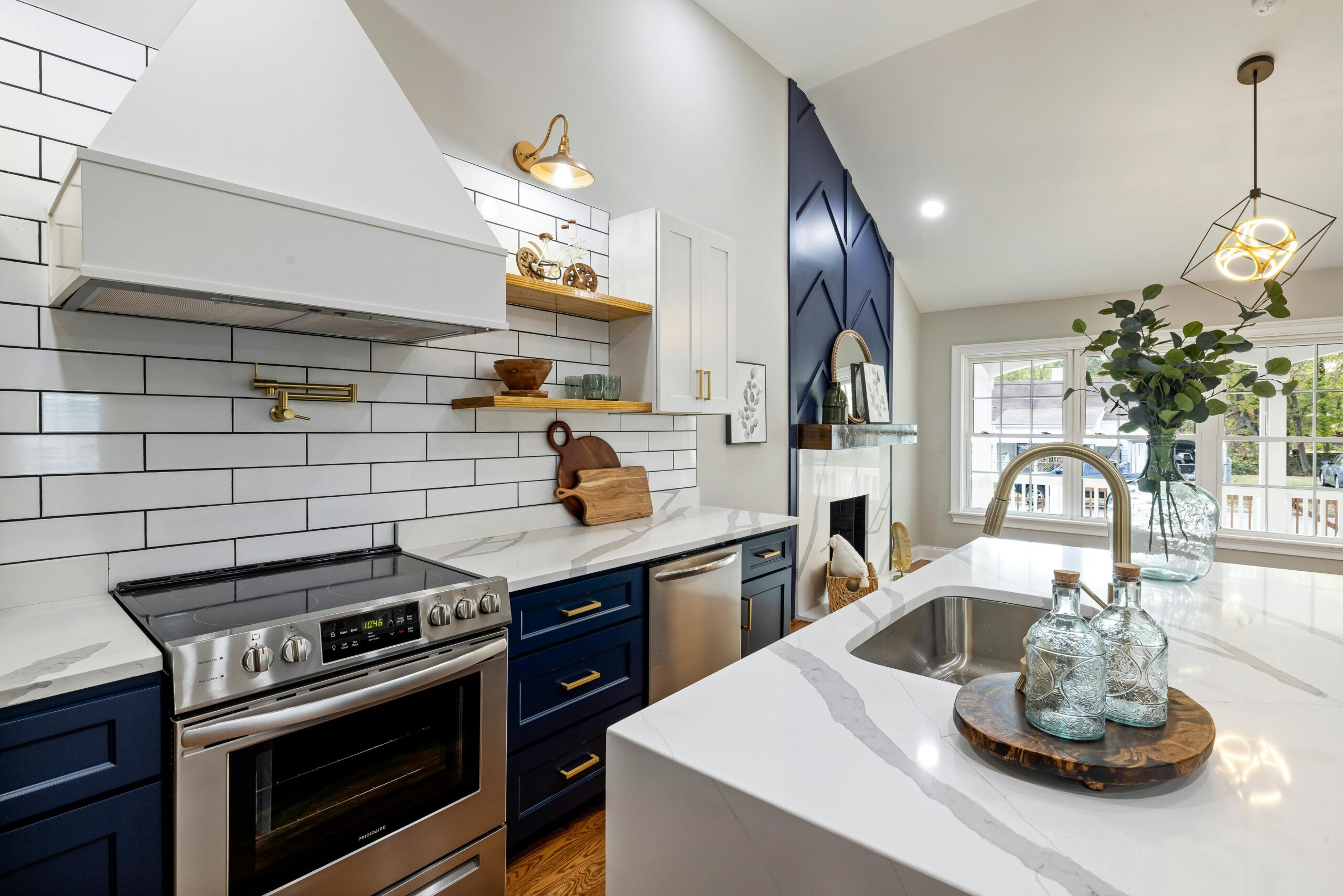
Kitchen layout types: choosing the right floor plan for your Michigan home
Table of contents
- Kitchen layout types and how to pick the right one for your home
- L-shaped kitchen: the most versatile layout for Michigan homes
- U-shaped kitchen: maximum counter space and storage
- Galley kitchen: efficiency in a compact footprint
- Island kitchen: the social hub layout
- Open concept: removing walls to connect kitchen and living space
- Peninsula kitchens: the island alternative for smaller rooms
- Common layout mistakes to avoid in Michigan kitchens
- How to choose the right layout for your Michigan kitchen
Kitchen layout types and how to pick the right one for your home
Kitchen layout types determine how efficiently you cook, how easily multiple people can move through the space, and how the kitchen connects to the rest of your home. A layout that works in a 300-square-foot open-concept kitchen fails completely in a 100-square-foot galley. I have remodeled kitchens in colonial homes, ranch homes, mid-century moderns, and new construction across Ann Arbor, Birmingham, and Southeast Michigan, and the layout decision shapes every other choice in the project, from cabinet configuration to appliance placement to where the island sits.
This guide covers the five most common kitchen layouts with the dimensions, costs, and trade-offs for each one. No single layout is best. The right layout depends on your room’s footprint, your cooking habits, and how many people use the kitchen at the same time.
L-shaped kitchen: the most versatile layout for Michigan homes
The L-shaped kitchen runs cabinets and countertops along two perpendicular walls, creating an open floor plan on the remaining two sides. It is the most common layout in our Southeast Michigan projects because it works in rooms as small as 100 square feet and as large as 250 square feet. The open sides accommodate a dining table, an island, or simply clear traffic flow between rooms.
In the post-war ranch homes throughout Livonia, Canton, and Wayne County, the original kitchen is typically a small L or a U that was walled off from the living and dining rooms. Converting these kitchens to an open L-shape by removing the wall between the kitchen and the adjacent room is the single most impactful renovation we perform. The kitchen footprint does not change, but the perceived size doubles when the visual barrier disappears.
L-shaped layout costs and considerations
An L-shaped kitchen remodel in our projects runs $35,000 to $80,000 depending on the cabinet tier, surface material selection, and whether structural walls need modification. If one of the L walls is load-bearing and the homeowner wants it opened, a structural beam ($2,500 to $6,000 installed) replaces the wall’s function while removing the visual barrier. The Ann Arbor kitchen remodel cost guide shows how layout complexity affects total project pricing.
The L-shape’s weakness is limited counter space. With cabinets on only two walls, the total linear footage is less than a U-shape or a galley. Adding an island compensates for this, but the island needs at least 42 inches of clearance on all sides for comfortable movement (48 inches if the island has seating on one side). In kitchens smaller than 120 square feet, the island may not fit without cramping the work triangle.
U-shaped kitchen: maximum counter space and storage
The U-shaped layout wraps cabinets and countertops around three walls, creating a horseshoe that maximizes counter space, storage, and work area within the room’s footprint. For serious home cooks who need prep space, staging area, and cleanup space simultaneously, the U-shape provides the most functional surface area per square foot of kitchen.
The trade-off is the enclosed feel. A U-shaped kitchen with upper cabinets on all three walls can feel like a tunnel, especially in kitchens with 8-foot ceilings common in homes across Plymouth and Northville. Removing upper cabinets from one wall and replacing them with open shelving or a window lightens the space dramatically. Another approach is using glass-front cabinets on the wall facing the main entry point, which adds visual depth while keeping storage intact.
U-shaped dimensions and requirements
A U-shaped kitchen needs a minimum of 10 feet between the parallel cabinet runs to allow two people to pass comfortably. Kitchens narrower than 8 feet become a U-shaped squeeze where opening the dishwasher blocks the aisle. If your kitchen is under 8 feet wide between the two parallel walls, a galley or an L-shape is a better use of the space.
U-shaped kitchens with an island are the premium configuration for large rooms. The island sits in the middle of the U, creating a command-center layout where the cook can reach the sink, stove, and refrigerator without walking more than a few steps. This configuration requires a room width of at least 14 feet (the two U walls at 24 inches deep each, plus 42-inch aisles on each side, plus a 36-inch island). Homes in Oakland County with open-concept great rooms frequently have the dimensions to support this layout.
Galley kitchen: efficiency in a compact footprint
The galley kitchen runs two parallel cabinet walls with a corridor between them. It is the most space-efficient layout because every square foot is working. The work triangle (sink, stove, refrigerator) lives within a few steps in any direction, and counter space is continuous along both walls. Professional restaurant kitchens use the galley format because it minimizes wasted movement during cooking.
For smaller Michigan homes, condos, and apartments where the kitchen occupies a hallway-sized space between rooms, the galley layout makes the most of every inch. A 7-by-12-foot galley kitchen has roughly the same cabinet and counter space as a 10-by-12-foot L-shape, packed into 84 square feet instead of 120. The kitchen remodel service covers our approach to maximizing function in compact layouts.
Galley kitchen costs in Michigan
Galley remodels run $25,000 to $55,000 in our projects. The lower cost compared to L and U configurations reflects the smaller footprint: fewer linear feet of cabinets, less countertop material, and less flooring. The per-square-foot cost may actually be higher than a larger kitchen because the plumbing, electrical, and appliance costs are similar regardless of size, but the absolute dollar amount is lower.
The galley’s main limitation is traffic. In a home where the kitchen corridor connects two living spaces, people walking through the kitchen while the cook is working creates constant congestion. If your kitchen serves as a hallway between the dining room and the family room, consider whether an L-shape would provide better traffic flow even if it means slightly less cabinet space. For kitchens with a dead end (the corridor leads to a pantry or window, not another room), the galley works perfectly because there is no through-traffic.

Island kitchen: the social hub layout
The kitchen island has evolved from a simple prep surface to the organizing element of the entire kitchen. In open-concept homes across Novi, Rochester Hills, and the broader Southeast Michigan market, the island functions as prep space, casual dining counter, homework station, and the physical boundary between kitchen and living room. Designing the island correctly is as important as designing the perimeter cabinets.
Island sizing and clearance
The minimum island size that functions well is 24 inches deep by 48 inches long. Below that, the surface is too small to serve as useful prep space and the storage underneath is too shallow for standard cabinets. The ideal island for a family kitchen is 36 inches deep by 72 to 96 inches long, which provides enough surface for a prep zone on one side and seating for two to four people on the other.
Clearance around the island is non-negotiable. Forty-two inches minimum between the island and any perimeter cabinet or wall. Forty-eight inches is better, especially if the aisle serves as a traffic route. Sixty inches is ideal between the island and a cooking surface, because the cook needs room to step back from the stove without bumping into the island. I measure every kitchen during the design consultation and will tell you directly if the room cannot support an island at functional clearances. A cramped island creates more problems than no island at all.
Island costs and features
A basic island with cabinets, a countertop, and no plumbing or electrical runs $3,000 to $8,000 depending on the cabinet tier and countertop material. Adding a sink requires extending the drain and supply lines ($1,500 to $3,000 for plumbing). Adding a dishwasher, cooktop, or prep sink increases both the plumbing and electrical scope. A fully loaded island with a cooktop, prep sink, dishwasher, and waterfall countertop edge can add $15,000 to $25,000 to the kitchen remodel cost.
Open concept: removing walls to connect kitchen and living space
Open-concept kitchen design removes the walls between the kitchen and adjacent living or dining rooms, creating one continuous space. It is the most requested layout change in our Southeast Michigan projects, driven by the desire for better sightlines, natural light flow, and a social cooking experience where the cook participates in family activity instead of working in isolation behind a wall.
Wall removal costs $2,500 to $8,000 depending on whether the wall is load-bearing. A non-load-bearing partition wall can be removed in a day for $2,500 to $4,000 including drywall patching, flooring transition, and paint. A load-bearing wall requires a structural engineer’s design for the replacement beam, plus the beam fabrication and installation. Total cost for load-bearing wall removal with a steel or LVL beam runs $5,000 to $8,000 in our projects. The permit requirements for Southeast Michigan always include structural review when a bearing wall is involved.
The open-concept trade-off is noise and odor. Cooking smells travel freely into the living room. Dishwasher and exhaust fan noise carries throughout the open space. A quality range hood ducted to the exterior ($800 to $2,500 for the hood plus $500 to $1,200 for ductwork) is essential in an open kitchen because the recirculating hoods that work passably in enclosed kitchens cannot manage the airflow demands of an open floor plan.
Peninsula kitchens: the island alternative for smaller rooms
A peninsula extends from a wall or cabinet run to create a three-sided counter surface. It functions like an island (prep space on one side, seating on the other) but does not require 42-inch clearance on all four sides because one end connects to the existing layout. For kitchens under 130 square feet where a freestanding island would create cramped aisles, the peninsula delivers the same functionality in a smaller footprint.
Peninsula kitchens are common in our Ypsilanti and western Wayne County projects where the original kitchen is an enclosed room that the homeowner wants to partially open. Removing the upper portion of a wall and installing a peninsula countertop creates a pass-through between the kitchen and the dining or living room. The peninsula supports seating for two to three people while the base of the former wall provides storage on the kitchen side.
Common layout mistakes to avoid in Michigan kitchens
The refrigerator next to the stove is the most common layout error in DIY kitchen plans. The refrigerator generates heat on its exterior panels and works harder when positioned next to a heat source. The stove radiates heat during cooking that forces the refrigerator compressor to run more frequently. Placing at least 15 inches of counter space between the two appliances (or putting them on separate walls) resolves the issue and creates a landing zone for items moving between the fridge and the stove.
Insufficient counter space on either side of the sink is another frequent mistake. You need at least 24 inches of clear counter on one side of the sink for stacking dirty dishes and at least 18 inches on the other side for a drying rack or clean dish staging. In small kitchens where counter space is precious, the sink placement must account for these working zones or the cook runs out of staging space during meal preparation. Our quality standards include minimum counter clearances around all major fixtures because these measurements affect daily usability more than the finish materials.
Door swing conflicts are the invisible layout error that becomes obvious on day one. The dishwasher door, when open, should not block the path to the refrigerator. The oven door should not block the kitchen aisle. The cabinet doors flanking the stove should not hit the range hood when opened to 90 degrees. I map every door swing during the design phase because resolving a conflict on paper costs nothing, but resolving it after cabinets are installed costs thousands.
How to choose the right layout for your Michigan kitchen
Start with the room’s physical dimensions and the locations of the plumbing stack, electrical panel, windows, and exterior walls. These fixed elements constrain what is possible without major structural work. A well-run renovation process maps these constraints before any design sketching begins.
Then consider how you cook. If you cook solo and want maximum efficiency, a galley or U-shape puts everything within arm’s reach. If multiple people cook or prep together, an L-shape with island or an open concept gives room for two or three people without collisions. If the kitchen serves primarily as a social space where food preparation happens alongside entertaining, the island layout with open sightlines to the living area delivers that experience.
At Wright’s Renovations, we sketch two or three layout options during the initial kitchen remodel consultation so you can compare configurations before committing to a direction. The sketch takes the conversation from abstract to concrete in 15 minutes. Schedule a consultation to explore layout options for your kitchen. We serve homeowners across Washtenaw, Oakland, and Wayne counties, and layout planning is where every kitchen project starts. Check our client reviews to see how different layouts look in completed Michigan kitchens.
