
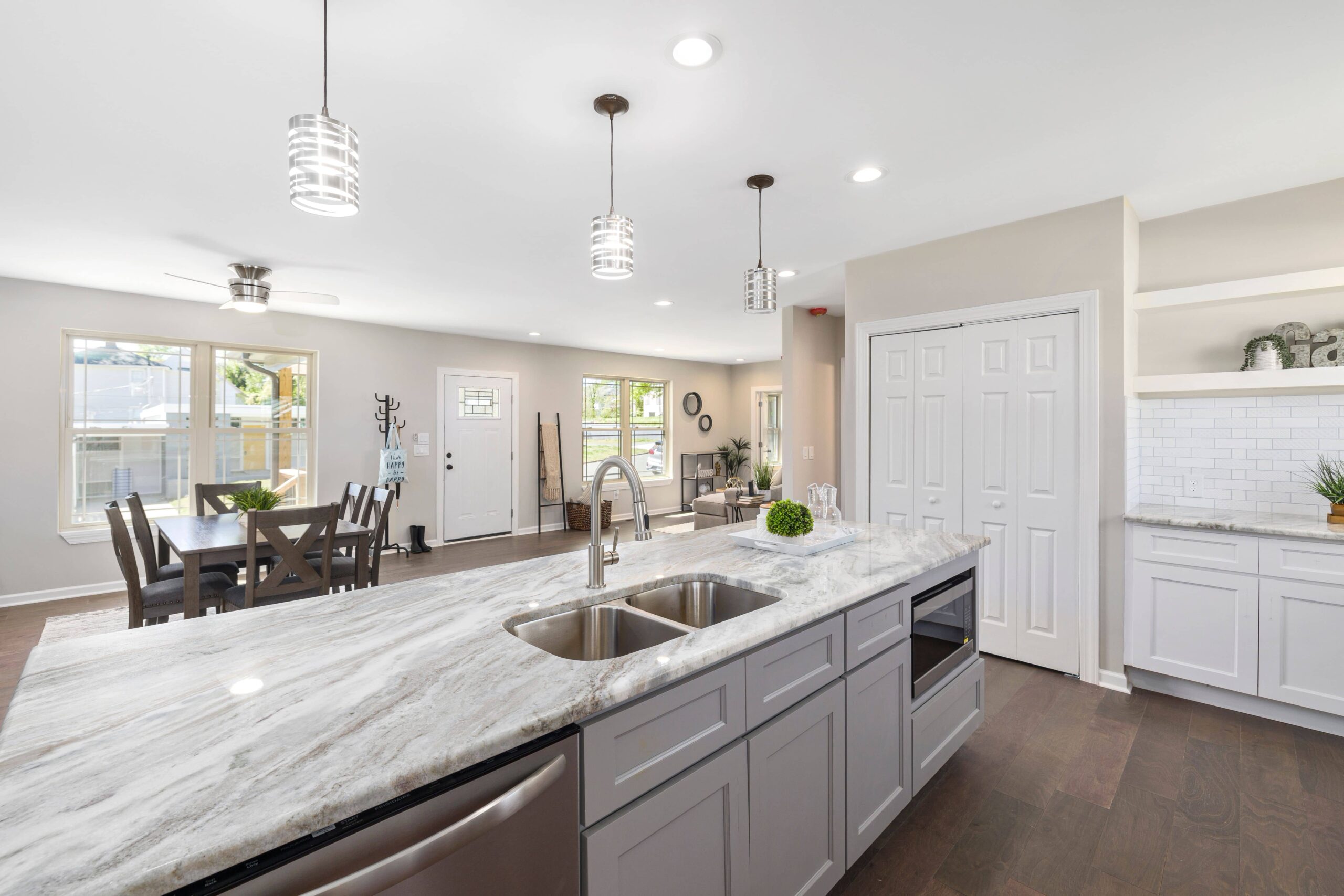
Kitchen remodel cost in Ann Arbor, Michigan
Table of contents
- What a kitchen remodel actually costs in Ann Arbor, Michigan
- Ann Arbor kitchen remodel cost by scope
- Why Ann Arbor costs more than the state average
- Cost breakdown by component for Ann Arbor kitchens
- How neighborhood affects cost in Ann Arbor
- What drives kitchen costs up beyond the estimate
- Financing and return on investment for Ann Arbor kitchens
- Timeline for a kitchen remodel in Ann Arbor
- How to get an accurate cost estimate for your kitchen
- Seasonal pricing and when to start your Ann Arbor kitchen project
What a kitchen remodel actually costs in Ann Arbor, Michigan
I price kitchens in Ann Arbor every week. The numbers I see on national websites bear almost no resemblance to what Ann Arbor homeowners actually spend. National averages say $25,000 to $50,000. That might be accurate in rural Alabama. In Ann Arbor, where the median home value pushes past $480,000 and homeowners expect materials and finishes that match the investment they’ve made in the neighborhood, the real numbers look different.
Here are the ranges we see across our kitchen remodel projects in Ann Arbor and the surrounding Washtenaw County area, based on actual completed projects from the last three years.
Ann Arbor kitchen remodel cost by scope
A cosmetic refresh, where you keep the existing layout but replace surfaces and fixtures, runs $35,000 to $55,000 in Ann Arbor. This covers new countertops, refaced or painted cabinets, new flooring, updated lighting, a fresh backsplash, and new hardware. You’re not moving walls, not relocating plumbing, not changing the footprint. Think of it as a skin-deep upgrade that makes an outdated kitchen feel current without tearing it apart.
A full remodel, where you gut the kitchen and rebuild it with a new layout, new cabinets, new everything, runs $75,000 to $130,000 in Ann Arbor. This is the scope most of our Ann Arbor clients choose. It includes custom or semi-custom cabinetry, stone countertops, new plumbing fixtures and rough-in, new electrical circuits and panel upgrades if needed, island installation or reconfiguration, professional-grade appliances, and hardwood or tile flooring. Layout changes that involve removing a wall or adding a pantry fall into this range.
A premium or luxury kitchen renovation, where we’re talking imported materials, professional gourmet stations, custom millwork, butler’s pantries, and high-end integrated appliances, runs $150,000 to $250,000 and above. These projects are most common in the Burns Park, Barton Hills, and central Ann Arbor neighborhoods where home values support the investment. At this level, every surface is custom, every detail is specified, and the timeline extends because materials are sourced from specialty fabricators.
Why Ann Arbor costs more than the state average
Michigan’s average kitchen remodel cost runs about 6% below the national average. But Ann Arbor isn’t average Michigan. The reasons are specific and quantifiable.
First, the housing stock demands it. A 1920s Tudor in the Old West Side with original plaster walls, knob-and-tube wiring remnants, and a Michigan basement requires more structural and mechanical work than a 1990s colonial in the suburbs. Opening up a kitchen wall in an 80-year-old house means checking for asbestos, upgrading the electrical panel, and sometimes reinforcing floor joists that have sagged over decades. Those aren’t optional extras. They’re prerequisites that add $5,000 to $15,000 to the project before you pick a single finish material.
Second, Ann Arbor homeowners have higher expectations for materials. The average countertop selection in our Ann Arbor projects is quartzite or natural marble, not laminate. The average cabinet line is semi-custom or full custom, not stock. The average appliance package includes at least one professional-grade piece. These choices reflect the neighborhood, the home values, and the standards the homeowner will live with for the next 15 to 20 years.
Third, the labor market in Ann Arbor is competitive. Skilled trades workers in Washtenaw County command higher wages than their counterparts in Livingston or Monroe counties because the cost of living is higher and the demand for quality renovation work is intense. Every design-build firm, general contractor, and specialty trade in the area is pulling from the same labor pool. We retain our crews with W-2 employment, benefits, and consistent work, but that workforce stability comes at a higher cost than the industry’s typical subcontractor model.
Cost breakdown by component for Ann Arbor kitchens
Here’s where the money goes in a typical $100,000 Ann Arbor kitchen remodel. These percentages shift based on the specific project, but they give you a framework for understanding how the budget allocates.
Cabinetry and hardware takes 30% to 35% of the budget, or $30,000 to $35,000. This is the single largest line item in any kitchen. Semi-custom cabinets with soft-close hinges, dovetail drawer boxes, and a painted or stained finish run $18,000 to $28,000 installed. Full custom cabinets with specialty storage, integrated lighting, and furniture-grade construction push $35,000 to $50,000. The cabinet choice drives more of the final look and feel than any other single decision.
Countertops take 10% to 15%, or $10,000 to $15,000. Quartz runs $65 to $120 per square foot installed. Quartzite and natural marble run $100 to $200 per square foot. Butcher block, concrete, and other specialty materials fall in between. A typical Ann Arbor kitchen has 40 to 55 square feet of counter space including the island.
Flooring takes 7% to 10%, or $7,000 to $10,000. Hardwood is the dominant choice in Ann Arbor kitchens, running $8 to $15 per square foot installed for site-finished white oak or hickory. Porcelain tile and luxury vinyl plank are alternatives that perform better in moisture-prone areas near the sink and dishwasher.
Appliances take 10% to 15%, or $10,000 to $15,000 for a standard package (range, refrigerator, dishwasher, microwave, hood). A single professional-grade range from Wolf or Thermador can hit $8,000 to $12,000 on its own. Panel-ready refrigerators that sit flush with the cabinetry run $6,000 to $10,000.
Electrical and lighting takes 5% to 8%, or $5,000 to $8,000. This covers recessed lighting, under-cabinet LED strips, pendant fixtures over the island, and the electrical rough-in for new circuits. Ann Arbor’s older homes often need panel upgrades to support a modern kitchen’s electrical load, which adds $2,000 to $4,000.
Plumbing takes 5% to 8%, or $5,000 to $8,000. Relocating a sink costs more than replacing one in place. Adding a pot-filler over the range, a prep sink in the island, or a filtered water tap each adds $800 to $2,000 in materials and labor.
The remaining 15% to 20% covers demolition, framing, drywall, painting, backsplash tile, trim carpentry, and project management. These line items don’t get as much attention as cabinets and counters, but they’re the infrastructure that holds everything together.
How neighborhood affects cost in Ann Arbor
Burns Park kitchens tend to be mid-range to high-end, with home values that justify $80,000 to $150,000 kitchen investments. The homes are 1920s to 1950s construction, typically colonial or cape cod, with smaller original kitchens that benefit from wall removal and layout optimization. Many Burns Park clients add a pantry or expand into an adjacent mudroom to gain storage.
Old West Side kitchens face historic district considerations. Any exterior work visible from the street needs Historic District Commission approval, which adds time but not necessarily cost for interior-only kitchen projects. The homes are Victorian and craftsman, with narrow footprints that make island placement tricky. Creative layouts and custom cabinetry are more common here than anywhere else in our service area.
Barton Hills and the areas near Huron River estates see the highest-budget kitchens. These are $500,000 to $1,500,000 homes where the kitchen is often the primary entertaining space. Professional-grade everything, custom millwork, and finishes sourced from specialty vendors. Projects regularly exceed $175,000.

What drives kitchen costs up beyond the estimate
The three most common cost drivers I see in Ann Arbor kitchens: structural discoveries behind walls (old wiring, inadequate framing, moisture damage), scope additions during design (the “while we’re at it” effect), and long-lead specialty materials that require extended timelines. We mitigate all three by doing a thorough pre-construction assessment, pricing the full wish list during our design phase, and ordering materials as early as possible.
If you’re planning a kitchen renovation in Ann Arbor and want to understand what your specific project will cost, schedule a consultation. I’ll walk your kitchen with you, assess the conditions, and give you a range that reflects the actual scope, not a national average that doesn’t apply to your neighborhood. You can also see completed kitchen projects across Ann Arbor and the rest of our Southeast Michigan service area.
Financing and return on investment for Ann Arbor kitchens
Ann Arbor’s median home value sits around $480,000 to $490,000. A $100,000 kitchen renovation represents roughly 20% of home value, which falls within the 15% to 25% range that appraisers and real estate agents consider appropriate for the market. Kitchen renovations in Ann Arbor typically recoup 60% to 75% of their cost at resale, depending on the scope and material quality. That means your $100,000 kitchen adds $60,000 to $75,000 in appraised value.
But the ROI calculation misses the point for most of our Ann Arbor clients. They’re not renovating to sell next year. They’re renovating because they cook dinner in that kitchen every night, because their kids do homework at the island, because they host Thanksgiving and want the kitchen to work for 20 people. The return they care about is daily quality of life, not a percentage on a spreadsheet. The resale value is a bonus, not the motivation.
Timeline for a kitchen remodel in Ann Arbor
A cosmetic refresh takes four to six weeks of construction after permits are approved. A full remodel runs eight to twelve weeks. A premium kitchen with custom cabinetry and specialty materials can run twelve to sixteen weeks. Add four to six weeks on the front end for design and permitting, and another six to eight weeks for cabinet lead time if you’re ordering custom.
The total elapsed time from first consultation to cooking in your new kitchen is typically five to seven months for a standard full remodel. That sounds like a long time, and it is. But the construction phase is only part of it. The rest is design decisions, material ordering, and permit processing. We compress the non-construction phases by running them in parallel: ordering cabinets during the permit review period, scheduling trades before the permit is issued so they’re ready to start the day it comes through.
Seasonal timing affects both cost and timeline. Winter renovations (November through February) often have slightly shorter wait times for trades because demand dips when exterior work slows down. Starting a kitchen project in January means your cabinet order goes in during a less busy period at the manufacturer, which can shave one to two weeks off the lead time. Spring and summer are peak renovation season in Michigan, and lead times for everything from permits to materials stretch accordingly.
How to get an accurate cost estimate for your kitchen
Online cost calculators give you a number, but the number doesn’t account for the specific conditions in your house. Is the wall between your kitchen and dining room load-bearing? Does your electrical panel have capacity for a 50-amp range circuit? Is there moisture in the basement below the kitchen that will affect the subfloor? These questions change the cost by $5,000 to $20,000, and no calculator can answer them.
The only way to get an accurate estimate is to have someone look at your kitchen in person. When I do a kitchen consultation in Ann Arbor, I spend 60 to 90 minutes in the house. I measure the space. I check the infrastructure. I ask about your wish list and your budget. By the end of that visit, I can give you a realistic range that accounts for the actual conditions in your home, not a national average that pretends every kitchen is the same.
That consultation is free, and there’s no obligation. If the numbers work, we move into design. If they don’t, you leave with a clear understanding of what your kitchen would cost and you can plan accordingly. That’s how the kitchen renovation process should start: with honest numbers, specific to your house, from someone who builds kitchens in your neighborhood every month.
Ready to get your numbers? Schedule your free kitchen consultation or browse our completed Ann Arbor kitchen projects to see what different budget levels look like in real homes. We serve homeowners across Ann Arbor, Birmingham, Plymouth, Novi, Canton, Northville, and all of Southeast Michigan.
That experience tracks with how we approach every kitchen estimate. The online research gives you a starting point, but the real number comes from someone standing in your kitchen, looking at your walls, checking your infrastructure, and pricing the specific scope you want. Michigan kitchens in older Ann Arbor neighborhoods carry variables that no calculator can account for. The in-person consultation is where accuracy lives, and it costs you nothing but an hour of your time.
Seasonal pricing and when to start your Ann Arbor kitchen project
Kitchen renovations in Ann Arbor follow seasonal demand patterns that affect both pricing and timeline. The busiest months for kitchen starts are April through June, when homeowners want projects completed before the school year begins. During peak season, material lead times stretch and trade availability tightens, which can add two to three weeks to the overall timeline. Starting your kitchen project in late fall or winter often means shorter lead times, more flexible scheduling, and occasionally better pricing on materials from suppliers clearing seasonal inventory. The construction itself happens entirely indoors, so Michigan winters don’t affect kitchen renovation quality or pace.
