
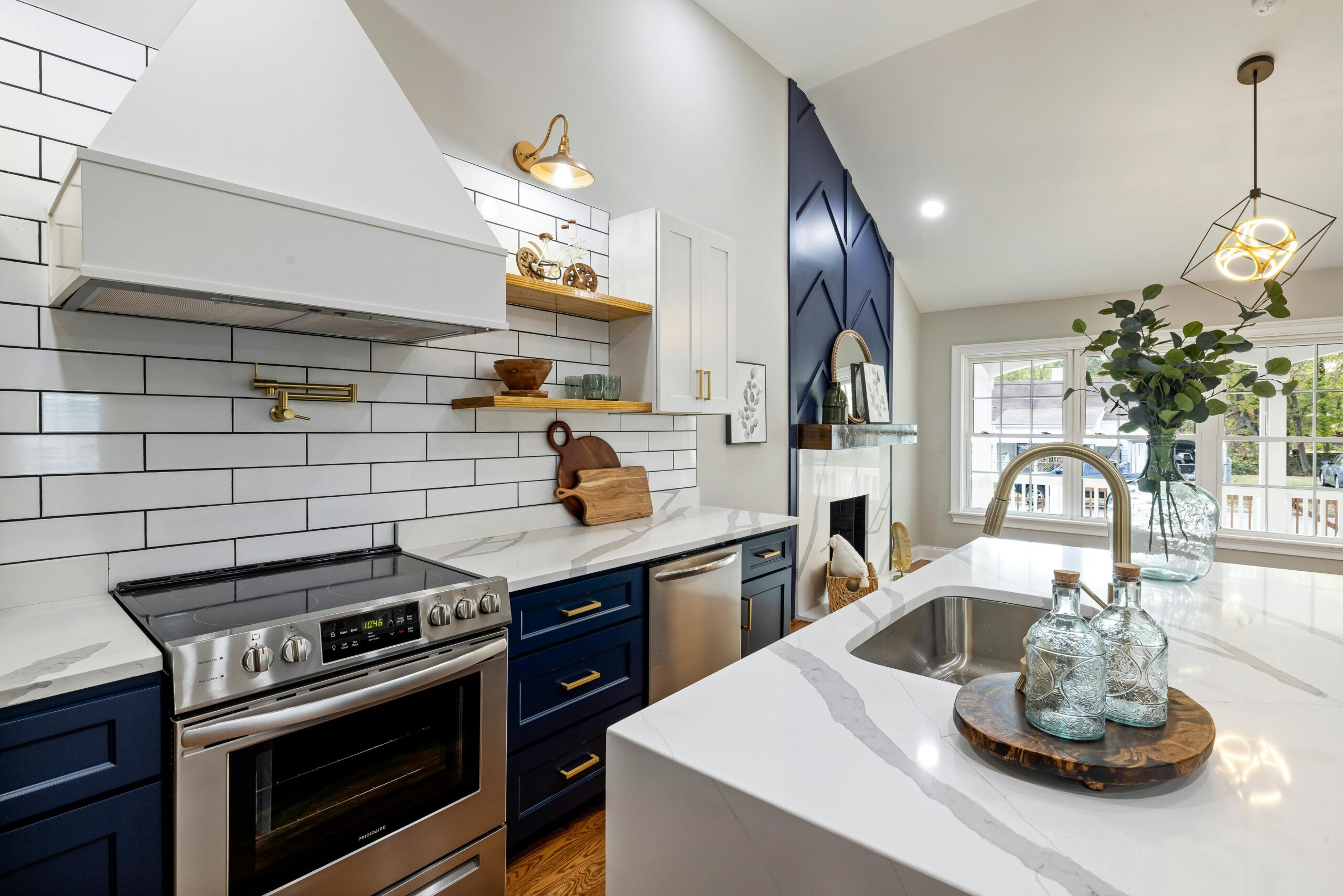
Kitchen countertop materials compared: quartz, granite, marble, and more
Table of contents
- Choosing kitchen countertop materials starts with how you actually use your kitchen
- Quartz countertops: the most popular choice in Michigan for good reason
- Granite countertops: the original premium surface
- Marble countertops: beautiful, demanding, and not for every kitchen
- Butcher block countertops: warmth and function for the right kitchen
- Solid surface countertops: the practical middle ground
- Concrete countertops: the custom option
- How to choose the right countertop for your Michigan kitchen
- What I would put in my own kitchen
Choosing kitchen countertop materials starts with how you actually use your kitchen
I have installed every kitchen countertop material on the market across hundreds of Southeast Michigan projects, and the question I hear most often is simple: which one should I pick? The answer to choosing the right kitchen countertop materials depends on how you cook, how you clean, what you can budget, and whether you want maintenance to be part of your life. I am going to walk through every major option we install at Wright’s Renovations’ countertop division and tell you exactly what works, what does not, and what I would put in my own kitchen.
Quartz countertops: the most popular choice in Michigan for good reason
Quartz has become the default choice in Southeast Michigan kitchen remodels, and I understand why. It is engineered stone, meaning it is roughly 93% ground natural quartz bound with polymer resins. The result is a surface that looks like natural stone but behaves like a manufactured product: consistent color, no sealing required, and excellent stain resistance.
What quartz does well
Quartz handles daily kitchen life better than almost anything else. Red wine, coffee, tomato sauce, and turmeric wipe right off. You never have to seal it. The color and pattern are consistent from slab to slab, so matching across a large kitchen or wrapping an island countertop is simple from a design standpoint. Quartz also comes in a range of finishes, from polished high-gloss to honed matte, and the pattern options now include convincing marble and concrete looks.
Where quartz falls short
Heat. Quartz resins can discolor or crack under direct heat from a hot pan. You need trivets. This is the single biggest complaint I hear from homeowners after installation, usually because nobody told them. I always tell clients upfront: quartz is not heat-proof. Use trivets, use cutting boards, and you will be fine. UV exposure can also cause fading over time, so if your countertop sits in direct afternoon sun from a west-facing window, be aware.
Cost in Southeast Michigan
Installed cost runs $50-$120 per square foot in our market across cities like Livonia and South Lyon, depending on the brand, color, and edge profile. A typical 40-square-foot kitchen countertop lands at $2,000-$4,800 installed. Premium brands like Cambria and Caesarstone sit at the higher end. Entry-level quartz from suppliers like MSI or Silestone starts lower. The fabrication and installation labor is similar regardless of brand, so the slab cost is where the variation lives. I recommend comparing options at the fabricator’s yard rather than relying on small samples because the full slab tells a different story than a 4-inch chip.
Granite countertops: the original premium surface
Granite dominated high-end kitchens from the 1990s through the early 2010s. It has lost ground to quartz in popularity, but granite still has real advantages that some homeowners prefer.
What granite does well
Granite is natural stone. Every slab is unique, which appeals to homeowners who want a one-of-a-kind kitchen. It handles heat better than quartz because there are no resins to damage. You can set a hot pan directly on granite without worry. It is also extremely hard and scratch-resistant. In terms of long-term durability, a well-maintained granite countertop will outlast the house. I have seen granite in 30-year-old Ann Arbor homes that still looks excellent because the homeowner sealed it regularly.
Where granite falls short
Sealing. Granite is porous and needs to be sealed once a year, sometimes more often depending on the specific stone. If you skip sealing, liquids penetrate the surface and leave stains. Red wine on unsealed granite is a permanent mark. The other issue is consistency. Because each slab is unique, matching multiple pieces across a large kitchen can be challenging. You may need to visit the stone yard and pick slabs that work together, which adds time to the kitchen remodel timeline and cost.
Cost in Southeast Michigan
Granite runs $40-$100 per square foot installed. It overlaps significantly with quartz pricing, though the entry point for granite is slightly lower because some granite varieties are abundant and competitively priced. The most exotic granites, things like Blue Bahia or Patagonia, can exceed $150 per square foot. For most Michigan kitchens, the $60-$80 range gets you a beautiful, durable slab. Installation requires the same precision as quartz: template, fabrication, and a crew that knows how to handle a 300-pound slab through a Northville colonial’s narrow hallway.
Marble countertops: beautiful, demanding, and not for every kitchen
Marble is the material that makes people fall in love in the showroom and sometimes regret it in the kitchen. I say that not to discourage you but to make sure you go in with clear expectations.
What marble does well
Nothing looks like marble. Carrara, Calacatta, and Statuario have a depth and warmth that no engineered product fully replicates. Marble stays cool to the touch, which makes it ideal for baking and pastry work. It photographs beautifully. And as it ages, it develops a patina that some homeowners love. A well-used marble countertop in a 1920s Birmingham kitchen tells a story that no other surface tells.
Where marble falls short
Marble etches. Acidic liquids like lemon juice, vinegar, and tomato sauce leave dull marks on the polished surface. This is not staining. It is a chemical reaction with the calcium carbonate in the stone. You can minimize it with immediate cleanup and regular sealing, but you cannot prevent it entirely in an active kitchen. Marble is also softer than granite and quartz, so it chips and scratches more easily. If you are the kind of person who winces at every mark on your countertop, marble will stress you out. If you are the kind of person who appreciates patina, it will make you happy.
Cost in Southeast Michigan
Marble runs $60-$150+ per square foot installed, depending on the variety. Carrara is the most accessible at $60-$80. Calacatta Gold, which has bolder veining and warmer tones, starts around $100 and can exceed $200 for premium slabs. If you love the marble look but cannot live with the maintenance, consider a quartz that mimics marble veining. Several options on the market now get close, though a side-by-side comparison at a kitchen design consultation will show you the differences.

Butcher block countertops: warmth and function for the right kitchen
Butcher block has made a strong comeback in Michigan kitchens, especially as a secondary surface on an island or a baking station. I install it as a full countertop material in some projects and as an accent in many more.
What butcher block does well
Wood adds warmth that no stone or engineered surface matches. Butcher block is forgiving on dropped dishes and glasses. It can be sanded and refinished when it shows wear, which means a 20-year-old butcher block counter can look new again with a weekend of work. For kitchens that lean toward a farmhouse aesthetic or a cozy Canton family home or a warm, layered Plymouth or Canton kitchen design, butcher block anchors the look.
Where butcher block falls short
Water. Butcher block and standing water are enemies. If a puddle sits around the faucet for hours, the wood swells, stains, and eventually rots. It requires regular oiling with mineral oil or a wood conditioner, usually every 4-6 weeks in active use. It also scratches and dents, though many homeowners see that as character rather than damage. I would not recommend butcher block as the primary surface next to a sink. Use it on an island, a prep station, or as a bar top where water exposure is controlled.
Cost in Southeast Michigan
Butcher block runs $30-$80 per square foot installed, making it one of the more affordable premium options. Maple is the standard species at the lower end. Walnut and white oak sit higher. The fabrication is simpler than stone, and some skilled homeowners install it themselves, though I recommend professional installation around sinks and seams where moisture management is critical.
Solid surface countertops: the practical middle ground
Solid surface materials like Corian and Wilsonart have been around for decades. They do not get the attention that stone does, but they solve specific problems well.
What solid surface does well
Seamless integration. Solid surface can be fabricated with invisible seams and integrated sinks, which eliminates the gaps where bacteria and grime collect. It is repairable. Scratches and minor burns can be sanded out by a professional. The surface is non-porous and never needs sealing. For kitchens where hygiene and low maintenance are priorities, solid surface is a logical choice.
Where solid surface falls short
Solid surface scratches more easily than stone and looks less premium in the eyes of most buyers. If resale ROI matters to you, stone countertops carry more perceived value. Solid surface also cannot handle hot pans directly, similar to quartz. The material softens under heat and can scorch or deform. It is a functional surface, not a showpiece. In markets like Troy and Oakland County where buyers expect stone, solid surface may not deliver the return you want.
Cost in Southeast Michigan
Installed cost runs $40-$75 per square foot, placing it below most stone options. The integrated sink feature adds $200-$500 but eliminates the cost of a separate undermount sink and its cutout fabrication. For a bathroom countertop, solid surface is often the smarter choice than stone because bathrooms are smaller and the seamless sink integration shines in a tight space.
Concrete countertops: the custom option
Concrete countertops are cast and finished to specification, which means you get exactly the color, texture, edge profile, and shape you want. They are niche, but I install them in a few projects every year for clients who want something nobody else has.
What concrete does well
Total customization. Any color, any shape, any edge, any embedded detail. Concrete can be cast in place or fabricated off-site, and it fits kitchens that lean industrial, modern, or farmhouse-industrial. It is also heat-resistant and extremely durable once properly sealed.
Where concrete falls short
Concrete cracks. Small hairline cracks are almost inevitable as the material cures and settles. They are cosmetic, not structural, but they bother some people. Concrete also requires sealing, similar to granite, and the sealer needs reapplication every 1-3 years. Weight is another factor. Concrete countertops are heavy, and your base cabinets need to support the load. This is rarely an issue with quality cabinets, but it is worth verifying during the design-build process.
Cost in Southeast Michigan
Concrete runs $65-$135 per square foot installed, depending on the complexity. Simple poured-in-place designs sit at the low end. Custom colors, embedded aggregates, or unusual shapes push toward the high end. It is a labor-intensive material, and the quality of the finished product depends heavily on the fabricator’s skill.
How to choose the right countertop for your Michigan kitchen
After installing thousands of countertops, here is the decision framework I use with clients at initial consultations:
- If you want zero maintenance and maximum durability: Quartz. It handles Michigan family life with no sealing, no special cleaners, and consistent performance year after year.
- If you want natural uniqueness and heat resistance: Granite. Accept the annual sealing ritual, pick your slab in person, and enjoy a surface that handles hot pans without flinching.
- If you want pure beauty and you embrace imperfection: Marble. Know what you are signing up for and love it on purpose.
- If you want warmth and character on a budget: Butcher block on an island or prep area, paired with stone around the sink and stove.
The best kitchens I build often mix materials. A quartz perimeter with a butcher block island. Marble on a baking station with granite everywhere else. Mixing lets you optimize each surface for its specific use while creating visual contrast that makes the room more interesting.
What I would put in my own kitchen
If I were remodeling my own kitchen tomorrow, I would go with honed white quartz on the perimeter and a walnut butcher block on the island. The quartz handles the sink, the stove, and the daily mess. Our client reviews consistently mention countertop satisfaction as a highlight of working with our team. Quartz without complaint. The walnut adds warmth and a surface I can cut on, sand out, and oil on a Saturday morning. That combination costs less than full marble and performs better in a kitchen that actually gets used.
Whatever you choose, see it at full scale before you commit. Visit the fabricator’s yard. Look at the full slab, not a sample. See it in different lighting. And talk to someone who has installed your material of choice in a hundred kitchens, not just sold it across a showroom counter. Our team at Wright’s Renovations can walk you through every option in person. Schedule a design consultation and we will help you pick the surface that fits your kitchen, your family, and your budget.
For more detail on how countertop choices affect your overall kitchen budget, take a look at our Ann Arbor kitchen remodel cost guide. And if you want to see finished kitchens with each of these materials installed, our project portfolio has real examples from Washtenaw and Wayne County homes.
