
Kitchen flooring options and costs for Michigan homeowners
Table of contents
- Kitchen flooring options and what each costs installed in Michigan
- Hardwood flooring in the kitchen
- Luxury vinyl plank: the practical alternative that looks better than you expect
- Porcelain and ceramic tile: the waterproof option with unlimited design range
- Natural stone flooring: slate, limestone, and travertine
- Concrete flooring: the industrial aesthetic gaining popularity in Michigan kitchens
- Radiant floor heating under kitchen flooring
- Subfloor preparation: the hidden cost that determines floor quality
- How to match your kitchen floor to the rest of the room
- Making the decision
Kitchen flooring options and what each costs installed in Michigan
Choosing kitchen flooring options cost-effectively means balancing what looks good today against what holds up after ten years of foot traffic, dropped pans, water splashes, and Michigan’s seasonal humidity swings. I have installed every major flooring type in kitchens across Southeast Michigan, and I can tell you from warranty callbacks and five-year follow-ups which materials perform as promised and which ones need replacing sooner than the manufacturer claims. This guide covers the six flooring materials we install most often in kitchen remodels, with the real costs, maintenance requirements, and performance characteristics for each one.
Hardwood flooring in the kitchen
Hardwood remains the most requested kitchen floor material in Ann Arbor, Birmingham, and Northville. Homeowners want the warmth, character, and continuity of running the same wood species from the living areas into the kitchen. That continuity matters in open-concept layouts where the kitchen, dining, and living spaces share one sightline. A flooring transition strip between rooms breaks that visual flow.
Costs and species selection
Hardwood kitchen flooring installed in our Southeast Michigan projects runs $8 to $16 per square foot for materials and $3 to $5 per square foot for installation, putting the total at $11 to $21 per square foot. A 150-square-foot kitchen floor costs $1,650 to $3,150 installed. White oak is the dominant species right now, running about $9 to $14 per square foot for the material. Red oak ($7 to $10) and hickory ($10 to $15) are common alternatives. The kitchen flooring service page covers additional species and finish options.
Hardwood performance in Michigan kitchens
The concern with hardwood in kitchens is water. A dishwasher leak, a spilled pot of pasta water, or ice cubes that drop and melt unnoticed under a cabinet can damage hardwood if the water sits long enough to penetrate the finish. Modern factory-finished hardwood with aluminum oxide coatings resists water far better than site-finished floors, but no hardwood is waterproof. I tell clients that hardwood in the kitchen is a reasonable choice if they are comfortable wiping up spills promptly and if they run a quality finish that seals the wood surface.
Michigan humidity swings between 15 percent in heated winter homes and 70-plus percent in July. Hardwood responds to these swings by expanding in summer and contracting in winter. Proper installation includes expansion gaps at walls, and the installer must acclimate the wood to the home’s indoor environment for at least five days before nailing it down. Skipping acclimation causes gapping, cupping, or buckling within the first year. Our quality standards require acclimation verification with a moisture meter before any hardwood installation begins.
Luxury vinyl plank: the practical alternative that looks better than you expect
Luxury vinyl plank (LVP) has replaced ceramic tile as the go-to water-resistant kitchen floor in budget-conscious and mid-range remodels. Modern LVP realistically mimics hardwood grain patterns, comes in plank sizes that install like floating floors without glue or nails, and handles water, pet accidents, and dropped cookware without damage. I was skeptical of LVP five years ago and I install it frequently now because the product quality has improved dramatically.
LVP costs in Michigan
LVP installed in our projects runs $5 to $10 per square foot total (materials plus labor). A 150-square-foot kitchen costs $750 to $1,500. Premium LVP brands like COREtec and Shaw Floorte sit at the higher end; builder-grade LVP from Home Depot or Lowe’s sits at the lower end. The cost difference reflects the wear layer thickness (12 mil on budget products vs. 20 to 28 mil on premium), the core rigidity, and the quality of the printed design layer. For a kitchen remodel in Ann Arbor where the flooring budget needs to stay under $1,500, premium LVP is the material I recommend without reservation.
LVP performance and limitations
LVP handles water without issue. You can leave a puddle on it overnight and it will wipe up without any damage to the surface or subfloor. It resists scratches from pet nails, chair legs, and normal foot traffic. It does not dent from dropped cans or pans the way hardwood does. These characteristics make LVP the practical winner for families with kids, pets, or heavy kitchen usage.
The limitation is feel underfoot. LVP is thinner and less rigid than hardwood or tile. Walking on LVP barefoot, the floor has a slight give and a sound that experienced flooring people can identify instantly. It does not have the solid thunk of hardwood or the cool density of porcelain tile. For some homeowners this is irrelevant. For others who value the feel of their kitchen floor as much as the look, it matters. The best way to evaluate this is to visit a showroom and walk on installed samples, not just hold a plank in your hand.
Porcelain and ceramic tile: the waterproof option with unlimited design range
Tile has been the default kitchen floor material for decades, and for good reason. It is waterproof, scratch-resistant, heat-resistant, and available in sizes, colors, and patterns that span every aesthetic from farmhouse to industrial to contemporary. Porcelain tile rated for floor use (PEI Class 3 or higher) will outlast the kitchen itself. I have seen porcelain floors in 30-year-old Michigan homes that still look like the day they were installed, with no worn paths and no discoloration.
Tile costs in Michigan
Porcelain tile flooring installed runs $8 to $18 per square foot depending on tile size, pattern complexity, and the substrate preparation required. A 150-square-foot kitchen costs $1,200 to $2,700. Large-format tiles (24-by-24 or 12-by-24 inch) create fewer grout lines and a more expansive feel, but they require a perfectly flat substrate. If the subfloor is uneven by more than 1/8 inch over 10 feet, the installer must apply a self-leveling compound before setting tile, which adds $2 to $4 per square foot. Homes in Ypsilanti and Canton with older wood-framed subfloors frequently need this prep work.
The grout maintenance question
Grout lines are the Achilles’ heel of tile flooring in kitchens. Cement grout absorbs grease, food residue, and moisture, darkening over time unless sealed annually. Epoxy grout solves this problem permanently but costs more to install (roughly $2 to $3 per square foot premium over cement grout). I recommend epoxy grout for every kitchen floor installation because the long-term maintenance difference is substantial. A kitchen floor with cement grout needs re-sealing every six to twelve months. A kitchen floor with epoxy grout needs nothing beyond normal mopping.
Another option is large-format rectified tile with 1/16-inch grout joints, which minimizes the grout surface area and makes cleaning easier. Contrast this with a mosaic or 4-by-4 tile with 1/8-inch joints, where the grout surface area approaches 15 to 20 percent of the total floor. Less grout means less maintenance, and large-format tile achieves this while also making the room feel larger.
Natural stone flooring: slate, limestone, and travertine
Natural stone kitchen floors make a statement that no manufactured material replicates. Slate, limestone, and travertine each have distinct textures, colors, and surface characteristics that bring organic warmth to a kitchen. They also bring higher costs, more maintenance, and specific installation requirements that contractors must understand to avoid premature failures.
Slate flooring installed runs $10 to $20 per square foot. Limestone runs $12 to $25. Travertine runs $10 to $22. For a 150-square-foot kitchen, natural stone costs $1,500 to $3,750. All natural stone is porous and requires sealing at installation and periodic re-sealing to prevent staining. Limestone is particularly susceptible to etching from acidic liquids, making it a risky choice for a kitchen where lemon juice, vinegar, and tomato sauce are daily presence. Slate is the most durable natural stone option for kitchens because its dense layered structure resists moisture and staining better than limestone or travertine.

Concrete flooring: the industrial aesthetic gaining popularity in Michigan kitchens
Polished concrete floors have moved from commercial spaces into residential kitchens, particularly in modern and industrial-style homes across Oakland County. For homes built on a concrete slab (common in ranch-style houses throughout Wayne County and Macomb County), the existing slab can be ground, polished, and sealed to create a finished floor surface without adding any material on top. The cost for grinding and polishing an existing slab runs $4 to $8 per square foot, making it one of the most affordable finished floor options when the slab is already there.
Concrete floors are waterproof when properly sealed, extremely durable, and radiant-heat compatible. The limitation is hardness underfoot. Standing on concrete for extended cooking sessions causes fatigue faster than standing on wood or LVP. Anti-fatigue mats at the sink and range stations mitigate this, but if you spend significant time standing in the kitchen, concrete may not be comfortable enough for daily use.
Radiant floor heating under kitchen flooring
Electric radiant floor heating has become one of the most requested upgrades in our kitchen remodels across the Ann Arbor area and Birmingham neighborhoods. Michigan winters mean cold floors from November through March, and a radiant heat mat under tile or stone flooring transforms the kitchen from a cold room to the warmest spot in the house. The mats install between the subfloor and the finished floor during renovation, adding $8 to $14 per square foot for materials and installation. A 150-square-foot kitchen with radiant heating adds $1,200 to $2,100 to the flooring budget.
Not all flooring materials work well with radiant heat. Porcelain and ceramic tile conduct heat efficiently and are the best pairing. Natural stone works well but heats more slowly due to the density of the material. Hardwood can work with radiant heat if the system is designed for low-temperature operation (typically capped at 85 degrees Fahrenheit at the surface), but rapid temperature changes can cause wood movement. LVP manufacturers specify radiant heat compatibility on a product-by-product basis. Some LVP products tolerate it; others void their warranty if installed over radiant heat. Verify compatibility before committing to a material and heating combination. The heated floor installation page covers the technical requirements in more detail.
Subfloor preparation: the hidden cost that determines floor quality
The condition of your subfloor determines whether the finished floor performs as intended or develops problems within the first year. In homes across Wayne County communities and the Macomb County area built in the 1950s through 1970s, the original plywood subfloor may be warped, delaminated, or uneven. Laying new flooring over a compromised subfloor transfers every imperfection to the finished surface. Tile cracks, hardwood planks cup, and LVP click joints separate when the substrate underneath them is not flat and structurally sound.
Our crews assess subfloor condition before providing a flooring estimate. If the subfloor needs repair (new plywood overlay, joist leveling, or moisture barrier installation), that work adds $2 to $6 per square foot. The investment is invisible once the floor is installed, but it determines whether the kitchen floor looks perfect five years from now or develops noticeable issues within the first twelve months. Skipping subfloor prep to save money is the most common cause of premature flooring failure in renovation projects, and it is the one cost I will push back on if a client asks to cut it from the budget.
How to match your kitchen floor to the rest of the room
The floor is the largest continuous surface in any kitchen. It sets the baseline that every other material decision references. Here is how I approach flooring selection relative to the cabinets, countertops, and overall design direction.
For warm-toned kitchens with wood cabinets or warm white paint, white oak hardwood or a warm-toned LVP creates cohesion. The floor and the cabinets share a material family (wood and wood-look) that makes the room feel unified. Avoid matching the exact stain color between cabinets and floor. A slight contrast (light floor, medium cabinets or medium floor, dark cabinets) creates depth. Matching them too closely makes the room feel flat.
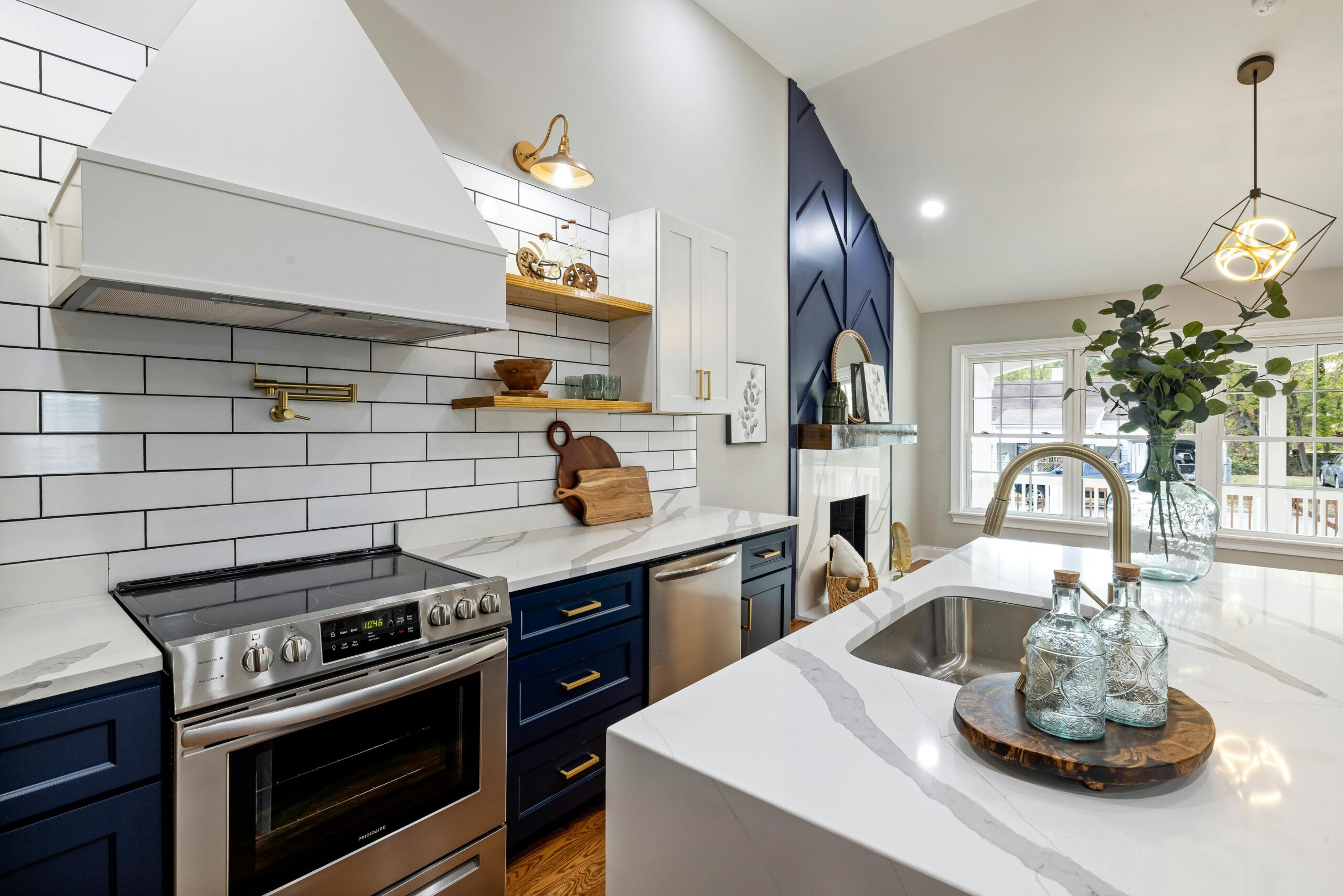
For cool-toned or contemporary kitchens with gray or navy cabinets, porcelain tile in a large format creates the clean, geometric foundation the style requires. A 24-by-48 inch tile in a light gray or warm concrete tone pairs well with flat-panel or slab-door cabinetry and quartz countertops.
For transitional kitchens that blend traditional and modern elements, a character-grade hardwood (with visible knots, grain variation, and wire-brushed texture) provides enough visual interest to ground the room without competing with patterned backsplash or veined countertop surfaces.
Making the decision
The floor you choose affects the kitchen’s sound, temperature underfoot, maintenance schedule, and long-term durability. I recommend choosing flooring early in the design process rather than as a last-minute decision, because the flooring impacts transitions to adjacent rooms, door clearances, and appliance heights. A well-sequenced renovation installs flooring before cabinets and appliances go in, which means the material needs to be selected and ordered weeks before the kitchen is demolished.
At Wright’s Renovations, we bring flooring samples to every kitchen consultation so you can see and feel each option against your cabinet and countertop selections. The sample board tells you more in five minutes than a week of browsing product websites. Schedule a consultation to compare materials for your kitchen remodel. We work with homeowners across Washtenaw, Oakland, and Wayne counties and every flooring material discussed here is one we install regularly.
