
Master bathroom remodel: design and costs for Michigan homes
Table of contents
- What makes a master bathroom remodel different from every other bathroom
- Master bathroom remodel costs in Southeast Michigan
- Layout options for primary bathrooms
- Shower design for the primary bathroom
- Freestanding tub placement and plumbing
- Lighting layers for the primary bathroom
- Flooring and heated floor systems
- Storage solutions for the primary bathroom
- Resale value of primary bathroom remodels in Michigan
- Aging-in-place features to build in now for later
- Working with Wright’s Renovations on your primary bathroom remodel
What makes a master bathroom remodel different from every other bathroom
A master bathroom remodel operates under different rules than a hall bath or powder room renovation. The primary bathroom is private space used daily by one or two people, which means the design should optimize for personal comfort, morning and evening routines, and long-term durability under heavy use. It is also the second most impactful room for resale value after the kitchen. I have remodeled primary bathrooms across Ann Arbor, Birmingham, and Southeast Michigan ranging from $15,000 refreshes to $80,000 complete transformations, and the common thread in every successful project is designing around how the homeowner actually uses the room, not how a magazine photographs it.
Master bathroom remodel costs in Southeast Michigan
Primary bathroom remodels in our projects fall into three tiers. A mid-range remodel ($20,000 to $40,000) replaces the vanity, shower or tub surround, flooring, lighting, and fixtures within the existing footprint. The plumbing stays in its current location, which avoids the cost of rerouting drain and supply lines. Most of our Plymouth and Canton primary bathroom projects land in this range.
A premium remodel ($40,000 to $65,000) includes everything in the mid-range scope plus a reconfigured layout, a walk-in shower with custom tile work, a freestanding soaking tub, a double vanity with custom or semi-custom cabinetry, heated flooring, and upgraded lighting and electrical. This tier involves moving plumbing, which adds $2,000 to $5,000 for drain and supply line relocation depending on the distance and accessibility.
A luxury remodel ($65,000 to $80,000 and above) reconfigures the entire room, potentially borrowing square footage from an adjacent closet or bedroom. It includes premium materials (natural stone, custom cabinetry, designer fixtures), a curbless shower with body jets, a freestanding tub, radiant heat, a separate toilet room, and integrated technology like heated mirrors and smart lighting. Projects at this level are most common in the Oakland County and Washtenaw County markets where home values support the investment.
Layout options for primary bathrooms
The layout determines how efficiently the room functions during a morning routine when both partners are getting ready simultaneously. A bathroom that works well for one person may create constant bottlenecks when two people share it. The layout must separate the wet zone (shower and tub), the dry zone (vanity and dressing area), and the private zone (toilet) so each area can be used independently.
The separated toilet room
A water closet (toilet in its own enclosed space with a door) is the single most requested layout feature in our primary bathroom remodels. The privacy it provides is valued by every couple sharing a bathroom, and the enclosed space allows one person to use the toilet while the other uses the vanity without discomfort. Adding a water closet requires as little as 30 by 60 inches of floor space (the minimum for code compliance with a toilet and a door swing), and the partition wall, door, and finish cost $2,000 to $4,000 in our projects.
Double vanity vs. single vanity with more counter
A double vanity with two sinks gives each person their own basin, mirror, and storage space. The minimum comfortable width for a double vanity is 60 inches (two 24-inch vanity sections with a 12-inch shared counter between them), though 72 inches is ideal. In bathrooms where the wall cannot accommodate 60 inches of vanity, a single basin in a 48-inch vanity with generous counter space on both sides may serve the household better than two cramped basins squeezed into a tight run.
The vanity height matters for daily comfort. Standard vanity height is 32 inches. Comfort height is 36 inches, matching kitchen counter height. For adults over 5 feet 6 inches, the comfort height reduces bending during morning and evening routines. Our design consultations include measuring the primary users’ heights and recommending vanity height accordingly, because this is a detail that affects comfort for years and costs nothing extra to specify correctly during ordering.
Shower design for the primary bathroom
The primary bathroom shower is used once or twice daily by the same person for ten to fifteen minutes. That daily repetition means every design decision is magnified. A showerhead height that is 2 inches too low becomes an annoyance you feel 365 times a year. A drain that is slightly slow becomes a puddle you stand in every morning. A glass enclosure with a hard-to-clean track becomes a cleaning chore you resent weekly. Getting the details right in the primary shower matters more than in any other shower in the house because the frequency of use amplifies every flaw.
A walk-in shower sized at 48 by 60 inches or larger provides a comfortable experience for most adults. The standard 36-by-36-inch shower stall that many Michigan homes have as the original builder installation is functional but cramped. Expanding the shower during a remodel, even by 12 inches in one direction, transforms the experience from a tight enclosure to a comfortable space. If the bathroom layout allows it, a 60-by-60-inch or larger shower with a bench seat creates a spa-like experience that becomes the most used feature in the room.
Shower niches (recessed shelves built into the wall) provide storage for shampoo, conditioner, and soap without taking up shower floor space. Two niches (one at standing height, one at seated height if a bench is included) cover the storage needs without cluttering the shower walls. The niche should be tiled to match the shower walls and waterproofed as carefully as the rest of the shower enclosure. Our tile installation crews build niches as integral parts of the waterproofing system, not as afterthought cutouts in the backer board.
Freestanding tub placement and plumbing
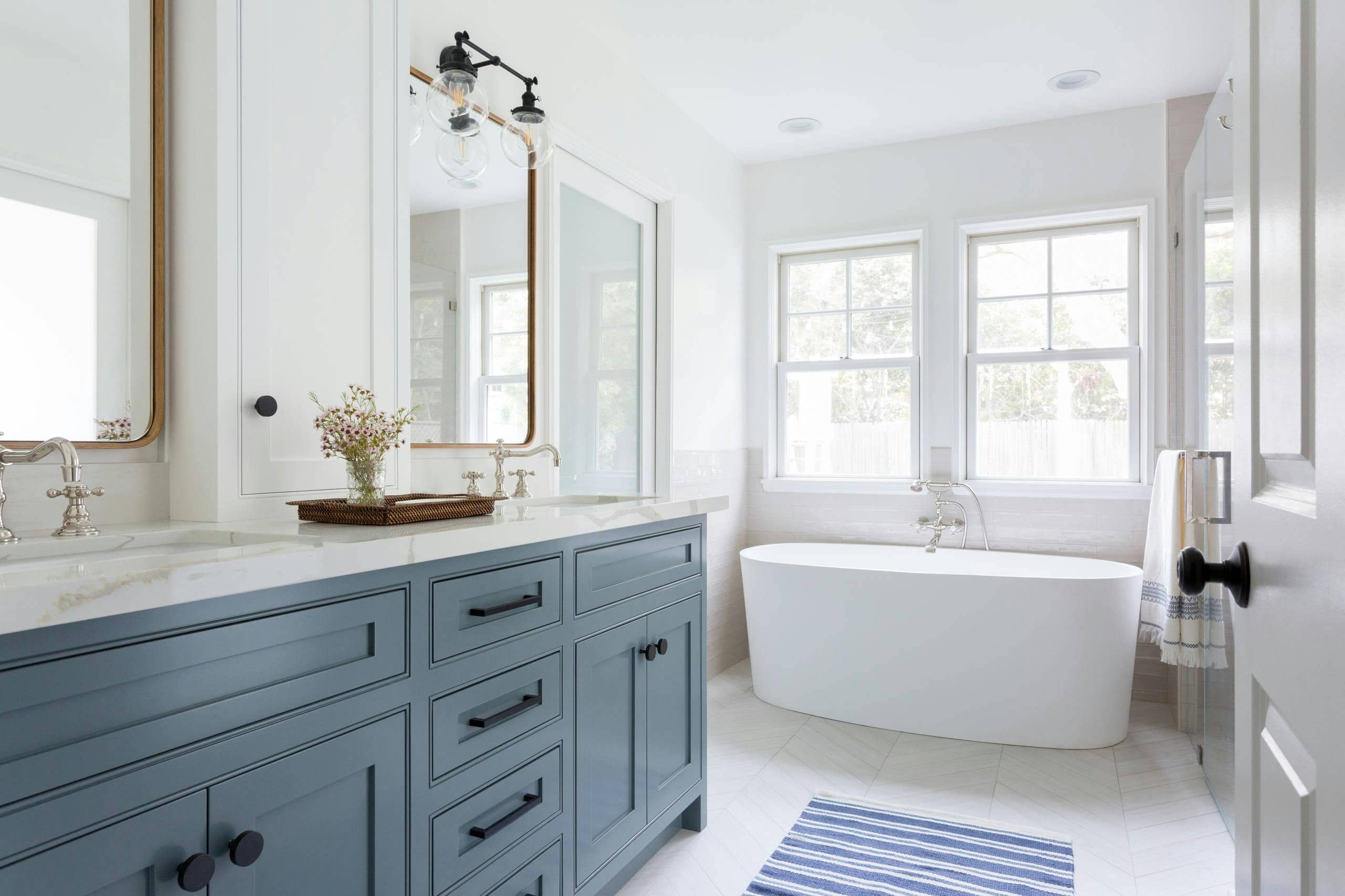
If the bathroom includes a freestanding soaking tub, the placement affects both the aesthetics and the plumbing complexity. A tub centered under a window creates a classic focal point and provides natural light during a soak. A tub placed at the end of the room opposite the entry creates a visual destination that draws the eye through the space. A tub in a corner saves floor space but can feel cramped if the walls are too close on two sides.
Freestanding tub plumbing is more complex than built-in tub plumbing because the drain and supply lines must reach the tub without visible piping. A floor-mounted tub filler requires a supply line routed through the floor, which is simple in bathrooms above a basement or crawl space but complicated in slab-on-grade homes where the floor is concrete. In slab homes across Wayne County and Macomb County, a wall-mounted tub filler eliminates the floor penetration by running the supply lines through the wall behind the tub. The visual look is different (wall-mounted vs. floor-mounted), but the functional result is the same.

Lighting layers for the primary bathroom
Primary bathroom lighting requires three layers: task lighting at the vanity for grooming, ambient lighting for general visibility, and accent lighting for atmosphere. The vanity task lights should flank the mirror at eye height (sconces at 60 to 66 inches from the floor) rather than mounting above the mirror, because side-mounted lights eliminate the harsh shadows that overhead lighting creates on the face. A 3000K color temperature provides warm, flattering light that renders skin tones accurately.
Ambient lighting from recessed cans or a decorative flush mount covers the general room illumination. In a 70-to-100-square-foot primary bathroom, three to four 4-inch recessed cans on a dimmer provide adequate ambient light that adjusts from bright morning task lighting to soft evening bath lighting. The dimmer is essential because the primary bathroom serves vastly different moods at 6 a.m. and 9 p.m.
Accent lighting in the shower (a recessed can rated for wet locations), inside glass-front lighted niches, or as LED strips under a floating vanity adds visual depth and creates the spa atmosphere that distinguishes a remodeled primary bathroom from a builder-grade one. These accent elements cost $200 to $600 to add during construction and are difficult and expensive to retrofit later.
Flooring and heated floor systems
The primary bathroom floor should be waterproof, durable, and comfortable underfoot for bare feet. Porcelain tile meets the first two requirements. Adding electric radiant heat ($8 to $14 per square foot for materials and installation) meets the third. In a Michigan primary bathroom, heated floors transform the morning routine from November through March. The heated floor installation page covers the technical requirements and compatible tile options.
Tile selection for the primary bathroom floor should prioritize slip resistance (a dynamic coefficient of friction of 0.42 or higher for wet conditions), ease of cleaning (minimal grout lines with large-format tile), and visual warmth (wood-look porcelain, warm-toned natural stone, or a matte concrete-look tile). High-gloss tile on a bathroom floor is a slip hazard when wet, regardless of how good it looks dry. Our crews verify the DCOF rating for every bathroom floor tile before installation.
Storage solutions for the primary bathroom
The primary bathroom needs more storage than any other bathroom in the house because it holds daily-use items for one or two adults: towels, toiletries, grooming tools, medications, cleaning supplies, and backup stock. A double vanity with drawers rather than cabinet doors provides the most accessible storage because items are visible from above rather than hidden behind a door that requires bending to access.
A linen tower or tall cabinet (84 inches, matching the vanity finish) adds vertical storage without consuming floor space. A recessed medicine cabinet with a mirrored door provides concealed storage for medications and small toiletries while doubling as a mirror. Built-in niches in the shower walls provide wet-zone storage. Together, these elements create a primary bathroom where everything has a designated place and the countertop stays clear for daily use. The bathroom remodel process at Wright’s Renovations includes a storage assessment to ensure the new design provides at least as much storage as the old bathroom, and preferably more.
Resale value of primary bathroom remodels in Michigan
Primary bathroom remodels in Southeast Michigan return 55 to 75 percent of the project cost at resale, according to regional data from Remodeling Magazine’s Cost vs. Value report. The return is highest when the remodel brings a dated bathroom up to current market expectations (walk-in shower, double vanity, modern finishes) without over-improving beyond the neighborhood’s price ceiling.
For homes in the $300,000 to $500,000 range across the Canton area, Livonia, and Wayne County neighborhoods, a $25,000 to $35,000 primary bathroom remodel hits the sweet spot. It delivers the updated look buyers expect without overcapitalizing. For homes above $600,000 in the Birmingham market and Northville neighborhoods, buyers expect premium finishes, heated floors, and a separated shower and tub configuration. A $50,000 to $65,000 remodel matches those expectations.
The features that drive the highest resale returns are consistent across our service area: a walk-in shower with quality tile work, a double vanity with stone countertop, updated lighting with dimmers, and heated flooring. These are the elements buyers notice during a showing and the elements that differentiate a renovated bathroom from a builder-grade original. The bathroom remodel cost guide maps these features to specific price points across the Southeast Michigan market.
Aging-in-place features to build in now for later
Even if you do not currently need accessible bathroom features, building the infrastructure during a primary bathroom remodel saves significant cost compared to retrofitting later. Blocking in the shower walls (installing plywood or 2-by-6 lumber behind the drywall at grab bar height) costs $100 to $200 during construction and enables grab bar installation at any point in the future without opening walls. A curbless shower entry with a linear drain adds minimal cost during new construction but requires a complete shower rebuild to add later.
A comfort-height toilet, wider doorways (34 to 36 inches instead of the standard 30 inches), and lever-style door handles and faucets all serve current users comfortably while meeting accessibility standards that may become important decades from now. These features cost nothing extra to specify during a remodel. They simply require choosing the accessible option at the point of product selection rather than defaulting to the standard one.
Working with Wright’s Renovations on your primary bathroom remodel
A primary bathroom remodel takes three to five weeks from demolition to final walkthrough depending on the scope. Custom tile work, specialty fixture orders, and glass enclosure fabrication are the elements that extend the timeline. We sequence the project so that demolition, rough plumbing, rough electrical, and waterproofing happen in the first week. Tile installation occupies weeks two and three. Vanity installation, fixture mounting, glass installation, and finish work fill weeks four and five.
The renovation process includes a secondary bathroom assessment during the consultation. If the primary bathroom will be out of service for three to five weeks, we need to confirm that a secondary bathroom can handle the household’s needs during construction. For homes with only one full bath, we discuss phasing strategies that keep the shower functional as long as possible during the project.
Schedule a consultation to start planning your primary bathroom remodel. We serve homeowners across Washtenaw, Oakland, and Wayne counties and primary bathrooms are our most frequently requested bathroom renovation. Check our client reviews for examples of completed primary bathroom remodels.
